About YPEP
Building Projects That Last a Century.
Higher quality. Better service.
Top class quality and service.
Shandong Yuanpeng Environmental Protection Technology Co., Ltd. was founded in 2022. With a registered capital of RMB 50 million and a staff of more than 300, the company covers an area of 35,000 square meters, is equipped with a professional technical R&D team, and is a comprehensive enterprise integrating production...


35000
Production area

100+
Export geography

60+
Patents and certificates

300+
Number of employees
Fields of Application
A successful business model based on customer appreciation, employee satisfaction, social approval, reliable quality, and longevity.
Landfills
Road stabilization
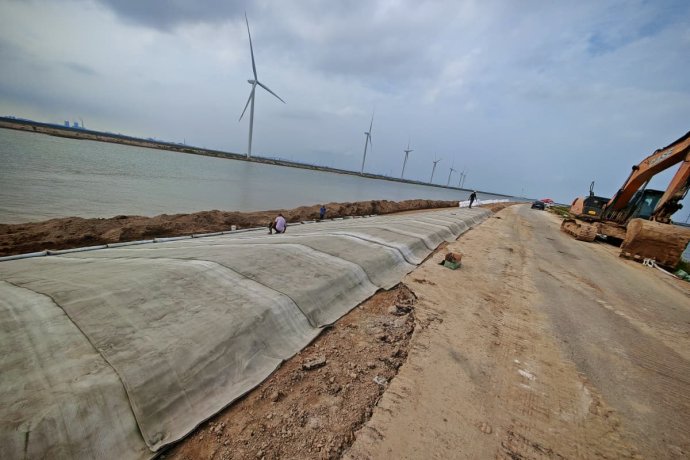
Coastal protection
Temporary jumpers
Dredging operations
Railway


Railway
There are many types of waste, and their processing methods also vary. Although China is actively increasing its use of waste sorting, incineration, and composting...
Product Catalog
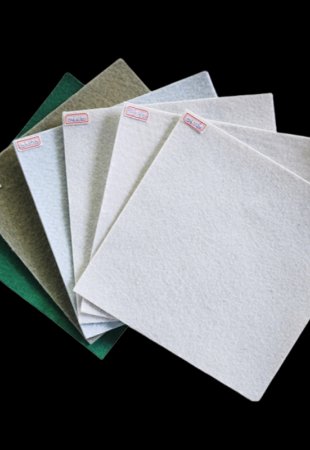
Geotextiles, also known as geotextile fabric, are permeable geosynthetic materials made from synthetic fibers by needlepunching or weaving. As one of the types of new geosynthetic material, geotextiles are produced in the form of a canvas, usually 4-6 meters wide and 50-100 meters long. It is…
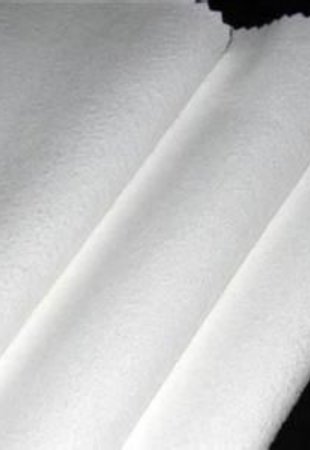
Geotextiles, also called geotextile fabric, are a permeable geosynthetic material made from synthetic fibers by needlepunching or weaving. Being one of the new types of geosynthetic materials, geotextiles are produced in rolls, usually 4–6 meters wide and 50–100 meters long. Depending on the…

I. Basic definitionWoven geotextiles, also known as woven geotextiles, are geosynthetic materials resembling fabrics produced using traditional textile technologies. They are produced by weaving synthetic fiber threads or flat tapes (such as polypropylene or polyester) in the longitudinal (warp)…

Woven geotextiles, as their name suggests, are flat mesh materials produced by industrial weaving (similar to burlap or fabric). Synthetic fibrous threads or flat tapes—usually made of polypropylene, polyethylene, or polyester—are interwoven in the longitudinal (warp) and transverse (weft)…
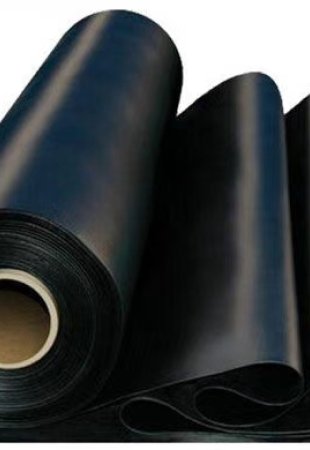
Product descriptionGeomembrane is a waterproof barrier material made of high-density polyethylene with a density of at least 0.94 g/cm³. It is widely used in containment projects, including municipal solid waste landfills, wastewater treatment plants and artificial reservoirs, and is used in the…
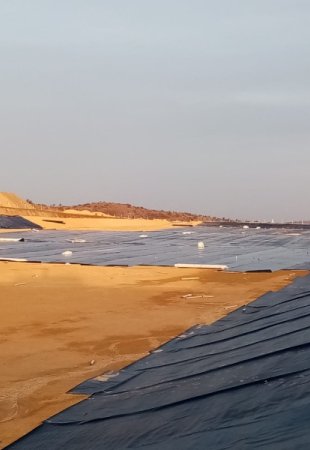
Product descriptionHDPE geomembranes are waterproof barrier materials made from high-density polyethylene with a density of ≥0.94 g/cm³. They are widely used in seepage control projects such as municipal solid waste landfills, wastewater treatment systems and artificial lakes, covering the fields…
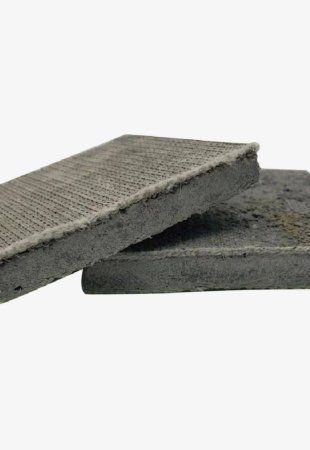
I. What is cement tissue?Cement fabric, also known as geotextile concrete, is a flexible building material consisting of a three-dimensional fibrous structure combined with impermeable concrete powder. After hardening as a result of hydration reactions, it forms a waterproof and fire-resistant…

Geotextile tubular bags are large tubular bags sewn from high-strength geotextile material (specialized polypropylene or polyester fibers). Functioning like a giant permeable "sausage," they utilize their filtration and dewatering properties to achieve several objectives: separating solids from…
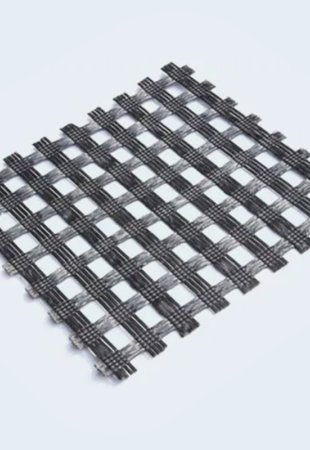
Geogrid is a basic geosynthetic material that has unique properties and functions compared to other geosynthetics. It is widely used as a reinforcing element in reinforced soil structures or as reinforcement in composite materials. Geogrids are divided into four main categories: plastic geogrids,…
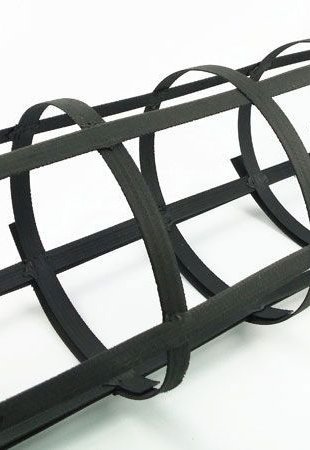
Geogrid is a basic geosynthetic material that has unique properties and functions compared to other geosynthetics. It is commonly used as reinforcement in reinforced soil structures or composite materials. Geogrids are classified into four main types: plastic geogrids, steel-plastic geogrids,…
Cases
Successful Examples


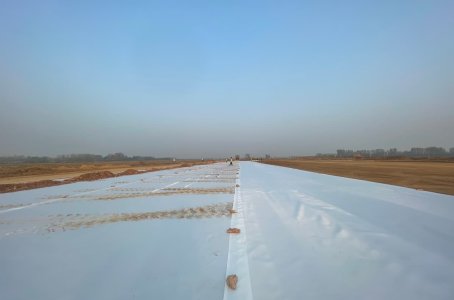
Why choose us?
Advantages
01
Innovation-driven R&D
We focus on developing advanced solutions for environmental pollution control and hazardous waste treatment.


02
Modern production
These materials are widely used in various fields such as water management, transportation and waste disposal.


03
Extensive project experience
These projects demonstrate not only our technical capabilities, but also our ability to adapt to different natural and cultural conditions.


04
Comprehensive range of services
We also specialise in soil restoration and environmental management, providing a comprehensive approach to solving environmental problems.


NEWS

Before installing HDPE geomembranes, the substrate surface must be inspected to ensure that it meets the design requirements and construction conditions. The base must be dry, compacted, level, without cracks, protruding irregularities, dirt or depressions. At a depth of up to 25 mm there should be
NEWS
Latest News
Cement blanket, also known as concrete sheeting, is a flexible, blanket-like composite material impregnated with dry cement powder. Essentially, it's "concrete that can be rolled up like fabric for transport and installation."
In simple terms, it can be thought of as a thick blanket impregnated
Geotextile is the general name for “geotextile fabric”. It is a permeable, flat, fabric-like material made from synthetic fibers by needlepunching or weaving. It belongs to the most fundamental and widely used branch in the family of geosynthetics.
Simply put, it can be thought of as a "specialty
Geogrids are flat lattice structures formed by oriented stretching or weaving of polymers such as polypropylene or polyester. They are the fundamental elements of the geosynthetic family of materials, specializing in reinforcement and strengthening.
Simply put, they function as a high-strength "