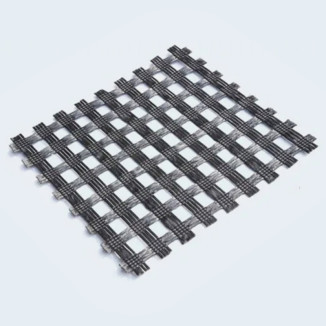
Cement blanket for sale
1. Quick installation: No on-site concrete mixing required; installs like carpet and is easy to cut to form complex shapes.
2. Fast curing: Starts to harden within 2 hours of watering and reaches 80% strength within 24 hours.
3. High strength and durability: excellent compressive and flexural strength; resistant to freeze-thaw cycles and chemical corrosion.
4. Fire resistance: non-combustible material with fire resistance class A.
5. Seamless and impermeable: The monolithic structure provides excellent waterproof and erosion resistance.
6. Environmental friendliness and versatility: low dust and waste; Suitable for vertical, inclined and complex surfaces.
I. What is cement tissue?
Cement fabric, also known as geotextile concrete, is a flexible building material consisting of a three-dimensional fibrous structure combined with impermeable concrete powder. After hardening as a result of hydration reactions, it forms a waterproof and fire-resistant concrete layer 5-13 mm thick. Compared to traditional concrete, it can reduce material consumption by 90% and reduce construction time by 60%. Its underside has a polyvinyl chloride (PVC) backing for improved water resistance. The fiber structure effectively prevents cracking, and the roll shape makes cutting and installation easy. It is suitable for numerous engineering applications including slope stabilization, agricultural irrigation and disaster relief.

Key Features:
Form: Soft when dry, allowing for rolling, cutting and styling.
Activation: Activated by watering, which starts the hydration process.
Result: After hardening, it forms a solid monolithic concrete layer.
II. Structural analysis (three-layer composite)
Top layer:A high-strength layer of fibrous fabric that provides primary protection and partial reinforcement.
Middle layer:base layer formed by specially developed dry concrete powder (cement + fine aggregate + additives), uniformly bound in a three-dimensional fibrous network.
Bottom layer:A waterproof membrane or dense fabric layer that prevents moisture loss during activation to ensure complete hydration.

III. Main application scenarios
The primary function of cementitious blankets is to "rapidly form a durable protective shell of concrete," making them suitable for:
Water conservation and flood protection projects:
Canal Lining: Rapid construction or repair of canals and river beds to prevent seepage and erosion.
Dam Slope Protection: Replaces concrete blocks or cast-in-place concrete for slope protection.
Drainage ditches/spillways: fast formation with excellent strength.
Military and emergency construction:
Rapid construction of shelters and roads: the original main purpose of the structure.
Disaster Rehabilitation: Used to temporarily or permanently protect and strengthen soil.
Municipal and landscape construction:
Artificial lakes and ponds: waterproof and quick to install.
Slope stabilization and greening base: After laying, it can be covered with landscaping soil, preventing soil erosion.
Sidewalk and path foundations: quick installation of temporary or permanent surfaces.
Industrial and special applications:
Waterproofing protective layers for roofs, substrates for equipment foundations.
Pipe casing for corrosion protection, temporary support for mine tunnels.
IV. Overview of the laying process
Preparing the base:level and compact the surface; complex formwork is not required.
Laying mats:Unroll the cement mat, cut it to size, ensuring overlap at the joints.
Secure the edges:secure with nails or clamping strips.
An important stage is activation:Water the mats evenly and thoroughly until they are completely saturated (ideally, water should drain out the back).
Hardening and curing:Allow the material to harden naturally; avoid walking on it initially. Load-bearing capacity is achieved after 24 hours.

V. Limitations and Considerations
Price:The unit cost of the material is higher than that of traditional concrete raw materials. However, when considering total costs, including labor, equipment, and time, it offers advantages in certain scenarios.
Thickness limitations:Currently, it is mainly used for thin-layer structures (at the centimeter level), and is not suitable for load-bearing structures that require a large volume of concrete (e.g. beams, columns, thick slabs).
Joint processing:When installing over large areas, the joints between panels are a weak point that requires a professional approach.
Foundation requirements:requires a relatively level and solid base, otherwise cracks may occur due to voids.
VI. Brief comparison with geotextile tubes
| Characteristic | Cement Blanket | Geotextile tube |
|---|---|---|
| Main function | Fast hardening, creation of a protective/structural layer | Separation of solid and liquid phases, dewatering of sludge/sludge |
| Initial state | Dry flexible roll material | Empty flexible woven bag |
| Activation method | Watering | Pumping and filling with slurry |
| Final state | Solid sheet of concrete | Geotextile bag filled with dehydrated solid material |
| Main Application | Slope protection, cladding, rapid hardening | Dredging, tailings dewatering, cofferdam |
Simply put, geotextile fabric is a material that "quickly forms a solid shell on the ground or slope," while geotextile tube is a tool that "dewaters and liquefies mud." Both are outstanding examples of modern geosynthetics, but they solve very different problems.
Company Profile
Shandong Yuanpeng Environmental Protection Technology Co., Ltd was founded in 2022 with a registered capital of 50 million, more than 300 employees, covers an area of 35,000 square meters, equipped with professional technical R&D teams, is a comprehensive enterprise integrating production, sales and after-sales service.