
geotextile
1. High strength: The use of plastic fibers provides excellent tensile strength and elongation in both dry and wet conditions.
2. Corrosion resistance: maintains strength in soils and water with different pH levels.
3. Good permeability: The porous structure between the fibers ensures effective water infiltration.
4. Microbial resistance: resistance to damage from microorganisms and insects.
5. Easy to install: Lightweight and flexible material makes it easy to transport, install and construct.
6. Wide range of specifications: width up to 9 meters—the widest product on the domestic market. Weight per unit area: 100–1000 g/m².
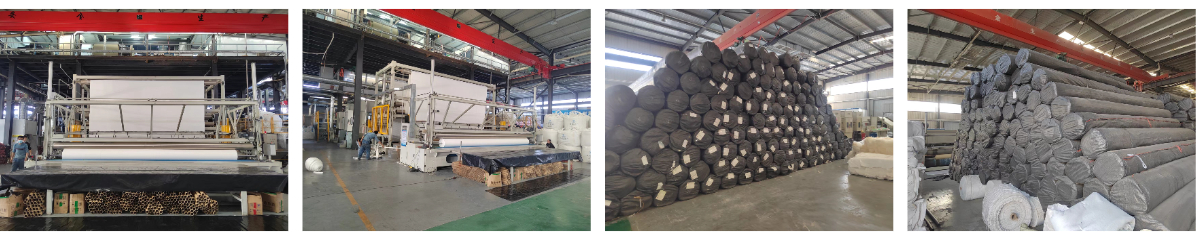
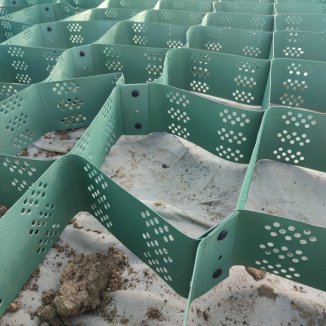
Geotextiles, also known as geotextile fabric, are permeable geosynthetic materials made from synthetic fibers by needlepunching or weaving. As one of the types of new geosynthetic material, geotextiles are produced in the form of a canvas, usually 4-6 meters wide and 50-100 meters long. It is divided into woven geotextiles and non-woven geotextiles.

Function
1. Separation
Needle-punched polyester staple fiber geotextiles are used to separate building materials with different physical properties (such as particle size, distribution, consistency and density), such as soil and sand particles or soil and concrete. This prevents loss or mixing of two or more materials, maintains their overall structure and functionality, and increases the load-bearing capacity of structures.
2. Filtration (reverse filtration)
When water flows from fine-grained soil layers to coarse-grained layers, the excellent air and water permeability of needle-punched polyester staple fiber geotextile allows water to pass through while effectively retaining soil particles, fine sand, small stones, etc., thereby maintaining the stability of soil and hydraulic structures.
3. Drainage
Needle-punched geotextile made of polyester staple fiber has excellent water permeability, forming drainage channels in the soil to remove excess liquids and gases from the soil structure.
4. Reinforcement
Needle-punched geotextile made of polyester staple fiber increases soil tensile strength and deformation resistance, improving the structural stability and quality of the soil.
5. Protection
When water erodes soil, it effectively dissipates, transfers, or decomposes concentrated stress, preventing the soil from collapsing under external forces and protecting the soil.
6. Puncture resistance
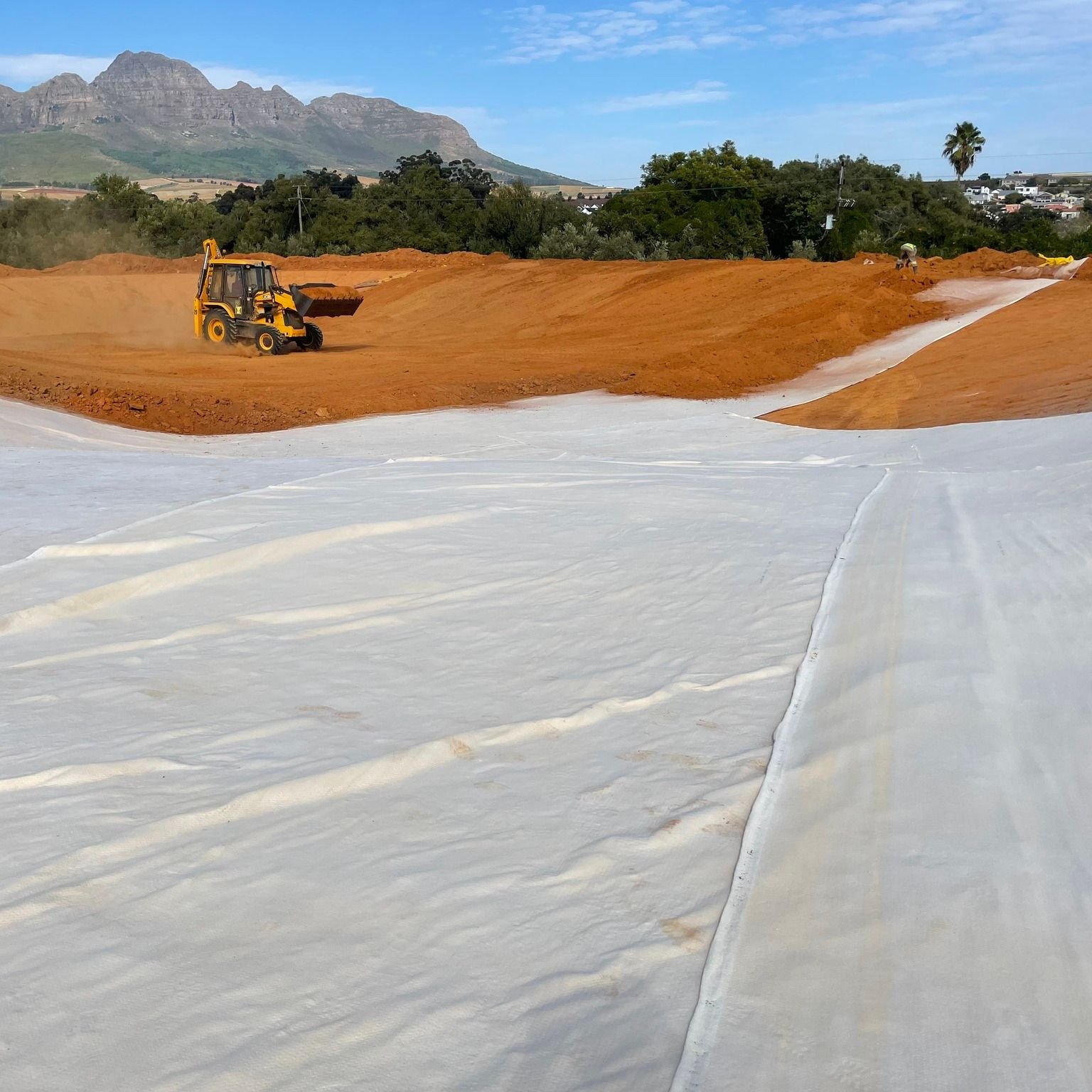
When combined with geomembranes to form composite waterproof and anti-permeation materials, it provides puncture resistance.
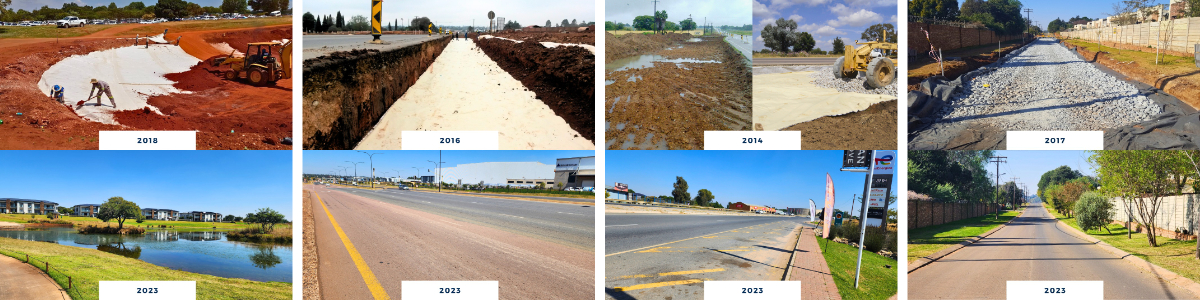
Applications
Widely used in geotechnical engineering for water supply, energy, mining, highway and railway construction:
1. Filter material for separating soil layers;
2. Drainage material for reservoirs, mining enterprises and foundations of high-rise buildings;
3. Material for protection against erosion of river embankments and strengthening of slopes;
4. Reinforcing material for roadbeds of railways, highways and airport runways; stabilizing material for road construction in marshy areas;
5. Insulating material for protection against frost and freezing;
6. Material for preventing cracking of asphalt pavement.

Company Profile
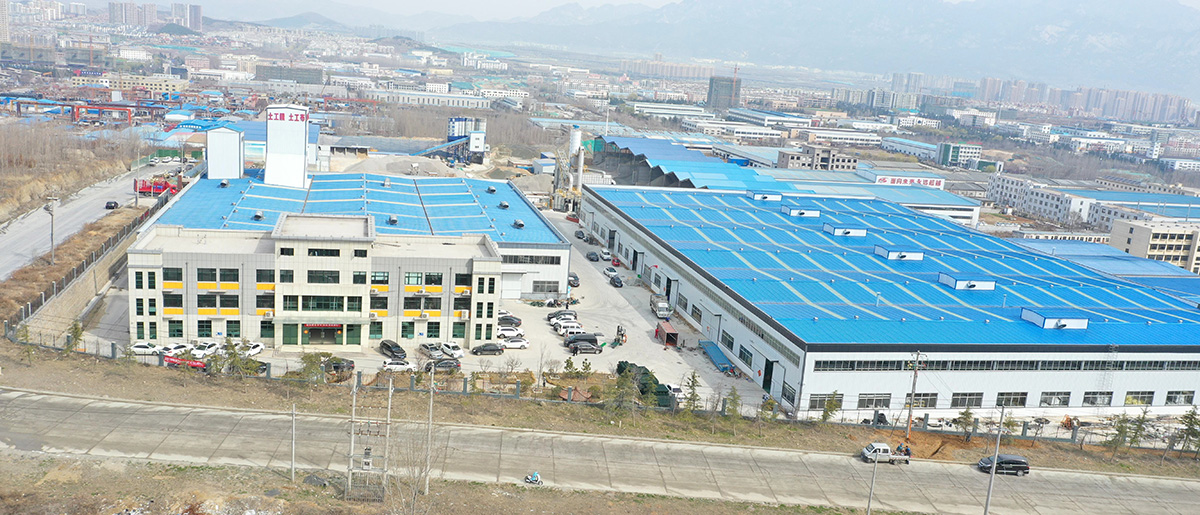
Shandong Yuanpeng Environmental Protection Technology Co., Ltd. was founded in 2022 with a registered capital of RMB 50 million. The company employs over 300 people, occupies a 35,000-square-meter facility, and boasts a professional technical and R&D team. It is a comprehensive enterprise integrating production, sales, and after-sales service.
Our company has successfully completed ISO 9001 quality management system certification. Some of our exported products have received SGS certification and patent certificates.
The company's main markets are Southeast Asia, Europe, and North and South America. Exclusive distributors have been established in Indonesia and Kuwait. Due to continued business expansion, a branch of Taian YPHB, specializing in foreign trade import and export operations, was opened in 2022 in the provincial capital of Jinan.