Many people confuse these materials, but understanding their differences is crucial to making the right choice.
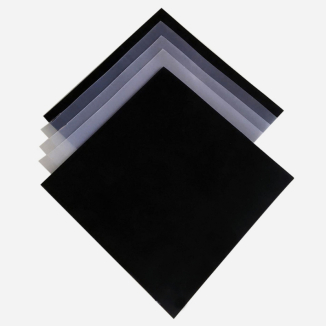
Woven PP Geotextile
1.High strength and low deformation: It has high bearing capacity and provides stable structural support.
2.Easy to install: Lightweight roll design makes transportation, installation and connection easy.
3. Excellent durability: Synthetic fibers are corrosion resistant, ensuring a long service life.
4. Cost effective: Provides excellent value for money as a solution for reinforcement and separation of materials.
Product Details
Woven geotextiles, as their name suggests, are flat mesh materials produced by industrial weaving (similar to burlap or fabric). Synthetic fibrous threads or flat tapes—usually made of polypropylene, polyethylene, or polyester—are interwoven in the longitudinal (warp) and transverse (weft) directions to form the structure.

Main functions and key roles
The main functions of woven geotextiles can be summarized in three words: reinforcement, separation and protection.
Reinforcing function (main advantage)
Principle:Due to its high tensile strength, geotextile redistributes stresses in the soil, limiting lateral displacements and deformations.
Analogy:Similar to reinforcement in concrete, incorporating geotextiles into the soil significantly increases its overall strength and stability.
Application:Reinforcement of foundations on soft soils, strengthening of steep slopes and embankments, backfilling of retaining walls and other engineering solutions.
Split function
Principle:Placed between two different geomaterials (e.g. crushed stone and soft soil) to prevent them from mixing with each other.
Analogy:Like a sofa cover, it allows water to pass through but prevents material particles from mixing.
Application:Separation of the track ballast layer and the base, isolation of the crushed stone base from the soft foundation, prevention of contamination of the upper layers of backfill with base materials and preservation of the overall structural integrity.
Protective function
Principle:Uses its integrity and strength to protect underlying materials from local stress, mechanical damage and erosion.
Application:It is used as a protective layer for geomembranes (waterproofing coatings), preventing their puncture by sharp stones; it is also used as a base layer on river banks and sea coasts to protect the soil from erosion.

Typical Applications
Roads and railways (base of the roadbed):Laid on weak foundations to reinforce and separate layers, preventing uneven settlement.
Dams and slope structures:Placed in layers in the ground to increase slope stability and prevent landslides.
Port and coastal facilities:It is used for reinforcing underwater foundations and as a reinforcing layer in coastal protection structures.
Solid waste landfills:Used as a protective layer for geocomposite drainage mats or geomembranes.
Geotextile pipes / geotextile containers:Woven geotextile is the primary material used in their manufacture, utilizing its high strength and erosion resistance to retain dewatered solids.

Key differences from non-woven geotextiles
| Characteristic | Woven geotextile | Non-woven geotextile |
|---|---|---|
| Manufacturing technology | Woven (interlacing of warp and weft threads) | Needle-punched / thermally bonded (random weave) |
| Structure and appearance | A regular mesh structure similar to burlap | Felt structure similar to woolen fabric |
| Main function | Strengthening, separation, protection | Filtration, drainage, protection |
| Mechanical properties | High tensile strength, low elongation ("hard") | Relatively low tensile strength, high elongation ("flexible") |
| Hydraulic properties | Mainly vertical filtration, weak ability for planar drainage | Three-dimensional pore structure, good water permeability/drainage both in the plane and in the vertical direction |
| Equivalent hole size | Relatively uniform and regular | Heterogeneous, wide variation in pore sizes |
How to make the right choice?
Follow this basic principle
When high strength, deformation control or separation of different soil layers is required → choose [woven geotextiles].
Examples:reinforcement of weak foundations, insulation of road surfaces, stabilization of steep slopes.When drainage, filtration, waterproofing layer protection or filter layer functions are required → choose [non-woven geotextiles].
Examples:Drainage of retaining walls, filter layers of dams, wrapping of drainage trenches, protection of geomembranes.
Often both types are usedin combination, to take advantage of their complementary advantages.
Resume
Woven geotextiles serve as "reinforcement ribs" and "insulation barriers" in geotechnical construction. With high tensile strength and stable structure, it plays an indispensable role in increasing soil stability and preventing mixing of materials. When containment and separation are key requirements of your project, woven geotextiles are the primary material to consider.
Company Profile
Shandong Yuanpeng Environmental Protection Technology Co., Ltd was founded in 2022 with a registered capital of RMB 50 million. The company employs more than 300 employees and its production site occupies 35,000 square meters. Equipped with a professional technical research and development team, Yuanpeng is a comprehensive company integrating production, sales and after-sales service.

Leave your messages


Related News
Main Application Fields of Polyester Geogrid
2026-09-20
Core Advantages of Polyester Geogrid
2026-09-20