tailings pond geomembrane
Core Functions and Mechanisms
1. Primary Anti-Seepage Layer
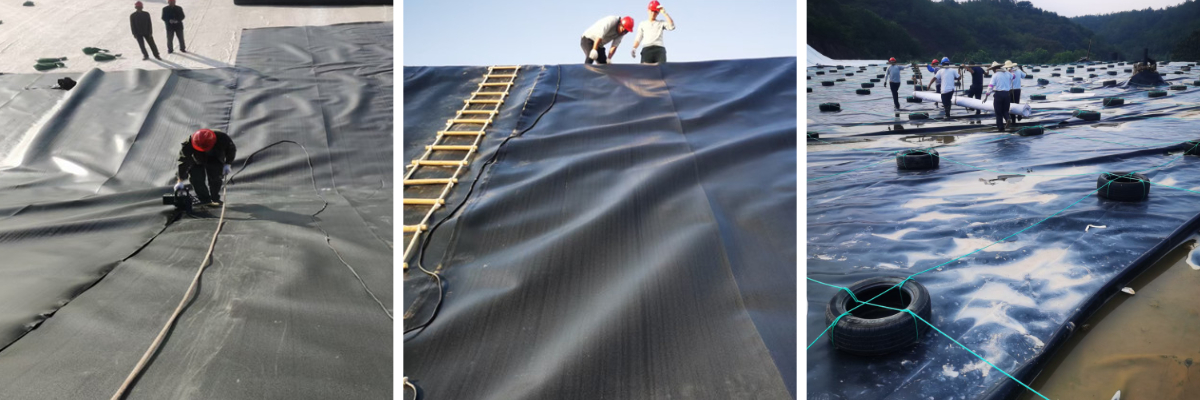
Geomembranes are installed at the bottom, slopes, and upstream face of the slag-retaining dam of tailings ponds, forming the first and most critical barrier against leachate leakage. With a permeability coefficient as low as 1×10⁻¹³ cm/s, they effectively block liquid infiltration.
2. Excellent Chemical Resistance
Tailings water often contains acids, alkalis, salts, and organic flotation reagents. HDPE geomembranes exhibit outstanding chemical inertness, enabling long-term stable performance within a pH range of 2–12 without swelling or degradation.
A tailings pond geomembrane is a high-performance impermeable barrier primarily made of high-density polyethylene (HDPE), designed to prevent the leakage of harmful leachates containing heavy metals and mineral processing chemicals from tailings ponds, thereby protecting groundwater and the surrounding ecological environment.
It acts as an "invisible protective layer" for tailings ponds and plays a crucial role in mining environmental protection engineering. Given the complex composition and strong corrosiveness of tailings slurry, as well as the long-term exposure to high pressure and settlement-prone conditions, geomembranes must possess exceptional impermeability, chemical resistance, and mechanical strength to ensure stable operation over decades.

I. Core Functions and Mechanisms
1. Primary Anti-Seepage Layer
Geomembranes are installed at the bottom, slopes, and upstream face of the slag-retaining dam of tailings ponds, forming the first and most critical barrier against leachate leakage. With a permeability coefficient as low as 1×10⁻¹³ cm/s, they effectively block liquid infiltration.
2. Excellent Chemical Resistance
Tailings water often contains acids, alkalis, salts, and organic flotation reagents. HDPE geomembranes exhibit outstanding chemical inertness, enabling long-term stable performance within a pH range of 2–12 without swelling or degradation.
3. High Mechanical Strength and Puncture Resistance
Under conditions of high stacking pressure and potential uneven foundation settlement, geomembranes must withstand significant tensile stress. HDPE membranes with a thickness of 1.5 mm–2.0 mm are typically used, offering a tensile strength exceeding 25 MPa, effectively resisting penetration by sharp stones and structural deformation.
4. Durability and Anti-Aging Design
Black HDPE membranes, incorporating carbon black and other UV absorbers, can be used in open-air environments for over 20 years. They maintain stable performance even under intense sunlight and in regions with large temperature variations.
5. Auxiliary Repair and Emergency Leak Sealing
For existing tailings ponds experiencing localized leakage, geomembranes can be applied as surface patches or cover layers to rapidly restore anti-seepage functionality, providing an economical and efficient method for defect remediation.

II. Common structural configurations: composite geomembranes
To enhance overall protective performance, composite geomembranes with either a "two fabric–one film" or "one fabric–one film" structure are widely used in engineering applications:
· The core layer consists of HDPE (high-density polyethylene) waterproofing membrane, providing primary impermeability;
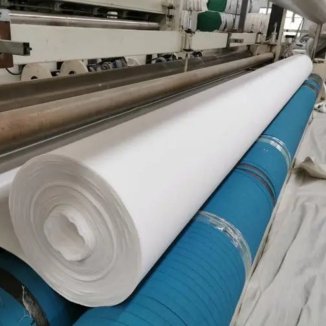
· Nonwoven fabrics made of polyester or polypropylene are laminated on one or both sides of the membrane to protect the membrane layer, increase friction, and prevent slippage;
· The integrated structure also improves drainage performance and accommodates foundation deformation.
This sandwich-like design significantly enhances construction safety and long-term stability, making it particularly suitable for steep slopes or areas with complex geological conditions.