
chemical resistant geomembrane
Exceptional Chemical Resistance
HDPE geomembranes exhibit excellent resistance to most inorganic acids (e.g., sulfuric acid, hydrochloric acid), alkalis (e.g., sodium hydroxide), and salt solutions, maintaining structural integrity even under extreme pH conditions ranging from 1 to 13.
· Particularly suitable for highly corrosive applications such as electroplating wastewater ponds, neutralization tanks, sedimentation basins, and dissolution tanks.
· Care should be taken to avoid contact with aromatic hydrocarbons (e.g., benzene, xylene) and halogenated hydrocarbons (e.g., carbon tetrachloride), as these substances may cause swelling or degradation.
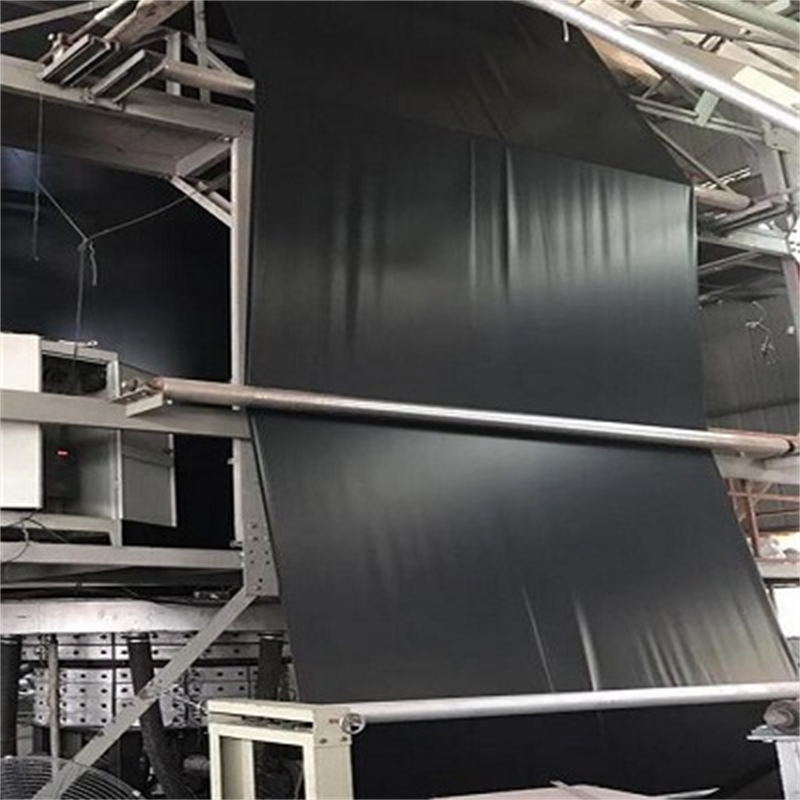
Chemical-resistant geomembranes are high-performance impermeable materials primarily made from high-density polyethylene (HDPE), specifically designed to withstand highly corrosive chemical substances. They provide long-term impermeable barriers in high-risk areas such as chemical plants, storage tank zones, and reaction pools, preventing toxic and hazardous substances from infiltrating soil and groundwater, thereby safeguarding environmental and operational safety.
These geomembranes are hailed as "the shield on the chemical battlefield," serving an irreplaceable isolation function in industrial sectors such as petrochemicals, pharmaceuticals, and fine chemicals. Given that chemical environments often involve strong acids, strong alkalis, organic solvents, and high-temperature liquids, the impermeable system must possess exceptional chemical stability, anti-permeation capability, and structural durability to withstand long-term exposure to corrosive conditions.

I. Core Performance Advantages
1. Exceptional Chemical Resistance
HDPE geomembranes exhibit excellent resistance to most inorganic acids (e.g., sulfuric acid, hydrochloric acid), alkalis (e.g., sodium hydroxide), and salt solutions, maintaining structural integrity even under extreme pH conditions ranging from 1 to 13.
· Particularly suitable for highly corrosive applications such as electroplating wastewater ponds, neutralization tanks, sedimentation basins, and dissolution tanks.
· Care should be taken to avoid contact with aromatic hydrocarbons (e.g., benzene, xylene) and halogenated hydrocarbons (e.g., carbon tetrachloride), as these substances may cause swelling or degradation.
2. Ultra-Low Permeability
With a permeability coefficient as low as ≤1.0×10⁻¹³ cm/s, HDPE geomembranes virtually eliminate liquid migration, effectively containing industrial effluents containing heavy metals and organic pollutants and preventing the spread of contamination.
3. High Strength and Resistance to Environmental Stress Cracking
With a elongation at break reaching up to 700%, the material offers excellent elasticity and adaptability to deformation, capable of withstanding stresses induced by foundation settlement and temperature fluctuations. Additionally, the environmental stress crack resistance (F20) is ≥1500 hours, ensuring no propagation of microcracks under long-term loading.
4. Superior Aging and UV Resistance
When stabilized with additives such as carbon black, the material can be exposed to outdoor conditions for 50–70 years. Its outstanding resistance to ultraviolet radiation makes it ideal for exposed applications such as outdoor storage tank areas and evaporation ponds.
5. Flexible Installation and Reliable Sealing
Utilizing hot-melt dual-track welding technology, the weld strength reaches over 90% of the base material. Weld integrity can be verified through vacuum testing or spark testing, ensuring a completely leak-free system.

II. Typical Applications
1. Chemical Reactor and Liquid Storage Tank Liners: Used as the primary impermeable barrier for tank seepage prevention, often combined with a geotextile underlayer and an upper protective layer to form a composite liner system, enhancing overall safety.
2. Oil Tank Foundation and Pipeline Anti-seepage Layer: Laying 2.0mm HDPE geomembrane at the bottom of oil storage tanks prevents oil leakage and infiltration, serving as a critical component for environmental impact assessment and acceptance in petrochemical projects.
3. Sewage Treatment Tanks and Equalization Tanks: Employed for impermeable lining in chemical plant wastewater treatment systems, especially suitable for sites with uneven foundations or potential settlement risks.
4. Evaporation Ponds and Waste Heap Leaching Ponds: Applied in coal chemical and metallurgical industries for impermeable lining at the bottom of high-salinity wastewater evaporation ponds, preventing deep soil contamination.