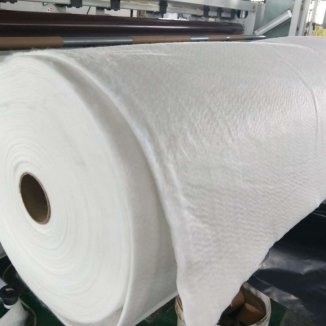
smooth geomembrane
Key Features Overview
• Exceptional Anti-Seepage Performance: With a permeability coefficient as low as ≤1.0×10⁻¹³ cm/s, it almost completely blocks the infiltration of water, gases, and hazardous liquids, making it the preferred choice for critical engineering projects such as landfills and sewage treatment ponds.
• High Resistance to Chemical Corrosion: Capable of withstanding erosion from various chemicals including acids, alkalis, salts, and oils, it is suitable for highly corrosive environments such as chemical plants, electroplating tanks, and tailings ponds.
Smooth geomembrane is a geosynthetic material made primarily from high-density polyethylene (HDPE), featuring a smooth surface and excellent waterproofing properties. It is widely used in various anti-seepage engineering applications and serves as an essential core barrier material in modern civil and environmental engineering projects.
It functions like an "invisible raincoat" for the earth, providing long-term protection of soil and water resources in complex environments by virtue of its extremely low permeability and outstanding chemical stability. With a smooth and flat surface, it achieves highly effective seepage control primarily through the inherent dense structure of the material itself, making it suitable for applications where friction resistance is not critical but high sealing performance is required.

I. Key Features Overview
• Exceptional Anti-Seepage Performance: With a permeability coefficient as low as ≤1.0×10⁻¹³ cm/s, it almost completely blocks the infiltration of water, gases, and hazardous liquids, making it the preferred choice for critical engineering projects such as landfills and sewage treatment ponds.
• High Resistance to Chemical Corrosion: Capable of withstanding erosion from various chemicals including acids, alkalis, salts, and oils, it is suitable for highly corrosive environments such as chemical plants, electroplating tanks, and tailings ponds.
• Outstanding Anti-Aging Capability: When compounded with carbon black and UV stabilizers, it remains stable in outdoor conditions for over 50 years, with a wide operating temperature range from -70°C to 110°C.
• High Mechanical Strength: Features excellent tensile, tear, and puncture resistance, with elongation at break reaching up to 700%, enabling it to accommodate uneven foundation settlement.
• Convenient and Efficient Installation: Enables seamless joints through hot-melt welding, delivering high weld strength, short construction cycles, and ease of quality inspection.

II. Main Applications
• Environmental Engineering: Bottom liners for municipal solid waste landfills, leachate equalization tanks, and hazardous waste disposal sites, preventing pollutants from infiltrating groundwater.
• Water Conservancy: Anti-seepage linings for reservoirs, canals, artificial lakes, and water storage tanks, improving water resource utilization efficiency.
• Municipal and Building Construction: Waterproofing for underground garage rooftops, moisture control in tunnels, and isolation layers for rooftop gardens, enhancing building durability.
• Agriculture and Aquaculture: Anti-seepage foundations for aquaculture facilities such as fishponds, shrimp ponds, and salt pans; environmentally friendly and non-toxic, with no impact on water quality.
• Industrial Facilities: Anti-seepage linings for high-risk areas such as oil tank bases, chemical reaction pools, and evaporation ponds, ensuring production safety.