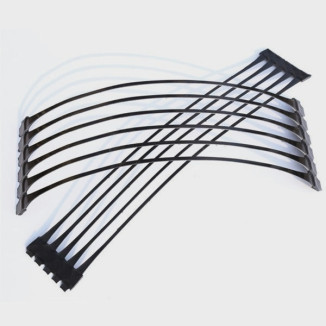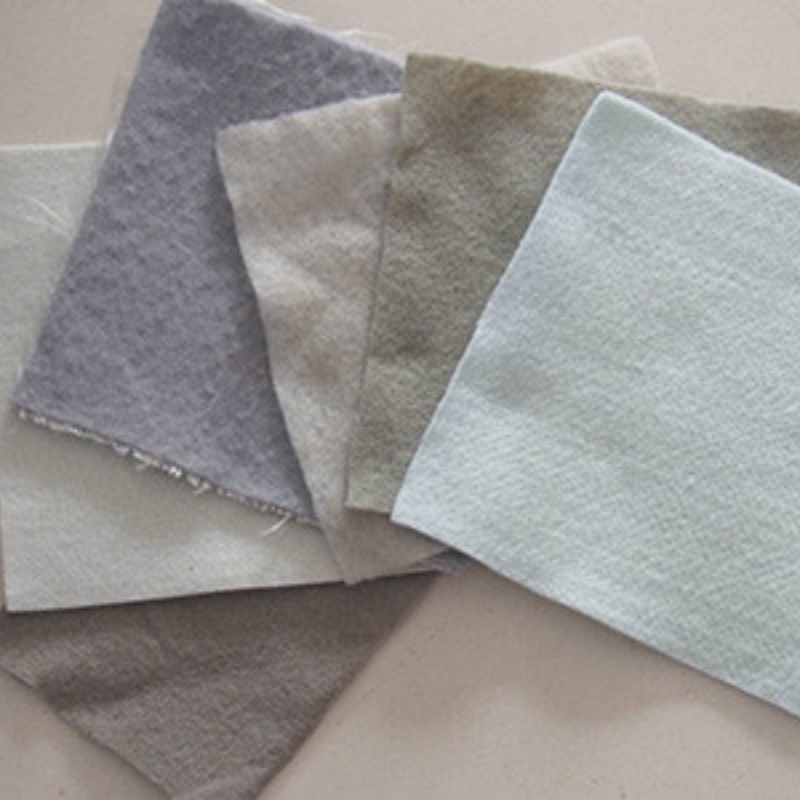

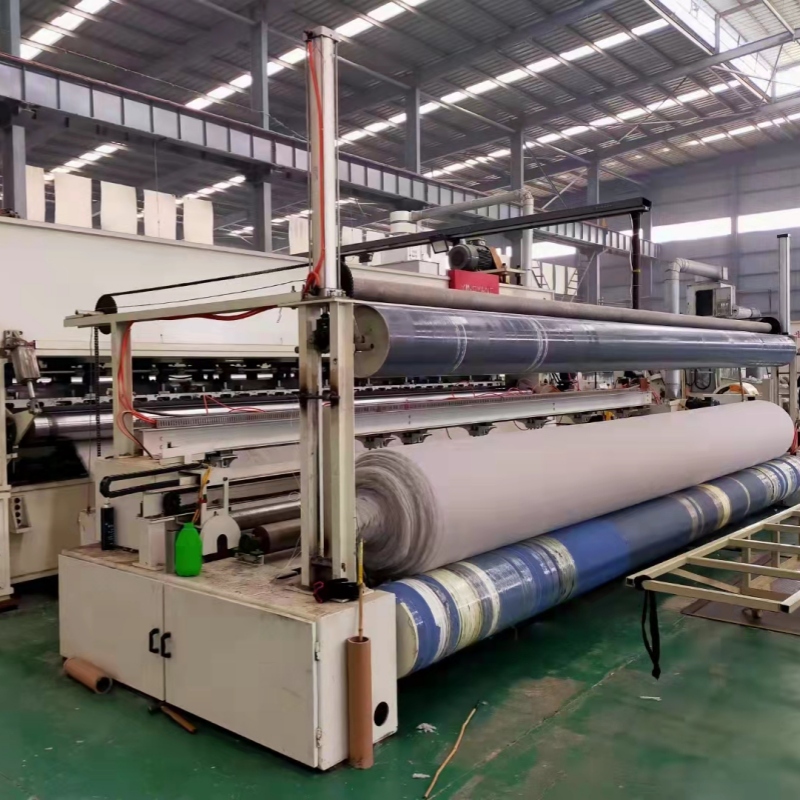
Non-woven Polyester Geotextile
Core Performance Characteristics
1. High Strength and Reinforcement Capability
The three-dimensional network structure formed by polyester filaments provides the material with excellent tensile strength and creep resistance. It effectively distributes loads in soft soil foundations, restricts lateral soil displacement, and enhances overall stability.
2. Superior Filtration and Drainage Function
The porous, permeable structure allows water to pass through smoothly while preventing soil particle loss, achieving a "water-permeable but soil-retentive" filtration effect. It is widely used in drainage systems for slope protection and retaining walls.
Non-woven polyester geotextiles are high-performance geosynthetic materials primarily made from polyester fibers (PET), manufactured through non-woven processes such as needle punching, thermal bonding, or chemical bonding. They possess excellent properties including high strength, corrosion resistance, anti-aging capability, good permeability, and ease of installation, and are widely used in various civil, hydraulic, and environmental engineering applications.

I. Core Performance Characteristics
1. High Strength and Reinforcement Capability
The three-dimensional network structure formed by polyester filaments provides the material with excellent tensile strength and creep resistance. It effectively distributes loads in soft soil foundations, restricts lateral soil displacement, and enhances overall stability.
2. Superior Filtration and Drainage Function
The porous, permeable structure allows water to pass through smoothly while preventing soil particle loss, achieving a "water-permeable but soil-retentive" filtration effect. It is widely used in drainage systems for slope protection and retaining walls.
3. Outstanding Environmental Resistance
· Resistant to high temperatures up to 230°C, maintaining structural integrity under elevated temperatures;
· Excellent UV resistance, suitable for long-term outdoor exposure;
· Resistant to acids, alkalis, and microbial degradation, making it suitable for complex geological and chemical environments.
4. Isotropy and Construction Adaptability
Randomly oriented fibers ensure uniform performance in all directions. The material conforms well to uneven surfaces, accommodates settlement deformation, and reduces the risk of damage during construction.

II. Main Application Areas
1. Transportation Infrastructure
Used for subgrade separation and reinforcement in highways, railways, and airport runways to prevent gravel from sinking into soft soil layers, delay reflective cracking, and enhance pavement durability.
2. Water Conservancy Projects
Serves as a filter layer and drainage body in embankments, reservoirs, and riverbank protection structures, preventing seepage-induced damage and soil erosion, thereby ensuring engineering safety.
3. Environmental Protection and Municipal Engineering
Acts as part of the impermeable system in landfills and tailings ponds, installed above and below geomembranes to provide protection, filtration, and drainage functions.
4. Soft Soil Treatment and Port Engineering
Applied in soft ground reinforcement, coastal dikes, seaports, and wharf projects to improve load-bearing capacity and control differential settlement.
5. Ecological Restoration and Landscape Gardening
Integrated with vegetated slope protection techniques to achieve combined slope stability and ecological greening, widely used in mountain restoration and urban landscape development.