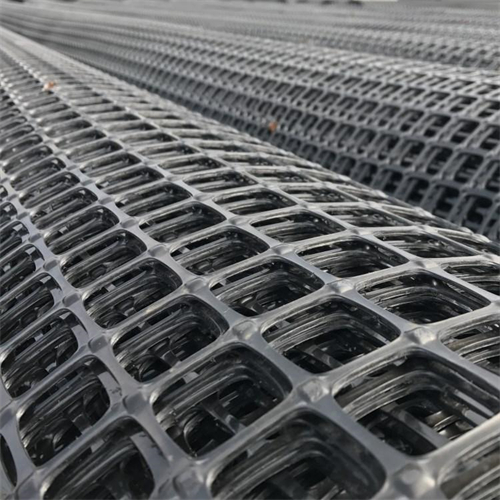
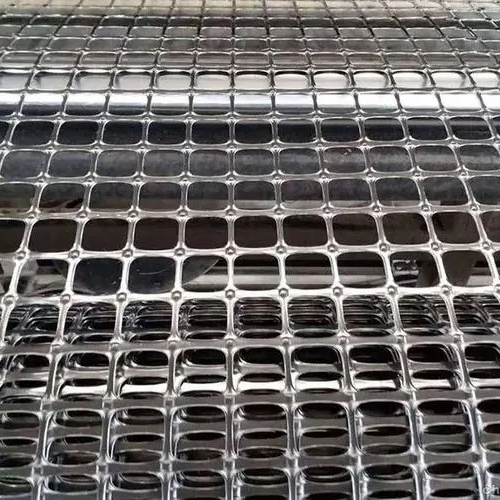
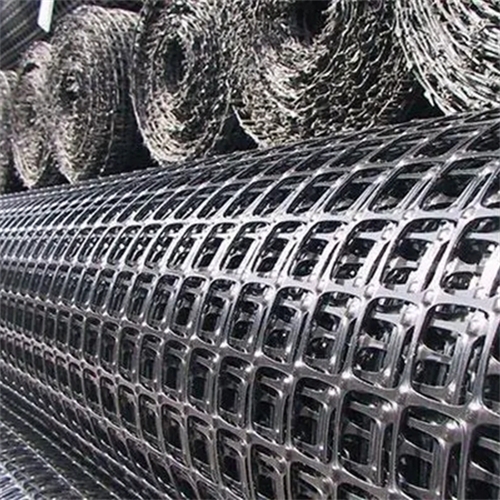
Biaxially Oriented Plastic Geogrid
·Biaxial Equal Strength: Uniform bearing capacity in longitudinal and transverse directions.
·Low Elongation & Low Creep: Keep stable performance under long-term load.
·High Interlocking Performance: Perfect occlusion with soil and aggregate, greatly improve foundation bearing capacity.
·Chemical Stability: Resist corrosion, acid, alkali and biological erosion.
Biaxially Oriented Plastic Geogrid
1 Product Introduction
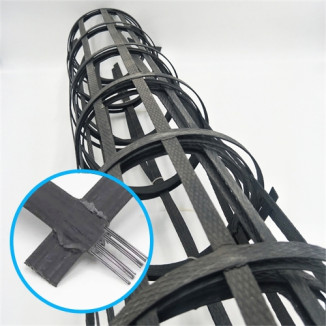
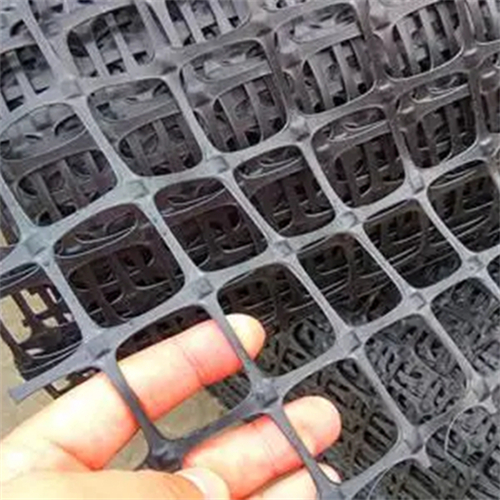
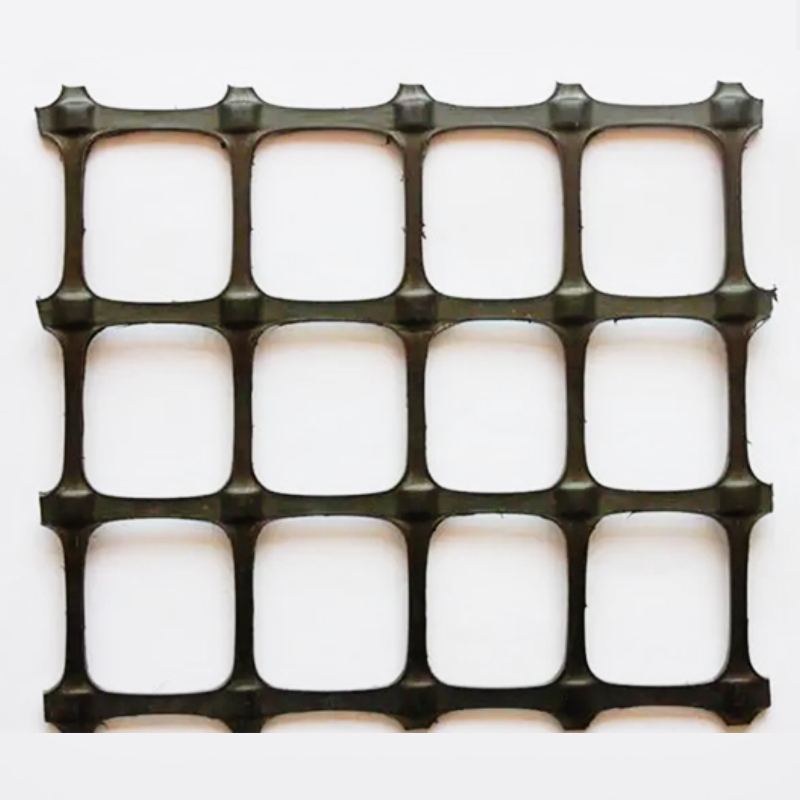
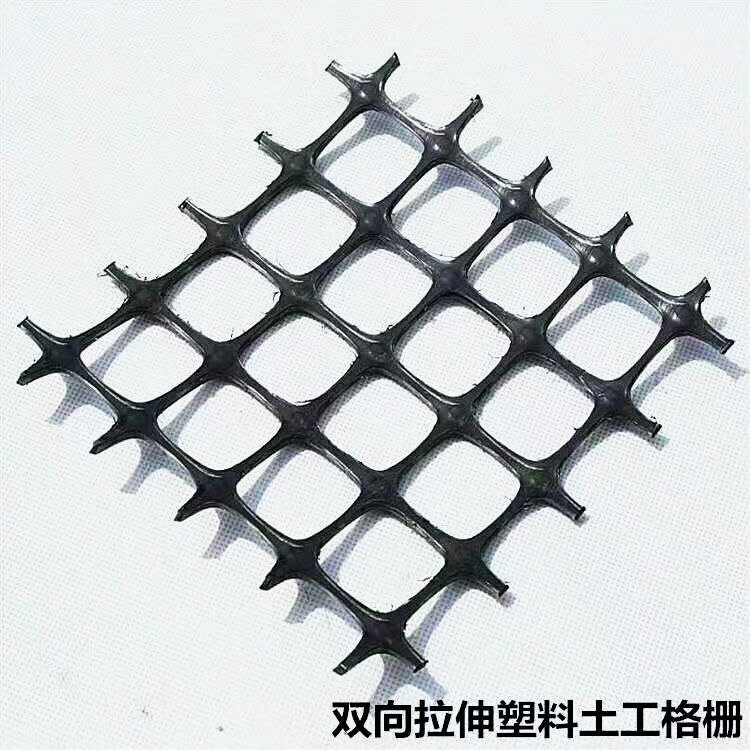
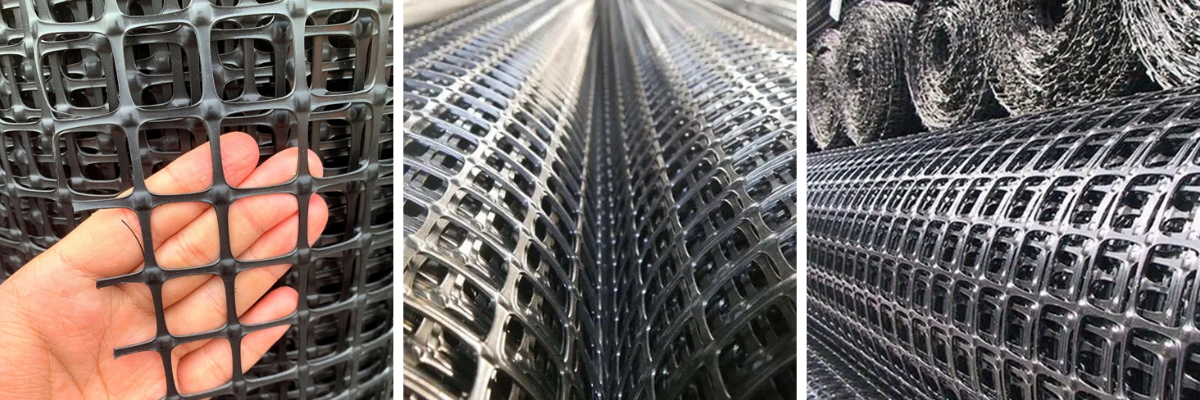
Biaxially Oriented Plastic Geogrid is manufactured mainly from polypropylene (PP), blended with anti-aging and anti-creep additives. It is produced through extrusion, punching, then simultaneous stretching in both longitudinal and transverse directions.
Molecular chains are oriented along both axes, delivering balanced tensile strength in two directions, low elongation and good dimensional stability. It interlocks with granular fill to confine aggregates, improving the integrity and bearing capacity of subgrade. It is widely used for reinforcement of highway and railway subgrades, parking lots, storage yards, airport runways, pavement base courses, as well as slope protection.
2 Specifications
Table 1 biaxial geogrid — standard grades (GB/T 17689-2008, Table 3)
Grade | Tensile strength | Load at 2 % strain | Load at 5 % strain | Nominal elongation |
TGSG1515 | ≥15.0 / ≥15.0 | ≥5.0 / ≥5.0 | ≥7.0 / ≥7.0 | ≤15.0 / ≤13.0 |
TGSG2020 | ≥20.0 / ≥20.0 | ≥7.0 / ≥7.0 | ≥14.0 / ≥14.0 | ≤15.0 / ≤13.0 |
TGSG2525 | ≥25.0 / ≥25.0 | ≥9.0 / ≥9.0 | ≥17.0 / ≥17.0 | ≤15.0 / ≤13.0 |
TGSG3030 | ≥30.0 / ≥30.0 | ≥10.5 / ≥10.5 | ≥21.0 / ≥21.0 | ≤15.0 / ≤13.0 |
TGSG3535 | ≥35.0 / ≥35.0 | ≥12.0 / ≥12.0 | ≥24.0 / ≥24.0 | ≤15.0 / ≤13.0 |
TGSG4040 | ≥40.0 / ≥40.0 | ≥14.0 / ≥14.0 | ≥28.0 / ≥28.0 | ≤15.0 / ≤13.0 |
TGSG4545 | ≥45.0 / ≥45.0 | ≥16.0 / ≥16.0 | ≥32.0 / ≥32.0 | ≤15.0 / ≤13.0 |
TGSG5050 | ≥50.0 / ≥50.0 | ≥17.5 / ≥17.5 | ≥35.0 / ≥35.0 | ≤15.0 / ≤13.0 |
Table 2 Grade-by-grade detail: apertures, ribs, nodes, raw material, roll size, standard
Item | |
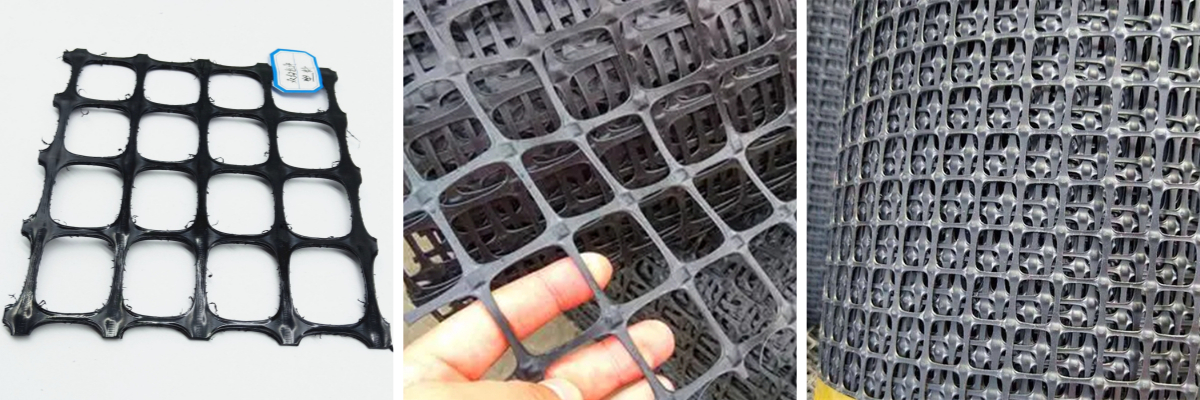
Aperture | Near-square openings with rounded corners, typically 30–50 mm, uniform across the roll (standard requires uniform apertures, not a fixed size) |
Ribs | Drawn ribs, rectangular section; MD and CD ribs comparable in equal-strength grades; rib thickness typically 1.0–2.5 mm by grade |
Nodes (junctions) | Integral — formed by the two draws on the same sheet, no welded/woven interface; node efficiency typically ≥ 85–90 % of rib strength |
Roll size | Width 1.0 / 2.0 / 3.0 / 4.0 m (to 6.0 m on request); length 50 m (30–100 m); no negative width tolerance; mass 300–550 g/m² by grade |
3 Applications
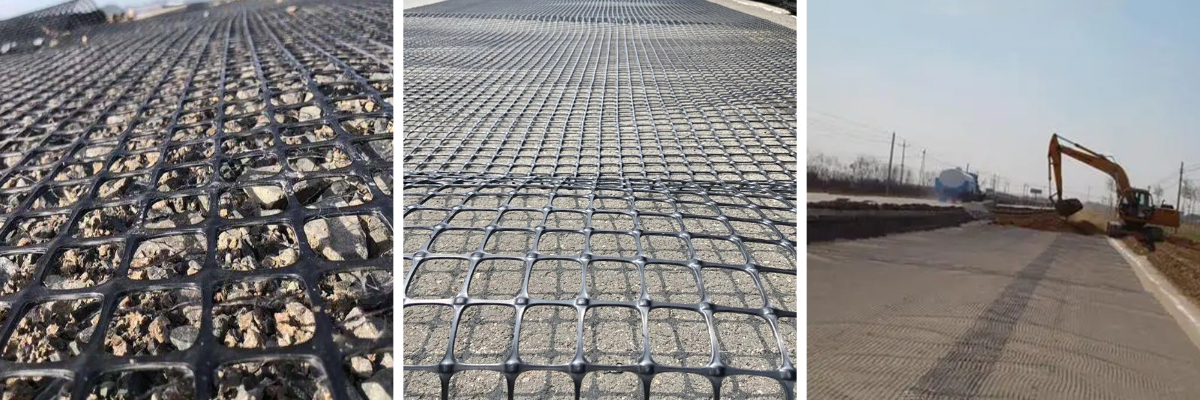
The grid works as lateral restraint and tensile membrane in both directions: granular fill locks into the apertures, the base is confined and lateral spreading prevented — bearing capacity rises, differential settlement falls. Two-way action makes roll laying direction far less critical than for uniaxial grid.
Table 3 Typical applications and grade selection
Application | Function | Typical grade | Key point |
Road / railway base course | Lateral restraint of granular base | TGSG3030–TGSG5050 | At subgrade/base interface |
Working platform, hardstanding | Two-way restraint, random loading | TGSG3030–TGSG5050 | One layer usually sufficient |
Soft ground embankment base | Tensile membrane, confines squeeze | TGSG4040–TGSG5050 | HDPE if soil is aggressive |
Airport apron, container yard | Distributes heavy wheel loads | TGSG4545–TGSG5050 | Higher grade for repeated loads |
Slope protection / secondary reinforcement | Surface restraint above uniaxial grid | TGSG1515–TGSG4040 | Pin; lay orthogonal to uniaxial layer |
Landfill cover, mine roof mesh | Crack control, roof support | TGSG3030–TGSG5050 | HDPE in leachate / saline sites |
4 Installation
1. Sequence: ground treatment → levelling → setting out → laying & tensioning → overlapping & tying → anchoring → backfill & compaction. Surface level, drained, no sharp protrusions. Unroll with any main stress direction (normally parallel to a road axis); biaxial tolerates rotation but avoid needless cross-laying of rolls.
2. Lay flat, tension by hand or beam, remove wrinkles; fix with U-pins at 1.5–2.0 m. Overlap panels 15–20 cm; tie or clip laps so they cannot slip; stagger laps between layers.
3. Backfill in layers of 10–20 cm with graded, sharp-free fill; no plant traffic on the exposed grid; light equipment first, then heavier passes; keep ≥ 15 cm fill over the grid and check no rib is punctured. Inspect laps, orientation, pinning and damage before covering; repair tears with patches lapped ≥ 20 cm; photo-record before concealment. Cover promptly (UV embrittles PP); store rolls under cover.
5 FAQ
1. Q: What is the difference between biaxial and uniaxial plastic geogrid?
A: Biaxial geogrid has balanced strength in both directions, suitable for subgrade bearing and dispersion; uniaxial one focuses on high longitudinal strength, more for retaining walls and steep slope reinforcement.
2. Q: Can biaxial plastic geogrid be used on soft soil foundation?
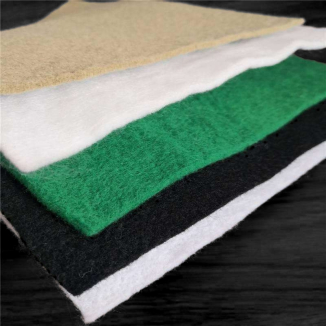
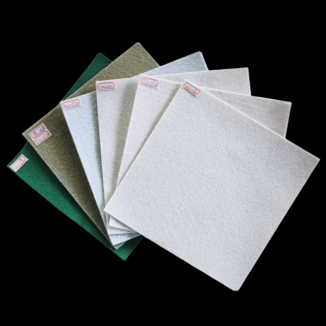
A: Yes. It restricts lateral spread of fill, reduces differential settlement and improves overall bearing capacity. It is usually matched with geotextile for separation.
3. Q: What temperature range can PP biaxial geogrid withstand?
A: Normal working range is -20℃ ~ 60℃. Add UV-stabilized formulation if laid in long-term exposed conditions.