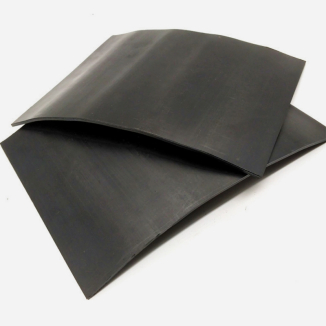
Polyester Non-Woven Geotextile
Core Features
1. High Strength and Reinforcement Capability
The three-dimensional network fiber structure provides excellent tensile strength and creep resistance. It outperforms short-fiber geotextiles at the same unit weight, effectively distributing soil stress and enhancing foundation stability.
2. Efficient Drainage and Filtration Function
With high porosity and a loose structure, the material offers superior vertical and planar permeability. It allows water to pass through while preventing soil particle loss, achieving "drainage without soil erosion."
Polyester non-woven geotextile is a nonwoven geosynthetic material primarily made from polyester filament fibers (PET) through a needle-punched manufacturing process. It features high strength, corrosion resistance, anti-aging properties, and excellent water permeability, and is widely used in civil engineering and environmental protection projects.

I. Core Features
1. High Strength and Reinforcement Capability
The three-dimensional network fiber structure provides excellent tensile strength and creep resistance. It outperforms short-fiber geotextiles at the same unit weight, effectively distributing soil stress and enhancing foundation stability.
2. Efficient Drainage and Filtration Function
With high porosity and a loose structure, the material offers superior vertical and planar permeability. It allows water to pass through while preventing soil particle loss, achieving "drainage without soil erosion."
3. Exceptional Weather Resistance
· Withstands high temperatures up to 230°C, maintaining structural integrity in elevated temperature environments;
· High UV resistance, suitable for long-term outdoor exposure;
· Resistant to acids, alkalis, and microbial degradation, making it suitable for complex chemical environments.
4. Good Flexibility and Adaptability
The material is soft and elastic, conforming well to uneven surfaces. It accommodates settlement and deformation, reducing the risk of damage during construction.

II. Main Application Areas
1. Hydraulic Engineering
Used in anti-filtration layers and seepage control systems for dam and riverbank slope protection, preventing seepage-induced damage and soil erosion.
2. Transportation Infrastructure
Installed in road and railway subgrades to provide separation, reinforcement, and drainage functions, preventing issues such as frost heave and reflective cracking.
3. Environmental Engineering
Used as upper and lower protective layers of the impermeable membrane in landfills, providing both drainage and filtration functions to prevent leachate from contaminating groundwater.
4. Soft Soil Treatment and Port Engineering
Used in soft soil foundation reinforcement, beach revetments, seaport terminals, and similar projects to enhance load-bearing capacity and control differential settlement.
5. Ecological Slope Protection
Integrated with vegetation planting techniques, enabling simultaneous slope stabilization and greening; widely applied in mountain restoration and urban landscape projects.