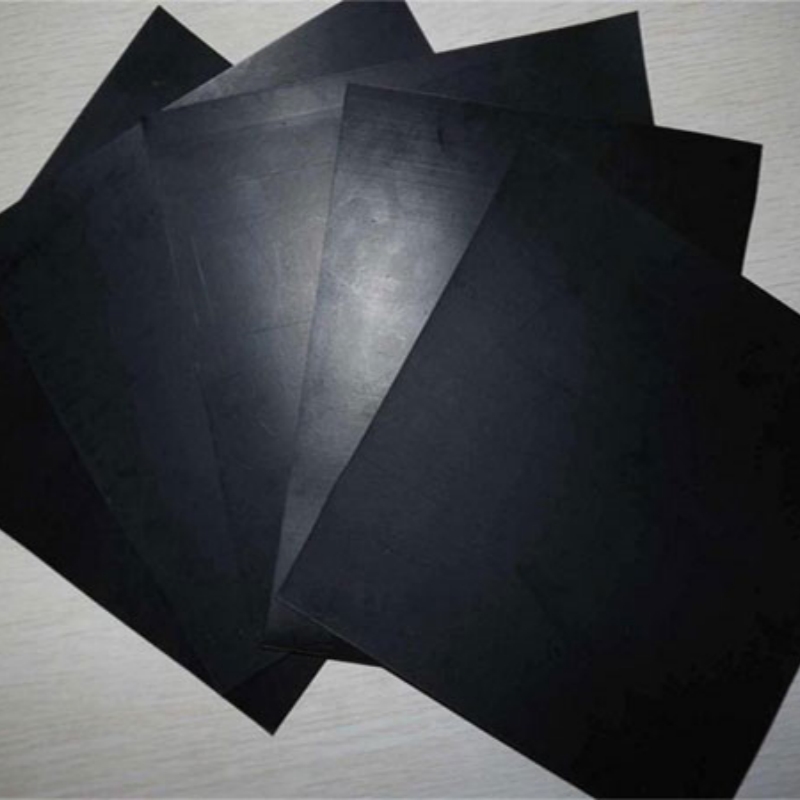
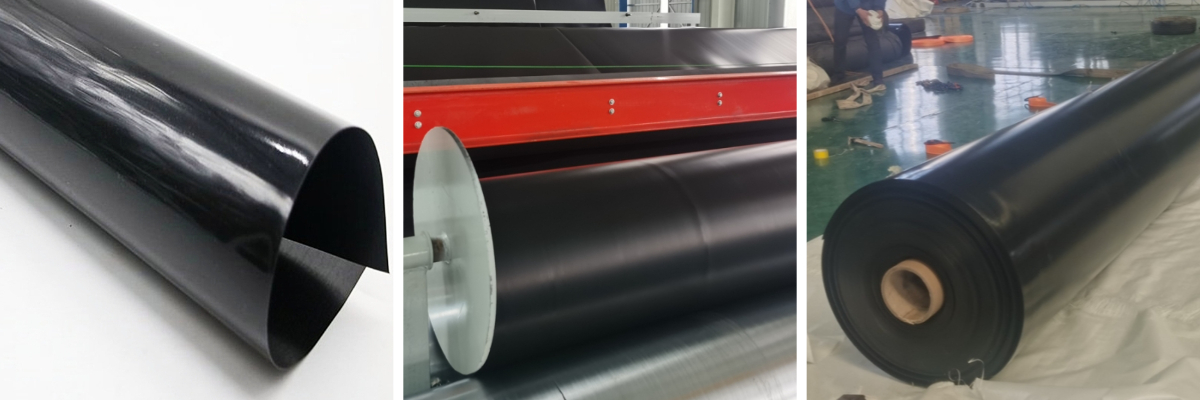
landfill geomembrane
▪ Absolute barrier: hydraulic conductivity effectively that of the polymer itself, independent of compaction, moisture content or settlement — the failure mode of a clay liner;
▪ Deformation tolerance: CJ/T 234 sets ≥ 700 % break elongation and ≥ 300 h environmental stress-crack resistance, so the membrane follows differential settlement of the waste mass without tearing;
▪ Mechanical toughness: yield strength 22 N/mm and puncture 480 N at 1.5 mm resist gravel, stone and construction traffic before the protection geotextile is placed;
▪ Ageing resistance: decades of service under cover; 1600 h UV exposure retains ≥ 50 % of standard OIT;
▪ Chemical resistance: resistant to leachate over the full pH range, to the organic acids and to the salts present in MSW leachate — the property EVA and PVC do not have;
Landfill Geomembrane
1 What a Landfill Geomembrane Is — and Which Polymer You May Use
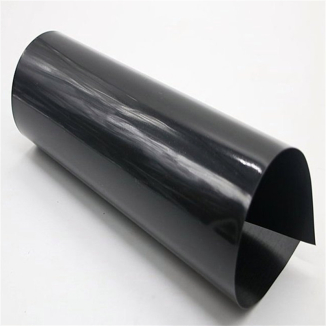
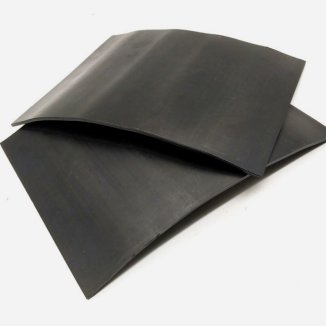
A landfill geomembrane is the low-permeability barrier in the composite liner of a sanitary landfill: it keeps leachate out of groundwater and rainfall out of the waste mass. The material is almost always high-density polyethylene — HDPE, or LLDPE where flexibility is needed. Chinese practice names it directly: GB/T 51403-2021 §3.1.2 lists the permitted liner materials and HDPE geomembrane stands first, and the only product standard referenced for it is CJ/T 234 (HDPE) or CJ/T 276 (LLDPE for landfills). EVA is not on that list. EVA softens at lower temperature, swells in solvent-rich liquids and has weaker environmental stress-crack resistance — the three properties leachate attacks hardest — so it is never accepted as the primary barrier of a landfill, whatever its thickness. This note therefore describes the HDPE / LLDPE membrane that landfill work actually specifies. HDPE is chosen because it combines a permeability below 1×10⁻¹³ g·cm/(cm²·s·Pa), yield strength 22 N/mm at 1.5 mm, resistance to the full pH range of leachate, and carbon-black stabilisation that gives a design life of decades under cover.
2 Manufacturing Process
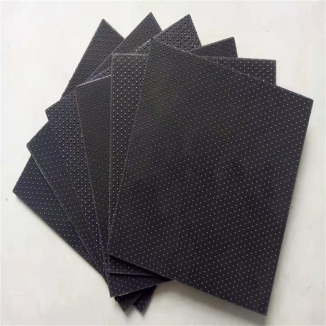
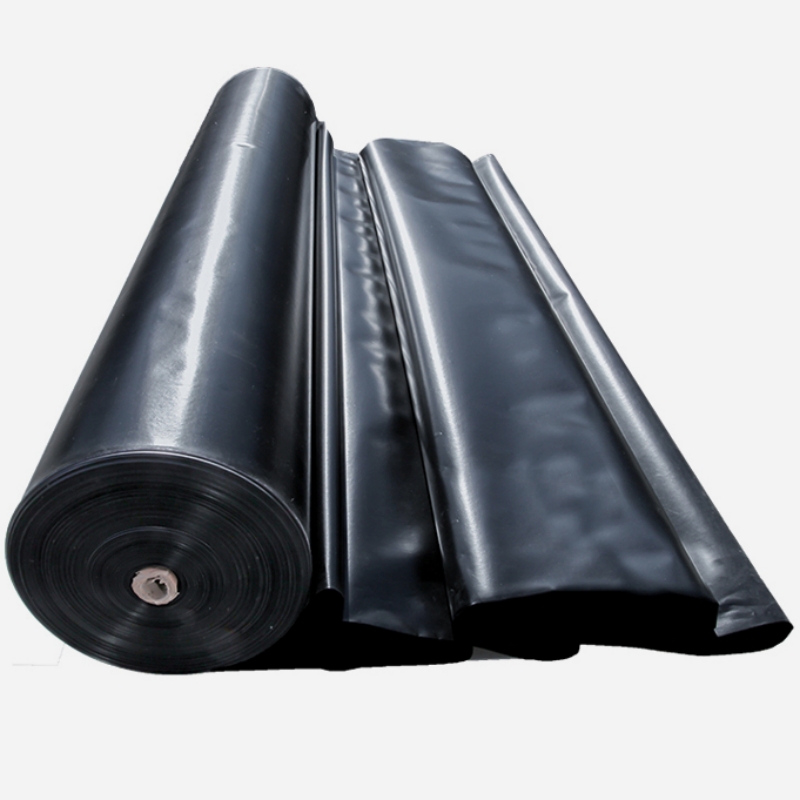
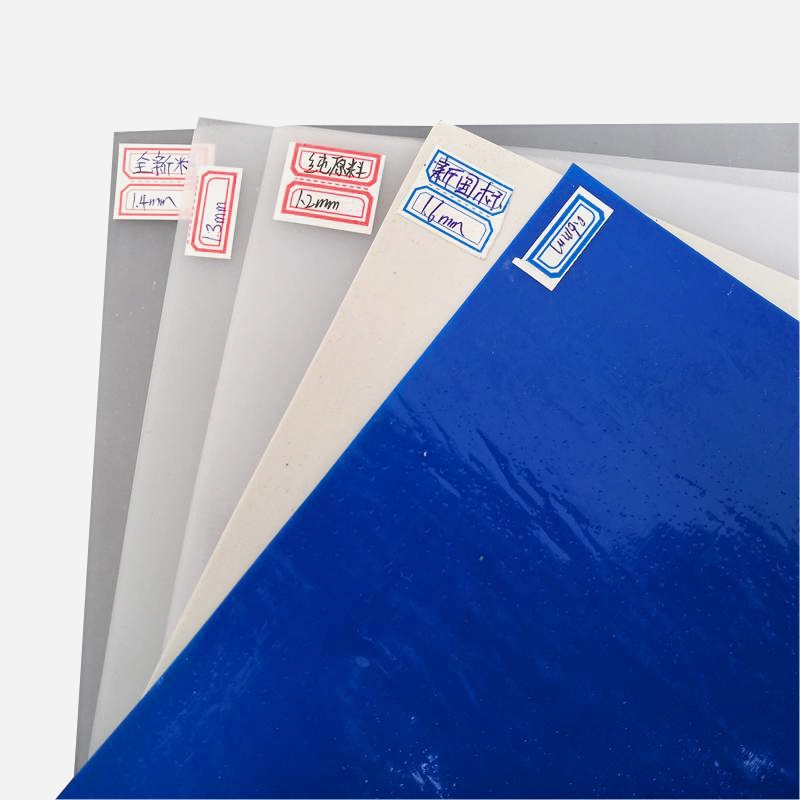
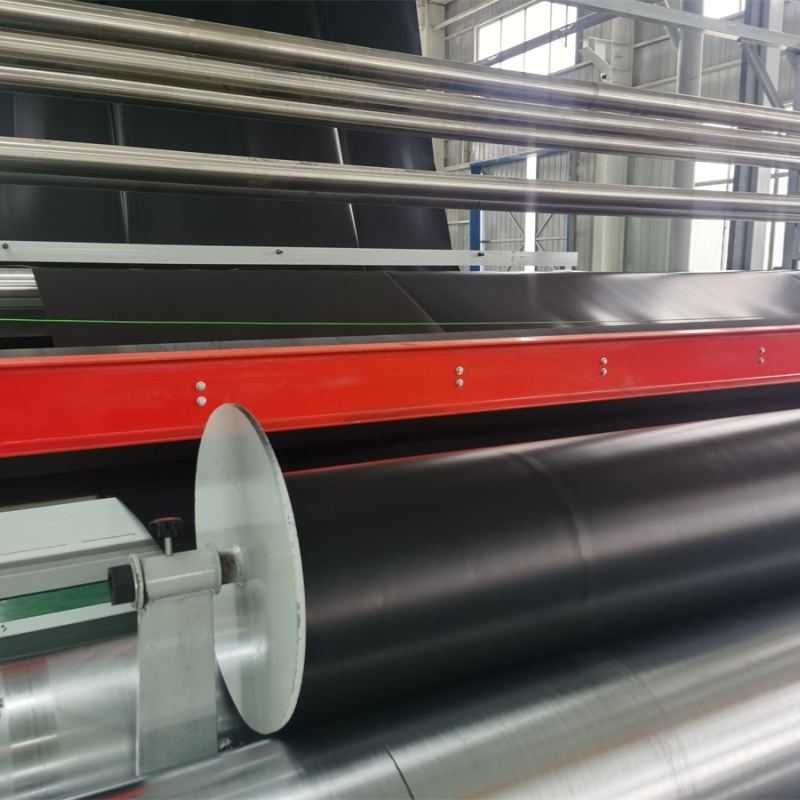
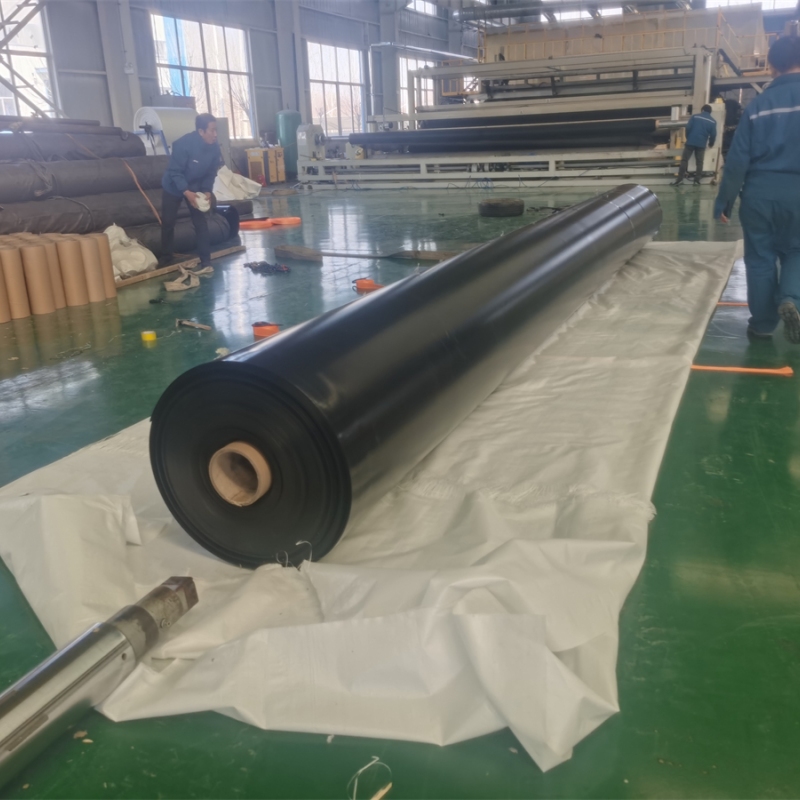
Three-layer co-extrusion. Virgin HDPE resin (density ≥ 0.940 g/cm³, MFI ≤ 1.0 g/10 min at 190 °C / 2.16 kg) is compounded with about 2.0–3.0 % carbon black plus antioxidant, UV absorber and thermal stabiliser — the carbon black is the UV screen, so its content and dispersion are controlled as specification items, not as colour. The melt is extruded through a flat die as a core with two skin layers, passed over a chill roll, thickness-gauged on line, trimmed and wound. Textured product is made by co-extruding a rough skin (sprayed / embossed, 0.3–0.6 mm profile) on one or both faces, or by laminating a nonwoven. Roll width is normally 6.0–8.0 m and length 50–150 m, so a 6.0 m width minimises field seams — GB/T 51403 §3.2.1 asks for not less than 6.0 m for that reason.
3 Advantages
▪ Absolute barrier: hydraulic conductivity effectively that of the polymer itself, independent of compaction, moisture content or settlement — the failure mode of a clay liner;
▪ Deformation tolerance: CJ/T 234 sets ≥ 700 % break elongation and ≥ 300 h environmental stress-crack resistance, so the membrane follows differential settlement of the waste mass without tearing;
▪ Mechanical toughness: yield strength 22 N/mm and puncture 480 N at 1.5 mm resist gravel, stone and construction traffic before the protection geotextile is placed;
▪ Ageing resistance: decades of service under cover; 1600 h UV exposure retains ≥ 50 % of standard OIT;
▪ Chemical resistance: resistant to leachate over the full pH range, to the organic acids and to the salts present in MSW leachate — the property EVA and PVC do not have;
▪ Weldable and testable: wide rolls (6.0–8.0 m) mean fewer seams; seams are heat-fused and every metre can be pressure-tested, giving a verifiable rather than assumed barrier.
4 Specifications & Stock — CJ/T 234, Smooth Sheet
Table 1 CJ/T 234-2006 physical and mechanical requirements, smooth HDPE geomembrane (MD and CMD)
Property | Unit | 0.75 | 1.00 | 1.25 | 1.50 | 2.00 | 2.50 | 3.00 |
Tensile yield strength | N/mm | 11 | 15 | 18 | 22 | 29 | 37 | 44 |
Tensile break strength | N/mm | 20 | 27 | 33 | 40 | 53 | 67 | 80 |
Break elongation | % | ≥ 700 | ≥ 700 | ≥ 700 | ≥ 700 | ≥ 700 | ≥ 700 | ≥ 700 |
Tear resistance (trouser) | N | 93 | 125 | 156 | 187 | 249 | 311 | 374 |
Puncture resistance | N | 240 | 320 | 400 | 480 | 640 | 800 | 960 |
Carbon black content | % | 2.0–3.0 | 2.0–3.0 | 2.0–3.0 | 2.0–3.0 | 2.0–3.0 | 2.0–3.0 | 2.0–3.0 |
OIT, standard / high pressure | min | 100 / 400 | 100 / 400 | 100 / 400 | 100 / 400 | 100 / 400 | 100 / 400 | 100 / 400 |
ESCR (notched constant load) | h | ≥ 300 | ≥ 300 | ≥ 300 | ≥ 300 | ≥ 300 | ≥ 300 | ≥ 300 |
UV 1600 h, OIT retention | % | ≥ 50 | ≥ 50 | ≥ 50 | ≥ 50 | ≥ 50 | ≥ 50 | ≥ 50 |
5 Where Each Grade Goes — Thickness by Location
Table 2 Location → grade, thickness and the governing clause
Location | Grade / surface | Thickness | Why this choice | Governing clause |
Bottom liner | HDPE, smooth | 1.5 mm | No shear on flat ground, so smooth sheet welds most reliably; 1.5 mm resists the 480 N puncture of gravel and placement traffic, 2.0 mm raises yield to 29 N/mm under the highest waste column. | GB/T 51403 §3.2.1, §3.2.2; CJJ 113 §3.4.2; CJJ 17 §8.2.7 |
Side slope | HDPE, double-textured | 1.5 mm | The liner must not slide: double-textured faces lift the interface friction angle from ~20° to over 30°, carrying the slope stability check. Slopes capped at 1:2, anchorage platforms every 10 m of height, no horizontal seam on slopes >10 % or within 1.5 m of the toe. | CJJ 113 §3.7.1, §3.7.3, §3.7.4; CJJ 17 §8.2.9 |
Final cover | HDPE, smooth (black) | 1.0 mm | Only rainfall and gas to resist, and no waste column above — 1.0 mm is the accepted minimum. Smooth sheet: welding quality matters more than friction here. Gas pressure must be held below 0.75 kPa by the venting layer or the sheet lifts. | CJJ 17 §10.0.2, §10.0.3; GB 55012 §4.6 |
Temporary cover | HDPE or LLDPE, smooth | 0.5 mm daily | Duty is rain shedding and odour control, not containment — a thin sheet, moved by machine. 0.5 mm daily, 0.75 mm where idle longer; overlap 100–120 mm, held by sandbags or tyres, not welded. | GB 55012-2021 §4.6.3 (clause note); T/GXAS 984-2025 §5.3.1 |
6 Installation Points
▪ Subgrade first: clear roots, stone and debris; ≥ 93 % compaction at the bottom, ≥ 90 % on slopes, surface evenness within 20 mm; no horizontal seam on slopes steeper than 10 % or within 1.5 m of the toe.
▪ Anchorage and sequence: anchor trench at least 800 mm × 800 mm and at least 800 mm back from the slope crest, with rounded rather than right-angled corners; anchorage platforms where the height step exceeds 10 m. Lay slope first then bottom, from low to high, seams parallel to the slope direction, allowing about 1.5 % slack — never stretched.
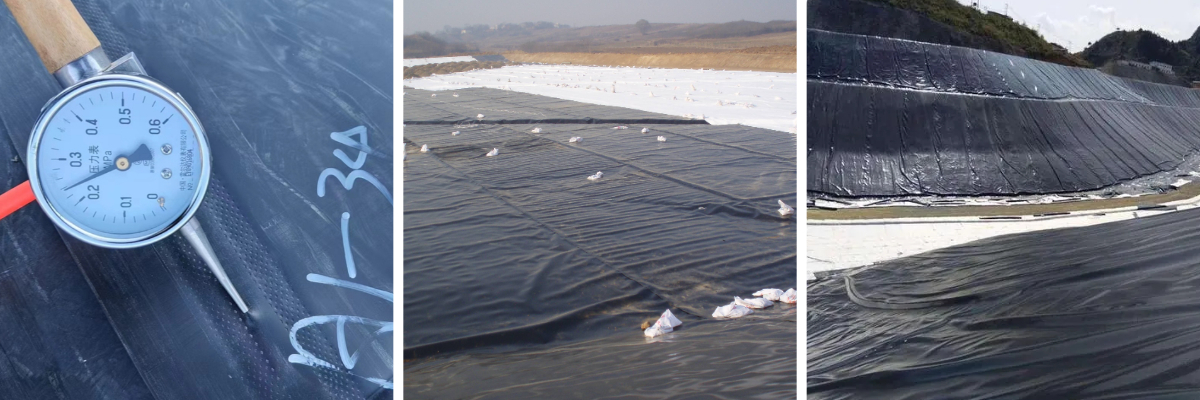
▪ Seaming: overlap 100 ± 20 mm for double-track hot wedge, 75 ± 20 mm for extrusion welding; trial weld daily and after any change of weather; textured sheet needs its profile dressed back at the seam. Below 5 °C or in rain, stop.
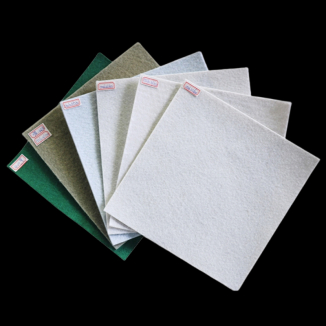
▪ Testing: pressure test every double-track seam at 0.15–0.25 MPa and require 100 % pass; vacuum-box or spark test every extrusion seam; destructive samples at the specified rate. Then place the 600 g/m² protection geotextile immediately — an unprotected membrane is the most common failure.
▪ Repair: patch with the same resin, extending at least 100 mm beyond the defect; no patch on a patch. Repair records, seam numbers and test results form the handover file.