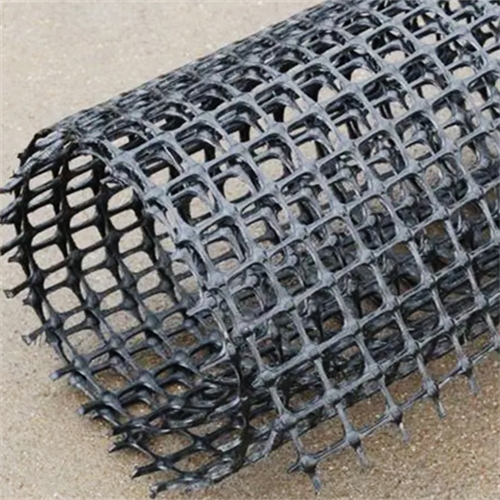
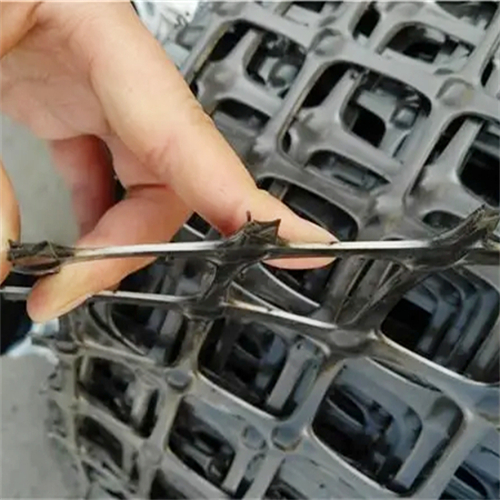
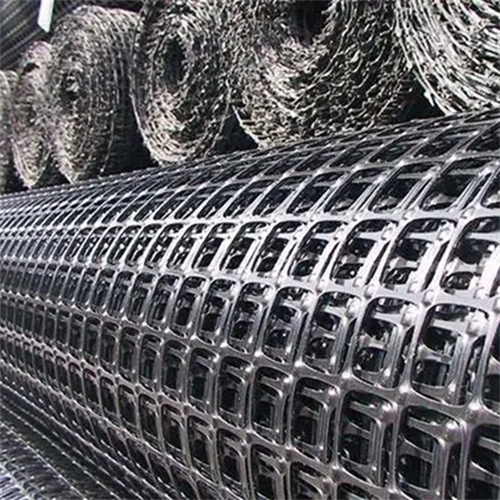
Biaxial HDPE Geogrid
·Excellent corrosion resistance: maintains stable performance in harsh environments such as acidic, alkaline, salt fog, and humid conditions, making it suitable for special areas like coastal regions, areas with high groundwater levels, or chemical industrial zones.
·Good anti-aging properties: with the addition of ultraviolet stabilizers such as carbon black, the service life can exceed 50 years.
·High tensile strength: the oriented molecular chain arrangement enables the material to exert significant resistance even at a small strain of 2%, effectively controlling early deformation.
Introduction to Biaxial HDPE Geogrid:
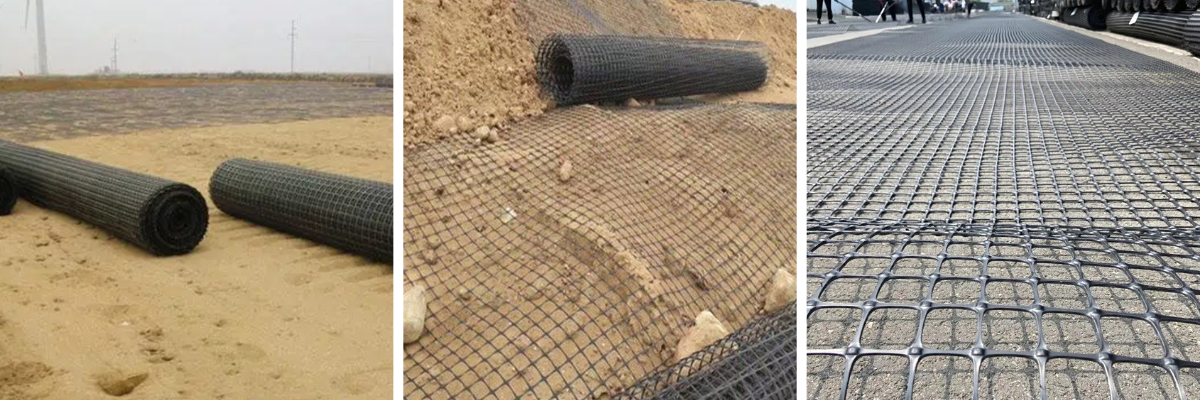
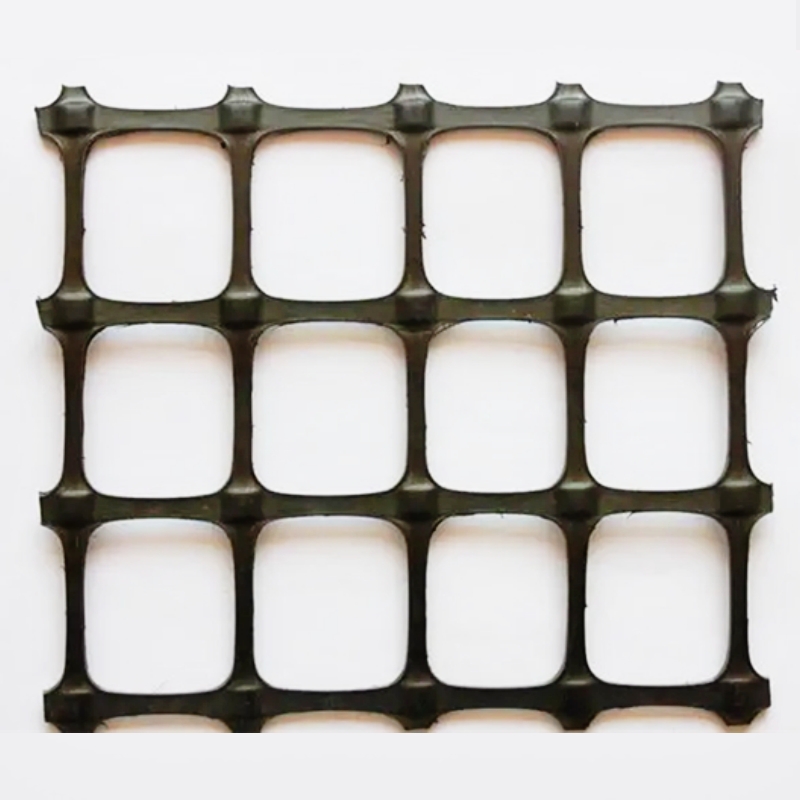
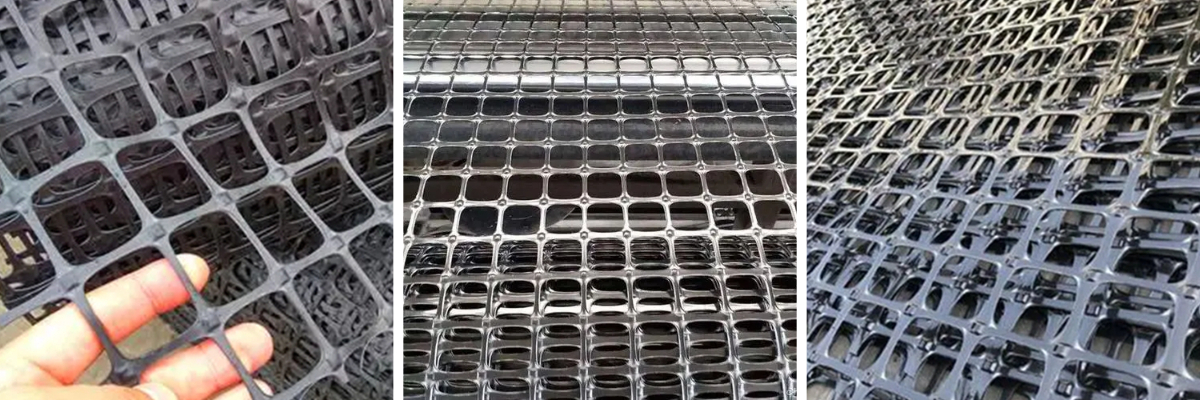
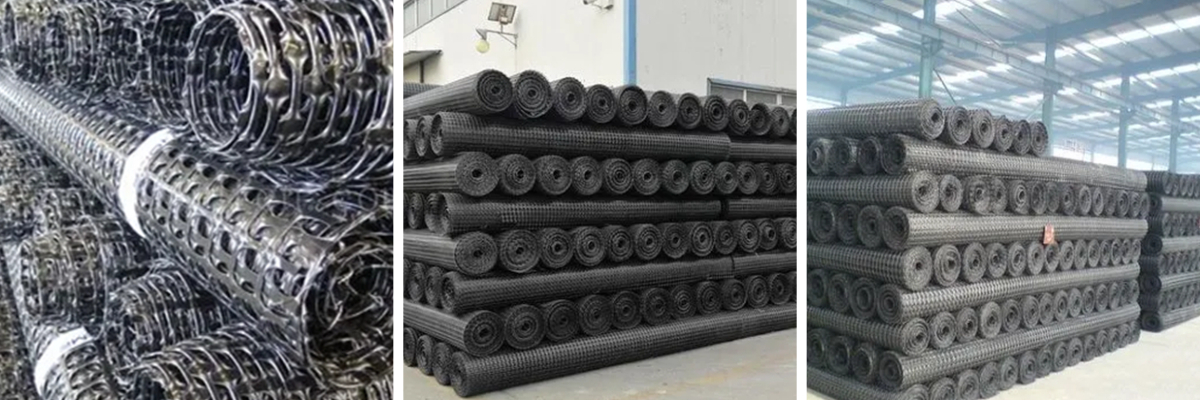
Biaxially oriented high-density polyethylene (HDPE) geogrid is a high-performance geosynthetic material made from high-density polyethylene (HDPE) through extrusion, punching, and biaxial stretching processes. It exhibits excellent tensile strength, corrosion resistance, and long-term stability, and is widely used in various heavy-duty foundations and permanent engineering structures.
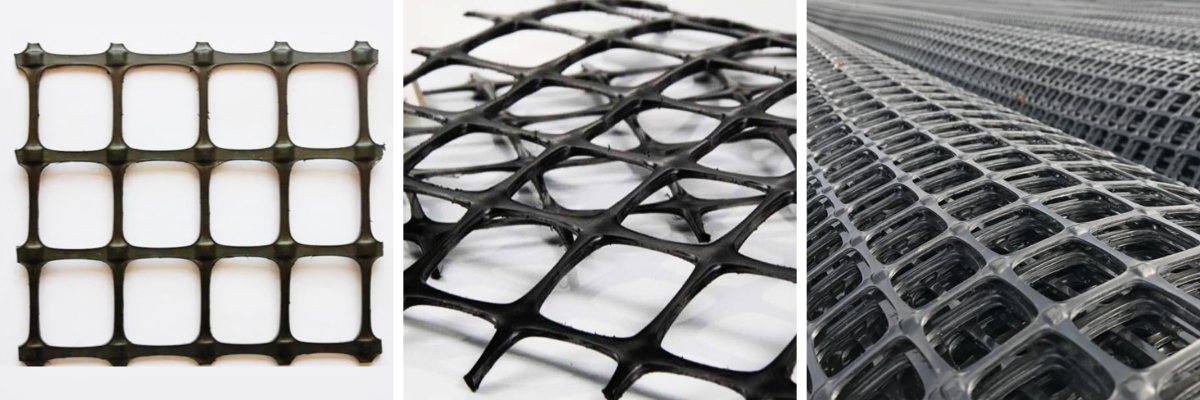
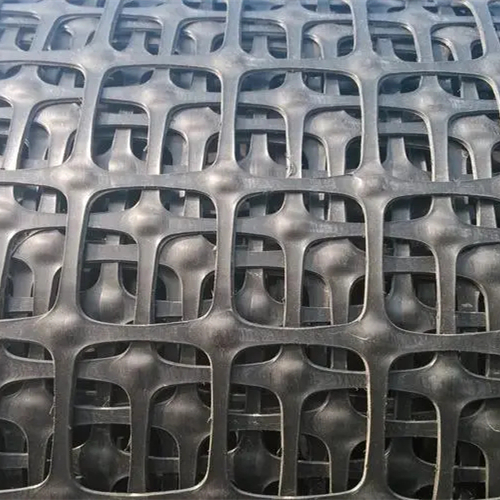
Biaxial Geogrid is stretched in both longitudinal and transverse directions, forming a uniform grid-like structure. The high-density polyethylene (HDPE) material provides enhanced environmental adaptability:
·Excellent corrosion resistance: maintains stable performance in harsh environments such as acidic, alkaline, salt fog, and humid conditions, making it suitable for special areas like coastal regions, areas with high groundwater levels, or chemical industrial zones.
·Good anti-aging properties: with the addition of ultraviolet stabilizers such as carbon black, the service life can exceed 50 years.
·High tensile strength: the oriented molecular chain arrangement enables the material to exert significant resistance even at a small strain of 2%, effectively controlling early deformation.
Compared to PP (polypropylene) materials, HDPE is more suitable for engineering applications involving long-term immersion, frequent freeze-thaw cycles, or high risk of chemical corrosion.
Ⅰ. Core Functions and Engineering Benefits
1. Enhance Subgrade Bearing Capacity
Through the "soil-geogrid" interlock effect, loads are uniformly distributed over a larger area, significantly improving the bearing capacity of soft soil foundations.
2. Control Differential Settlement
Reduces foundation settlement by more than 30%, particularly suitable for sections prone to differential settlement, such as bridge approach zones and widened embankments.
3. Save Construction Costs
Reduces cushion layer thickness by 10%–50%, decreases aggregate usage, shortens construction duration, and lowers overall project cost.
4. Improve Structural Integrity
Effectively prevents issues such as pavement cracking, slope sliding, and culvert failure, thereby enhancing the durability of infrastructure.
5. Eco-friendly Applications
Can be combined with grass planting mats for slope greening, enabling integrated engineering protection and ecological restoration.
Ⅱ. Construction Guidelines and Specifications
·Site Preparation: Compact and level the ground, remove sharp objects, and ensure the laying surface is free of protrusions.
·Laying Direction: The primary load-bearing direction (longitudinal) should be perpendicular to the embankment axis, maintaining a smooth, wrinkle-free surface.
·Overlapping and Fixation: Longitudinal overlap of 15–20 cm and transverse overlap of ≥10 cm; secure with U-shaped nails at intervals of 1.5–2 m.
·Backfill Requirements: Promptly backfill with gravelly or sandy soil, ensuring particle size ≤15 cm to avoid damaging the geogrid.
·Layered Compaction: Roll immediately after laying each layer; re-tension the geogrid before being covered with soil to ensure it remains taut and properly tensioned.