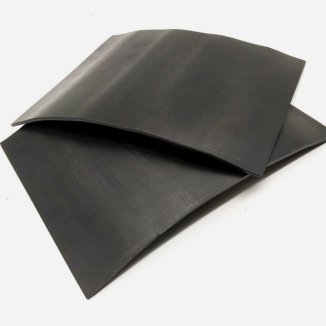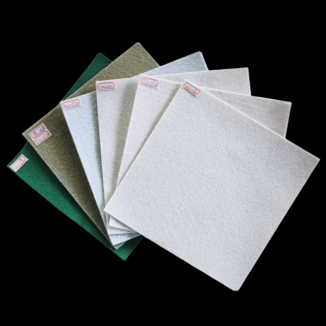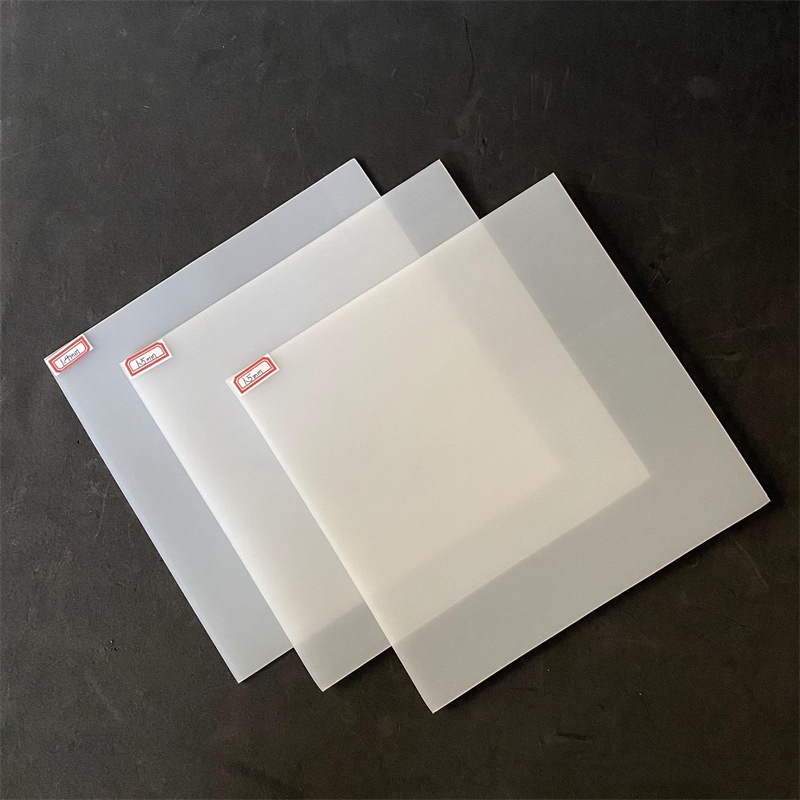
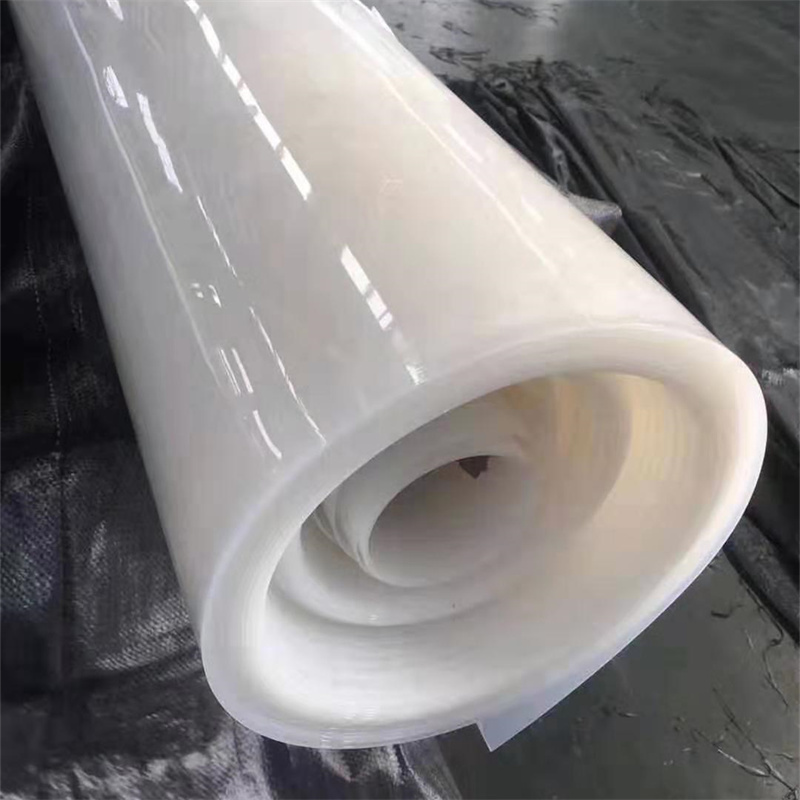
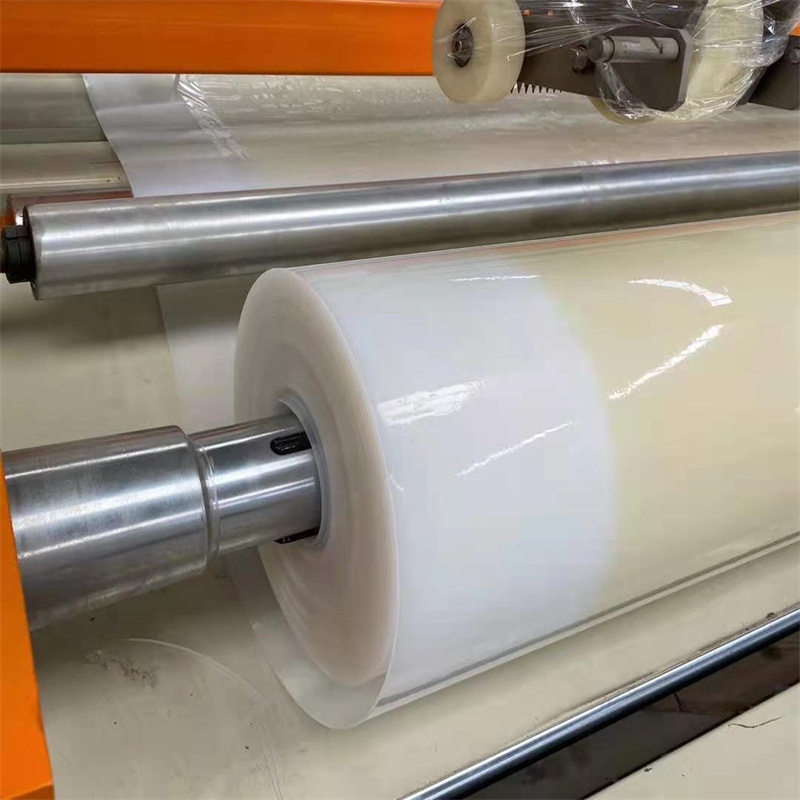
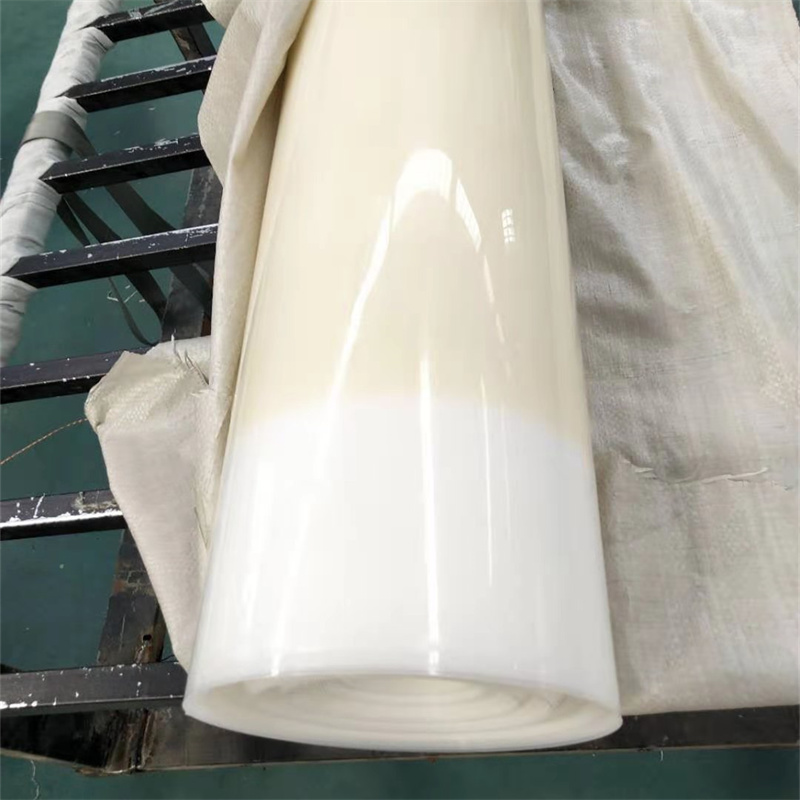
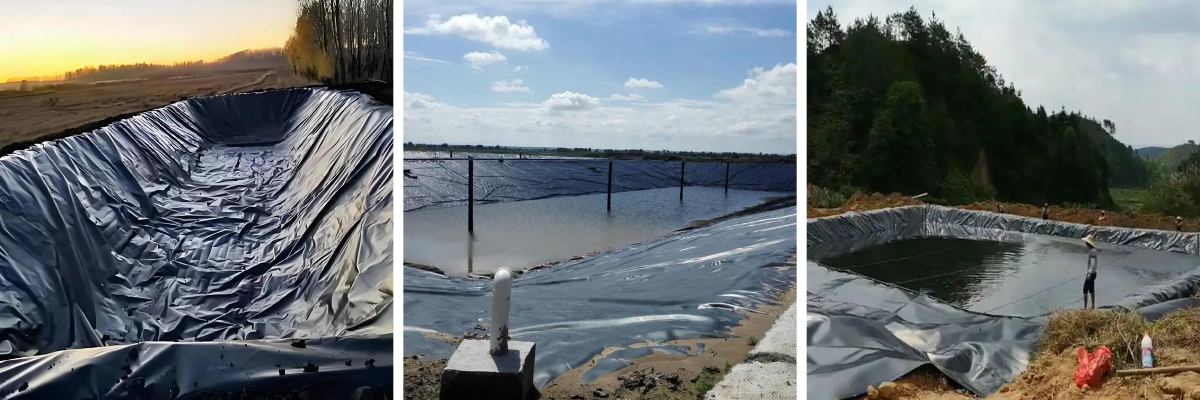
EVA waterproofing membrane for water reservoir
·Excellent seepage control
Sharply reduces seepage with far less water loss than unlined ground
·Cost-effective & fast installation
Cheaper than concrete lining, no curing required, easy on-site repair
·High elongation for deformation resistance
550–800% elongation, accommodates settlement without cracking
·Stable performance in cold climates
Flexible down to -40℃, freeze-thaw resistant, no cold cracking like PVC
1 Definition
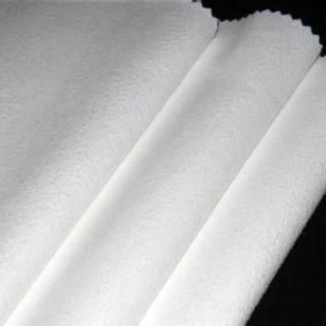
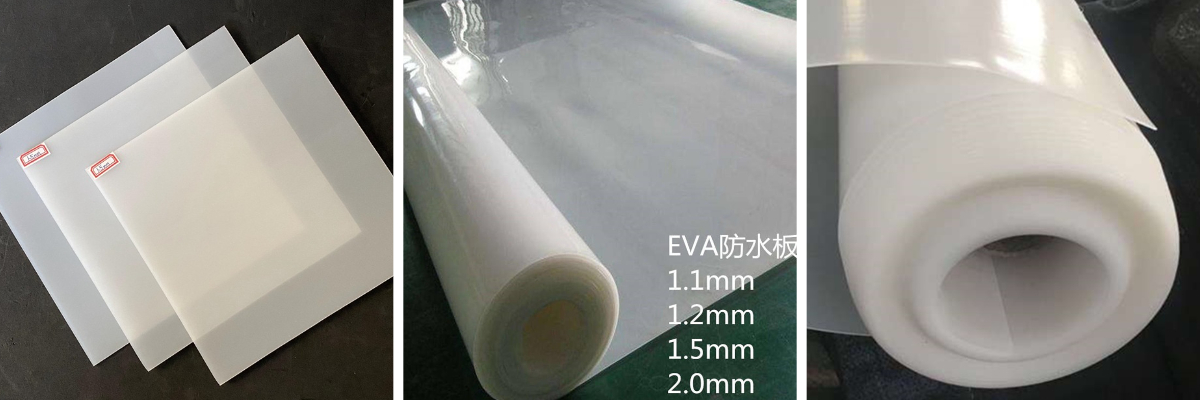
EVA waterproofing membrane is a flexible thermoplastic sheet of ethylene vinyl acetate copolymer (VA content typically 5–20 %; higher VA gives softer, tougher, more weldable sheet). Resin is compounded with carbon black, antioxidants and UV stabilisers, then hot-melt extruded into a continuous homogeneous roll. It is a barrier, not a filter — the dense matrix has no pores, so reservoir performance depends on the sheet staying continuous: seam quality, subgrade protection and puncture avoidance are the governing risks. Within the polyolefin family it is softer and more conformable than HDPE with better cold flexibility, but has lower absolute tensile strength.
2 Product Specification
No single dedicated standard exists. EVA is specified either as type GL-2 under GB/T 17643 (strength in N/mm, rising with thickness) or as a sheet under GB 18173.1 (strength in MPa, independent of thickness). The two are consistent but not interchangeable — state the governing standard.
Table 1 — Properties per GB/T 17643 GL-2 (reservoir thicknesses)
Property | Unit | 1.00 mm | 1.50 mm | 2.00 mm |
Tensile break strength (MD/TD) | N/mm | ≥ 27 | ≥ 40 | ≥ 53 |
Elongation at break (MD/TD) | % | ≥ 800 | ≥ 800 | ≥ 800 |
Right-angle tear load | N | ≥ 100 | ≥ 150 | ≥ 200 |
Puncture resistance | N | ≥ 250 | ≥ 370 | ≥ 500 |
Density / carbon black | g/cm³ · % | ≤ 0.939 / 2.0–3.0 | ≤ 0.939 / 2.0–3.0 | ≤ 0.939 / 2.0–3.0 |
Water vapour permeability | g·cm/(cm²·s·Pa) | ≤ 1.0 × 10⁻¹³ | ≤ 1.0 × 10⁻¹³ | ≤ 1.0 × 10⁻¹³ |
Service temperature | °C | −40 to +70 | −40 to +70 | −40 to +70 |
Supply Status | Bulk stock & customizable | Bulk stock & customizable | Bulk stock & customizable |
3 Advantages for Water Storage Reservoirs
·Very high seepage reduction. seepage falls from 5–30 % of stored volume per year (unlined) to ≈ 0.5 mm/day of water-level drop in a well-built reservoir, and 1–10 mm/day on typical sites — against ≈ 250 mm/day for unlined silty ground.
·Cost and programme. lower capital cost than an equivalent reinforced concrete lining, faster construction with no curing period, and local repair by patch or extrusion weld.
· Flexibility. elongation of 550–800 % lets the sheet follow differential settlement, thermal movement and deformation around pipes without the cracking seen in rigid linings.
· Cold-climate performance. remains flexible to about −40 °C, surviving winter installation and freeze–thaw cycling without the cold-cracking risk of PVC.
· No plasticiser migration. no plasticiser, heavy metals or BPA to migrate into stored water — but this is a material property, not an approval: drinking-water service needs certification of the actual compound (NSF/ANSI 61 or domestic water-hygiene licence).
·Testable seams. double-track seams are pressure-tested over their full length (0.15–0.25 MPa held 3–5 min, no significant drop) — a non-destructive, recordable result on every metre.
·Where EVA is the weaker choice. lower strength and higher creep than HDPE, and UV degradation if unstabilised — for deep reservoirs or hot exposed slopes, textured HDPE is usually better.
4 Installation and Precautions
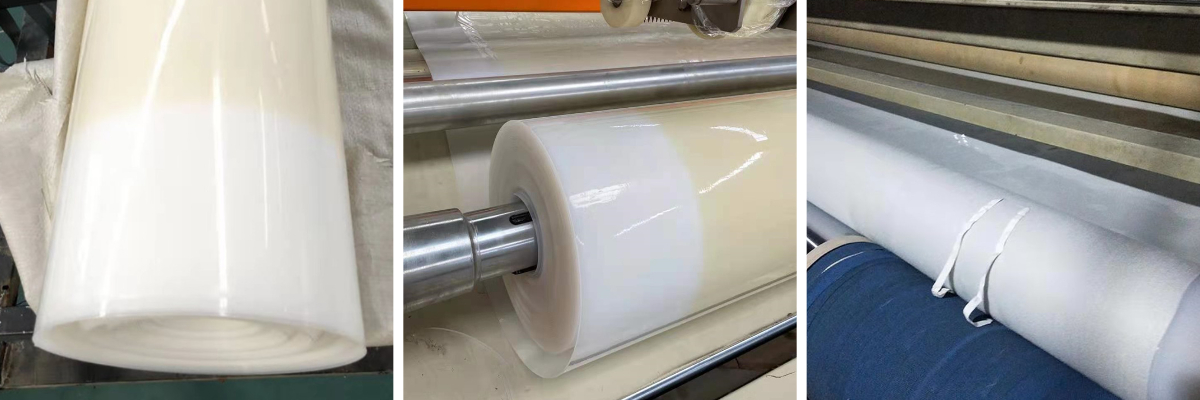
Each step is a hold point — most defects found later trace back to a step signed off too early.
1. grade and compact to profile; remove all stones, roots and sharp objects.
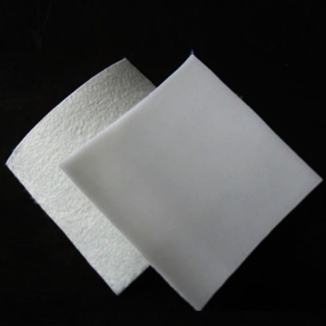
2. cushion layer: non-woven geotextile (300–600 g/m²) or 80–100 mm sand — not optional on rocky ground.
3. unroll from the low point upward, sheet parallel to the slope line; leave 1.5 % slack, never stretch.
4. seam by double-track hot-wedge welding (overlap ≥ 100 mm, clean and dry); extrusion-weld details.
5. anchor in perimeter trench (≥ 0.4 × 0.4 m), at penetrations and on intermediate berms.
6. pressure-test every seam, then whole-liner electrical leak survey; repair all findings.
7. place ballast or protective layer promptly; no traffic on the bare membrane.
· Precautions — weather, wind, UV. no welding below 5 °C without preheating (stop below −10 °C), none in rain, fog or dust; ballast every panel against wind; 2.0–3.0 % carbon black for exposed service.
· Penetrations and slopes. treat every pipe, sump and outlet as a separately inspected welded collar; on slopes steeper than 1V:3H use textured sheet plus anchor berms.
· Quality records. record welder ID, settings and pressure-test result per seam; keep a repair register; monitor first fill.
5 FAQ
Q1: What is the main difference between EVA waterproofing membrane and HDPE geomembrane?
A:
EVA is much softer with higher flexibility and elongation. It is designed to fit uneven shotcrete surfaces in tunnels and underground structures, and requires a lower welding temperature for curved construction.
HDPE has higher tensile modulus, superior UV resistance and stronger chemical resistance. It is the first choice for landfill, tailings pond and lagoon containment, where long‑term exposure and harsh polluted leachate exist.
EVA is generally not recommended for heavy‑pollution containment projects.
Q2: Does EVA membrane need geotextile as a protective layer?
A:
Yes, it is strongly recommended. Shotcrete surface often has sharp aggregate and protruding points. Without geotextile cushion, EVA membrane is easy to be punctured.
Composite EVA membrane pre‑bonded with geotextile can simplify laying work and provide integrated anti‑puncture protection.
Q3: What thickness of EVA waterproofing membrane should I choose for tunnel projects?
A:
For highway / railway tunnels, the common specification is 1.5 mm or 2.0 mm. For metro tunnels and underground caverns with high water pressure, 2.0 mm or above is preferred.
Thinner 1.2 mm EVA is only suitable for low water pressure culverts and auxiliary tunnels. The final selection should consider groundwater pressure, base roughness and design service life.
6 Company Profile
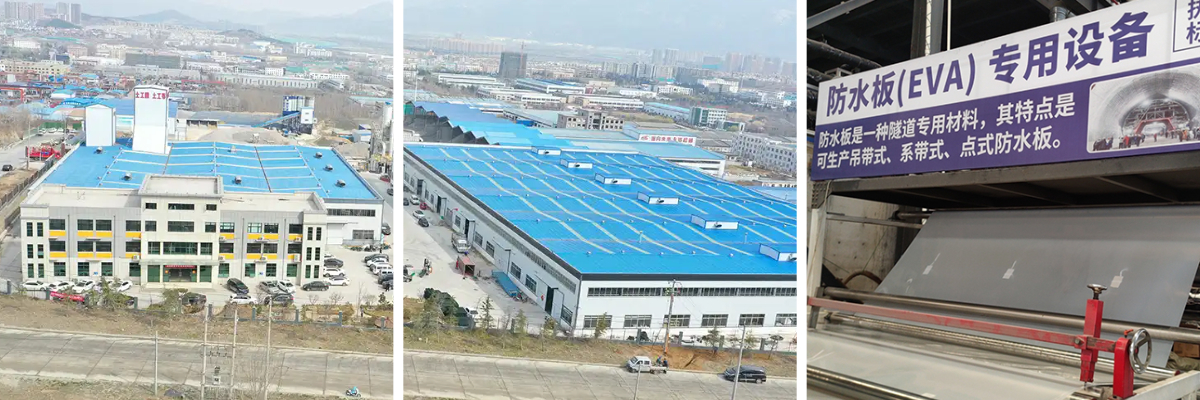
Manufactured at our 35,000 m² facility with full automatic extrusion lines, serving CREC, CCCC, POWERCHINA and other major infrastructure projects worldwide.