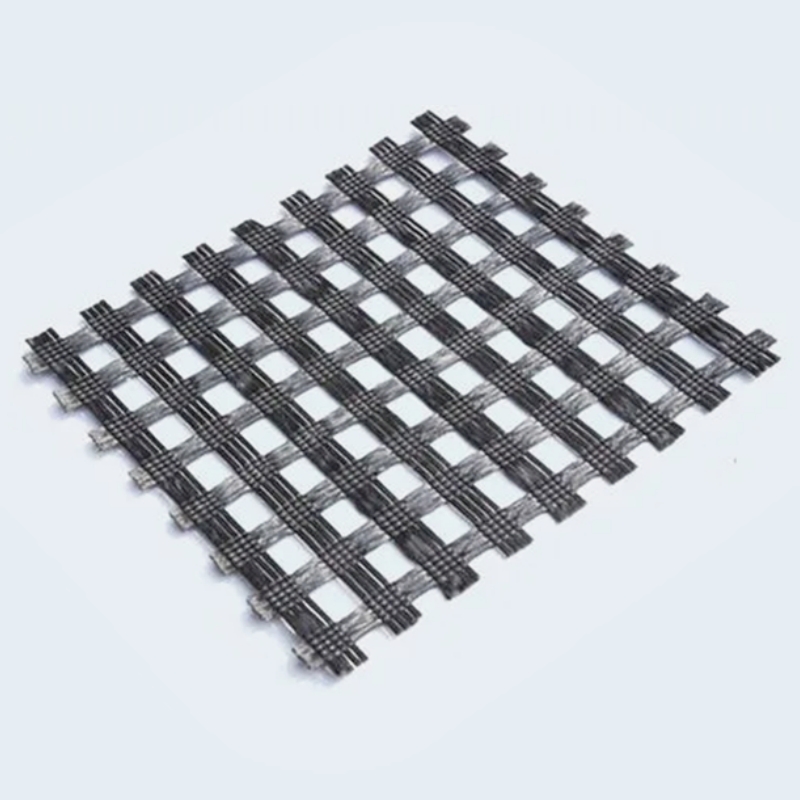
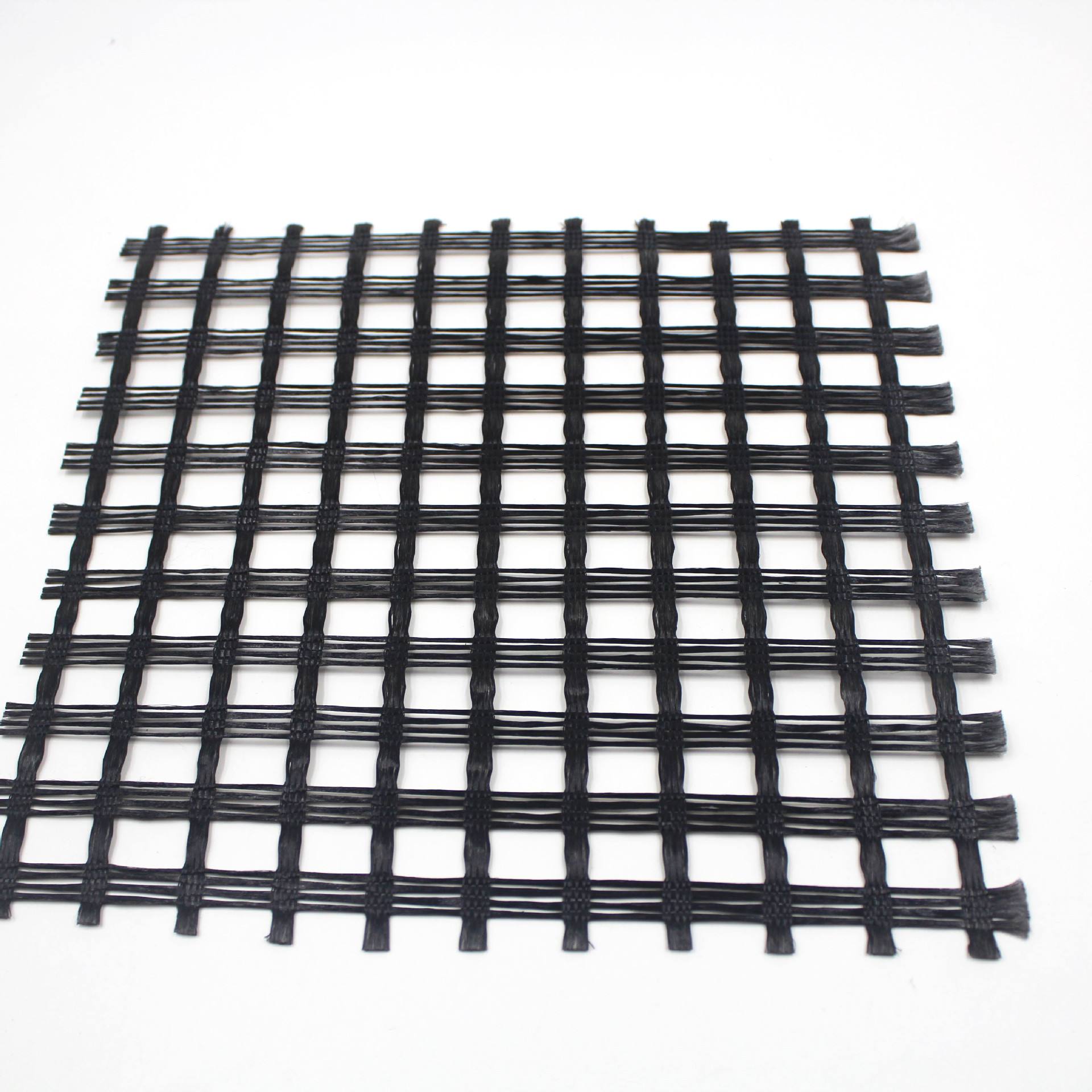
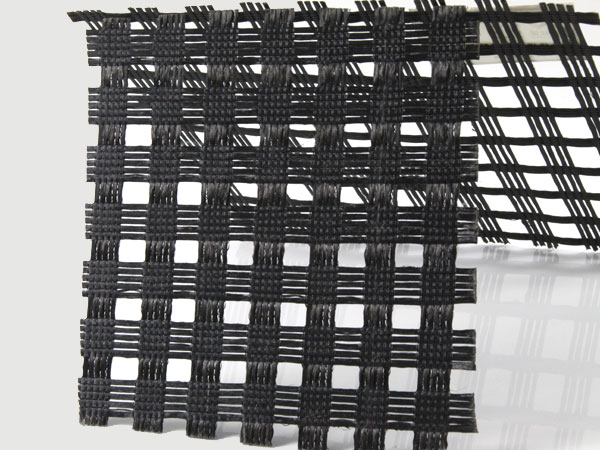
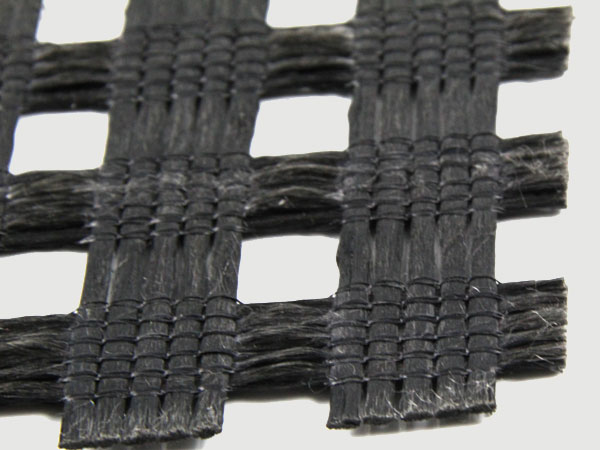
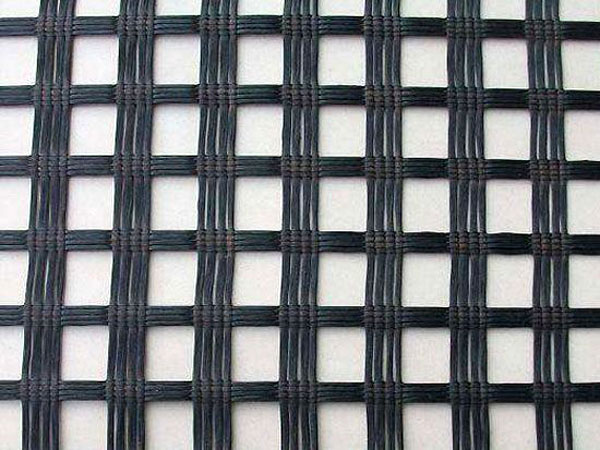
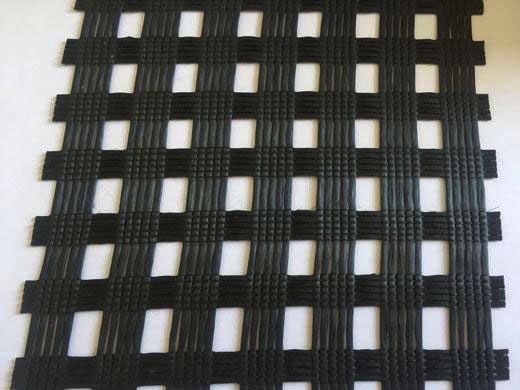
polyester geogrids
1. Ultra-low creep performance
Polyester fiber has inherently low creep. Under sustained long-term soil load, the tensile deformation increases very slowly. It maintains design reinforcement force over decades, which is critical for high-grade highway, railway and permanent reinforced soil projects.
2. High tensile strength and high modulus
It achieves high tensile strength together with high elastic modulus. Large load can be borne with small elongation. It activates reinforcement effect quickly to restrict soil lateral displacement.
3. Excellent long‑term tensile retention
Good long-term strength retention under buried conditions. Proper coating protects filament from hydrolysis and ageing, satisfying long design service life requirements.
1 Material and Manufacturing
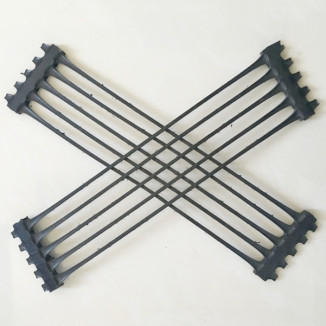
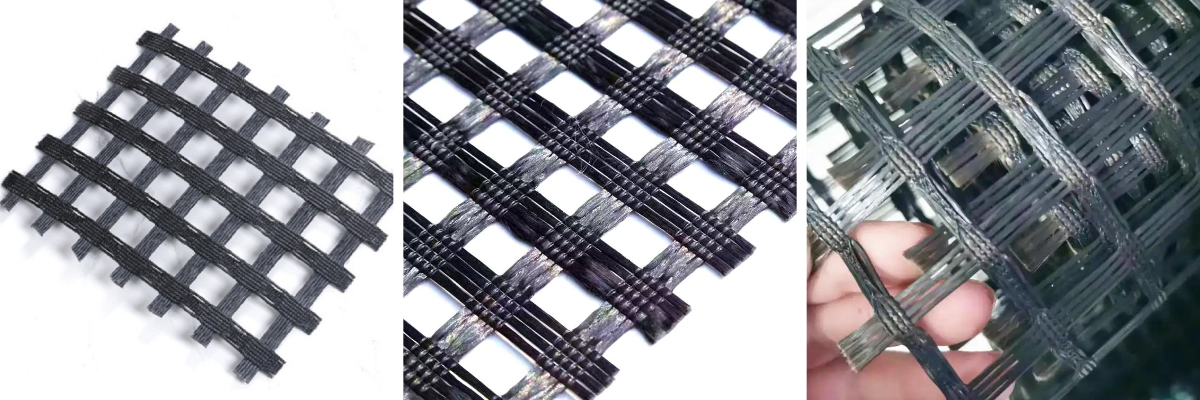
Polyester geogrid is made from high-tenacity PET industrial filament: a warp-knitting machine loops the warp yarns, inserts weft yarns across, and locks the junctions with fibre bundles, giving straight, non-slipping ribs. The sheet is heat-set, then coated with PVC, modified bitumen or SBR latex. Made to JT/T 480-2002 and JT/T 925.1-2014; highway work also to JTG/T 3334 and the asphalt-reinforcement code.
▪ High strength, low strain — elongation at break typically ≤13 % (3–10 % for pavement grades); confinement is mobilised at low strain.
▪ Creep resistance — creep under sustained load far lower than PP stretched grids — suited to heavy-duty, permanent works.
▪ Heat — withstands paving temperatures (160–180 °C) without softening; no open-flame exposure.
▪ Chemistry — stable against acids, alkalis, microbes and salts; strong alkali and UV reduce strength — keep coated and covered.
2 Types, Parameters and Stock
Type designation = nominal tensile strength, longitudinal–transverse, in kN/m (e.g. 50-50 biaxial, 80-30 uniaxial). Common sizes are stocked; specials are made to order.
Table 1 — Biaxial grades (elongation ≤13 %)
Type | MD / TD strength (kN/m) | Aperture (mm) | Roll width (m) | Roll length (m) | Stock |
PET 50-50 | ≥50 / ≥50 | 25.4 × 25.4 | 3.95 / 5.2 | 50 / 100 | Stock |
PET 80-80 | ≥80 / ≥80 | 25.4 × 25.4 | 3.95 / 5.2 | 50 / 100 | Stock |
PET 100-100 | ≥100 / ≥100 | 25.4 × 25.4 | 1.0–6.0 | 50 / 100 | Stock |
PET 150-150 | ≥150 / ≥150 | 25.4 × 25.4 | 1.0–6.0 | 50 / 100 | Stock |
3 Selection for Roads and Asphalt Overlays
Table 2 — Grade selection by application
Application | Grade | Position | Key point |
New pavement, semi-rigid base | PET 50-50 / 80-80 | Top of base (or base–surface interface) | Controls shrinkage-crack reflection |
Direct overlay on asphalt | PET 50-50 / 80-80 | Top of old surface, base of overlay | Treat defects first |
Overlay on old concrete | PET 80-80 / 100-100 | Top of slab (on levelling course) | Seal joints, mill faulting |
Widening joint | Uniaxial e.g. 80-30 | Interface, spanning the joint | Strip placement, ≥1 m wide |
Heavy traffic, intersections | PET 100-100 and above | Base of overlay | Go one grade up |
Subgrade / soft ground | Uniaxial e.g. 120-50 up | Subgrade base or fill layers | By reinforced-soil design |
4 Installation
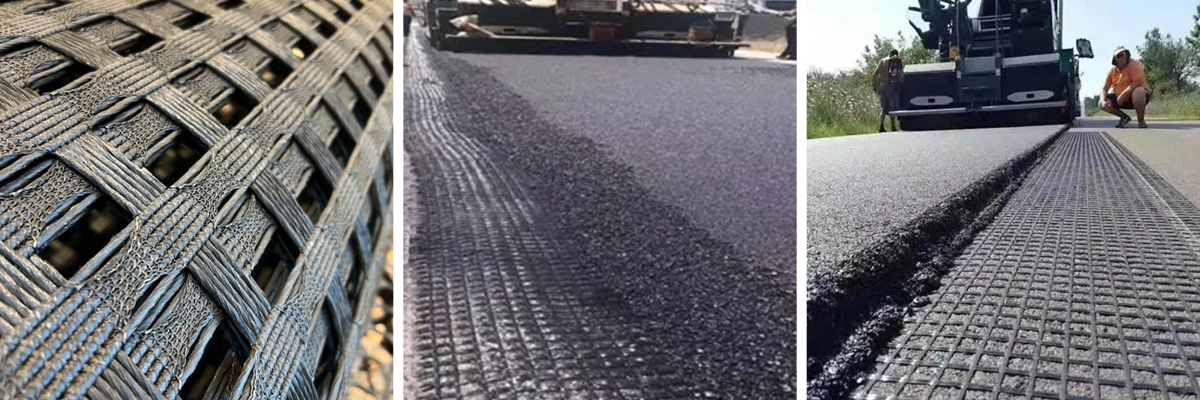
Sequence: clean — spray tack coat — lay — fix — overlap — roll — pave the same day. Each step is a hold point.
1. Sweep off dust, oil and loose material; patch potholes and ruts, mill faulting.
2. Spray tack coat at 0.3–0.6 kg/m², wet but not ponding; wait until fully broken and non-tacky.
3. Unroll with the main strength direction normal to the centreline; pull tight and flat — no wrinkles.
4. Fix with U- or L-pins 15–20 cm long at 0.5–1.0 m × 1.0–1.5 m, staggered; heads flush.
5. Overlap ≥15 cm longitudinal, ≥10 cm transverse; trailing roll on top in the paving direction; re-spray and add pins at laps.
6. Pneumatic-tyre roll 1–2 passes (extra pins within 50 cm of edges), then pave the same day; paver runs straight — no sharp turns or braking on the grid.
5 FAQ
Q1: What is the biggest difference between polyester geogrid and HDPE uniaxial plastic geogrid?
A:
Polyester geogrid has much lower creep and higher modulus, suitable for permanent heavy-load projects such as railway subgrade. HDPE uniaxial geogrid is more cost-effective for general retaining walls and common road embankments, with larger creep.
Q2: What is the biggest advantage of polyester geogrid compared with PP / HDPE plastic geogrid?
A:
The core advantage is ultra‑low creep and high modulus. Under long‑term constant soil load, polyester geogrid maintains stable tensile force with very slow deformation growth. Plastic geogrids have relatively larger creep. Therefore, polyester geogrid is preferred for permanent heavy‑load projects: railway subgrade, high embankments, bridge approach and high‑standard reinforced retaining walls.
Q3: Which coating option is better: PVC coating or bitumen coating for polyester geogrid?
A:
PVC‑coated type has smoother surface, better anti‑aging performance and is easier for visual inspection; it is widely used in railway and highway subgrade. Bitumen‑coated polyester geogrid offers superior friction performance, good adhesion with asphalt layers, mainly for asphalt pavement reinforcement. Neither can replace the other; select according to the application layer.
6 Company Profile
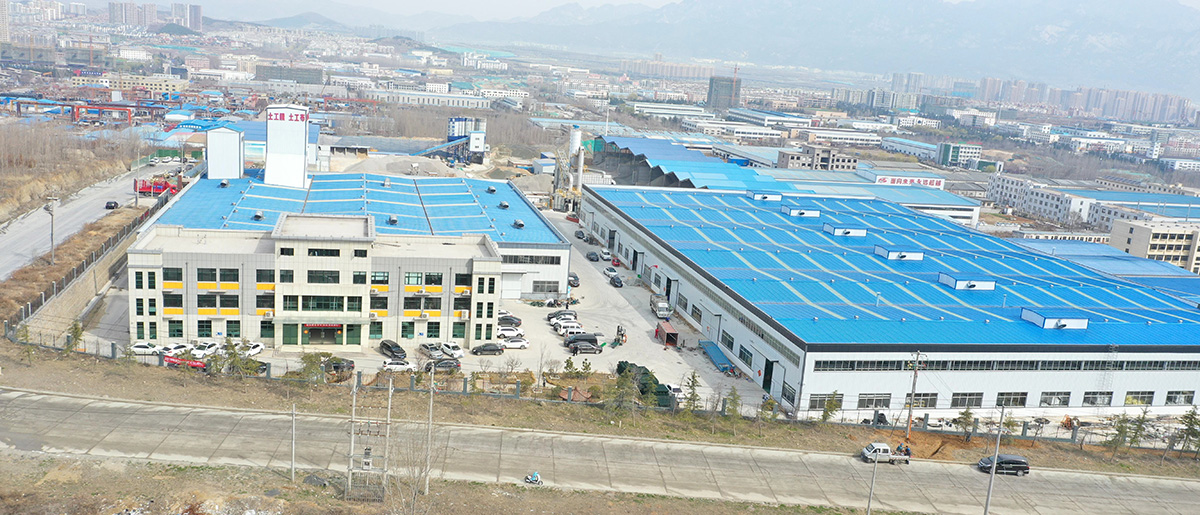
Shandong Yuanpeng Environmental Protection Technology Co., Ltd. was founded in 2022 with a registered capital of RMB 50 million. The company employs over 300 people and operates a 35,000-square-meter production facility. Equipped with professional R&D teams, the company is a comprehensive enterprise integrating production, sales, and after-sales service.
Some production lines have reached full automation. Annual sales volume reached 120 million yuan. The company has established long-term partnerships with organizations such as CREC, CSCES, CCCC, MCC Group, POWERCHINA, Tongyuan Design Group, CSMDI, BMEDI, and others.