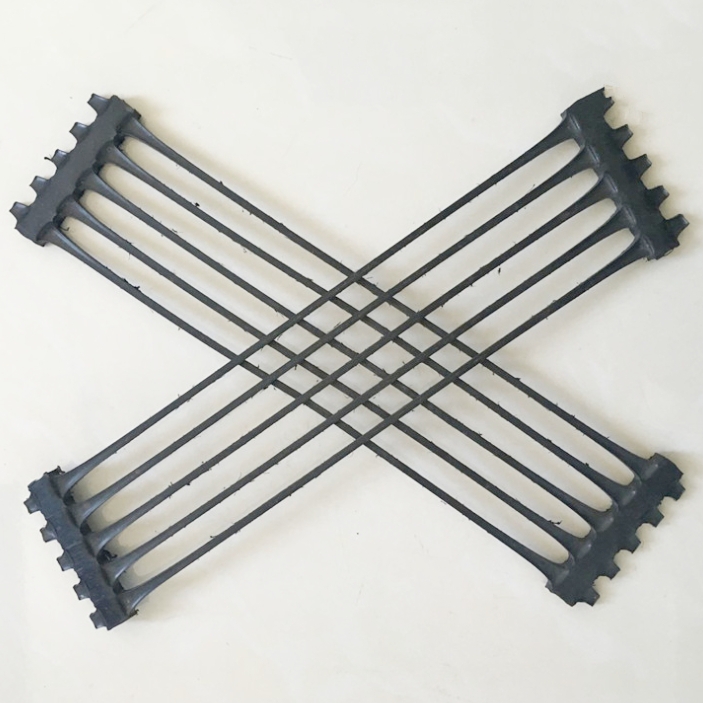
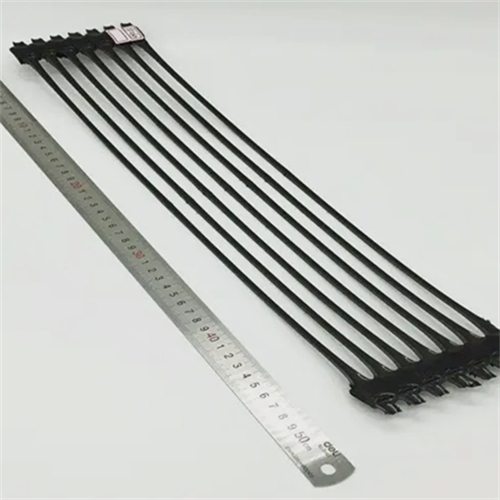
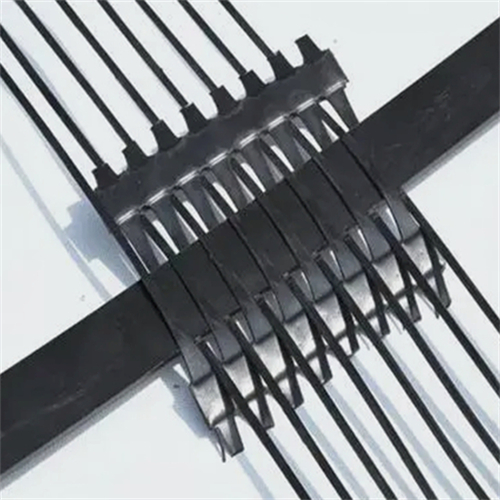
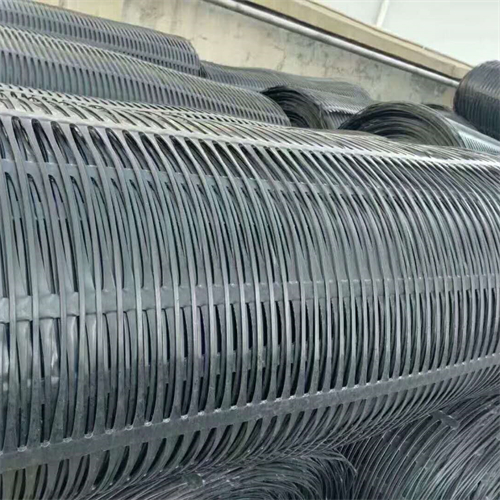
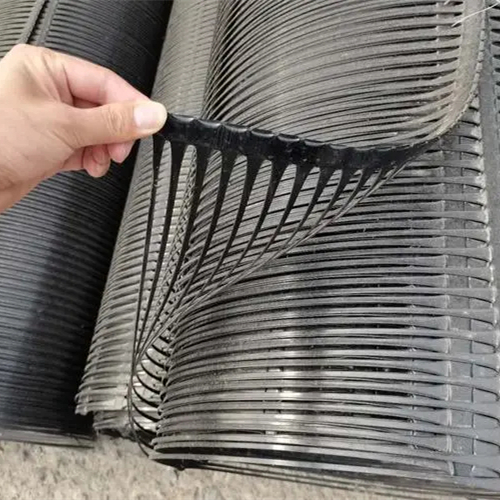
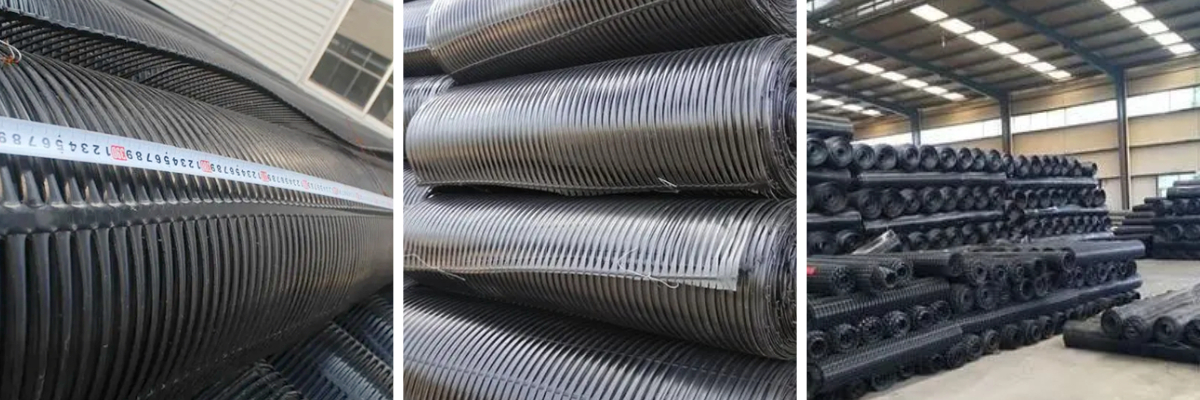
Uniaxial geogrid for foundation reinforcement
Typical Application Scenarios (Mainly Foundation & Subgrade)
·Soft soil foundation treatment (highways, railways, airports)
·Splicing and widening of old and new subgrades (preventing slab staggering and cracking)
·Reinforcement of bridge abutment backfill and retaining walls (uniaxial earth pressure)
·Reinforcement of high embankments, steep slopes and dams
·Foundation works for stockyards, ports and freight yards
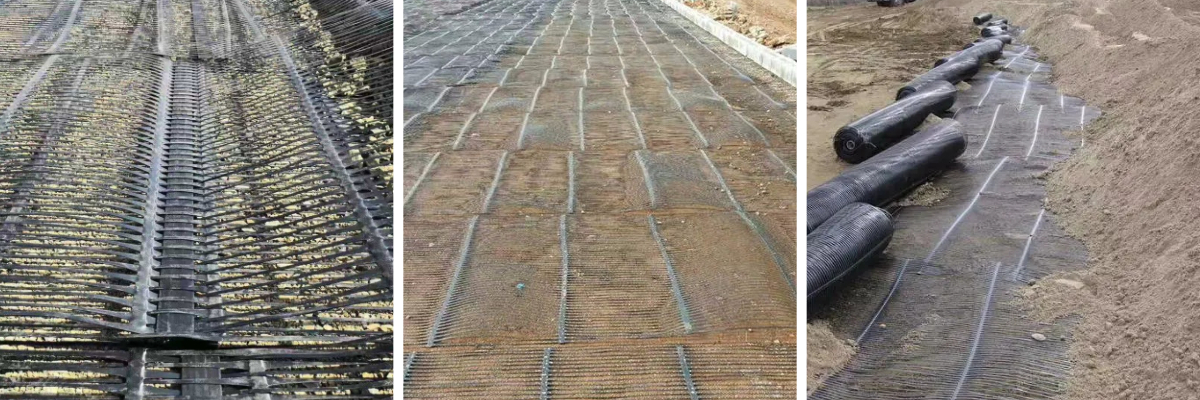
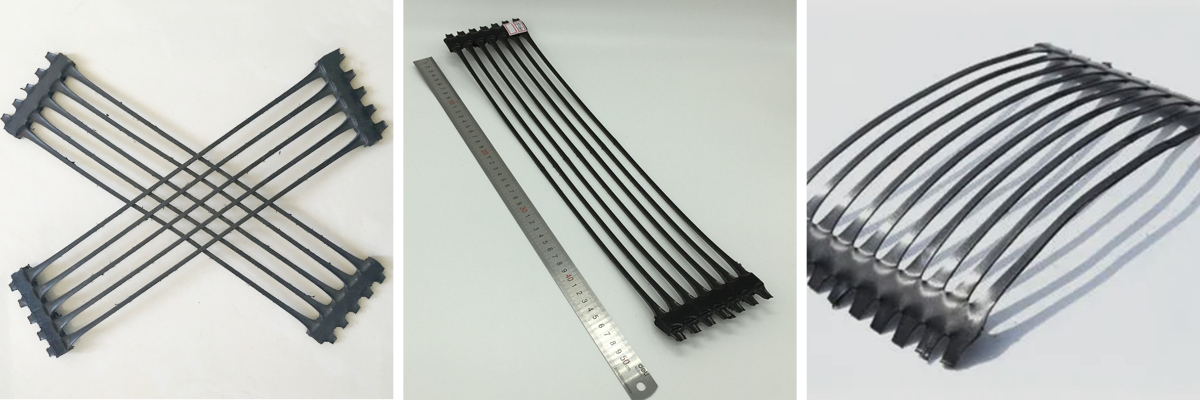
"Uniaxial geogrid for foundation reinforcement" refers to a uniaxially oriented geogrid material specifically used in foundation reinforcement engineering. Its primary function is to provide unidirectional tensile reinforcement within the foundation, thereby enhancing the overall stability and load-bearing capacity of the foundation. It is widely applied in infrastructure projects such as roads, railways, and embankments.
Ⅰ. Core Functions and Advantages:
1. Improved Subgrade Bearing Capacity
Installing uniaxial geogrids in soft soil subgrades allows the upper load to be evenly distributed over a larger soil area, reducing localized stress concentration. This significantly enhances the subgrade’s compressive and shear resistance, preventing differential settlement.
2. Controlled Settlement Development
Through interlocking and frictional interactions with the soil, the geogrid restricts lateral movement of soil particles, forming a stable reinforced layer. This effectively controls post-construction settlement and is particularly suitable for settlement-sensitive infrastructure such as highways and railway embankments.
3. Reduced Construction Costs
Using uniaxial geogrids reduces reliance on traditional granular replacement layers, enabling a reduction in base layer thickness by more than 30%. This saves on material and construction costs while also shortening project schedules.
4. Adaptability to Complex Geological Conditions
The material exhibits excellent resistance to acids, alkalis, corrosion, and aging, allowing long-term use in harsh environments such as wet, saline, or alkaline conditions. Low-temperature resistant products maintain stable performance even at -50°C and have been successfully applied in permafrost sections of the Qinghai-Tibet Railway.
5. Efficient and Convenient Construction
Lightweight and flexible, the geogrid is easy to cut and overlap. Installation requires only ground leveling, tensioning, anchoring, and layer-by-layer compaction with backfill soil—no heavy machinery needed—resulting in construction efficiency improved by over 40%.
Ⅱ. Typical Application Scenarios (Mainly Foundation & Subgrade)
·Soft soil foundation treatment (highways, railways, airports)
·Splicing and widening of old and new subgrades (preventing slab staggering and cracking)
·Reinforcement of bridge abutment backfill and retaining walls (uniaxial earth pressure)
·Reinforcement of high embankments, steep slopes and dams
·Foundation works for stockyards, ports and freight yards