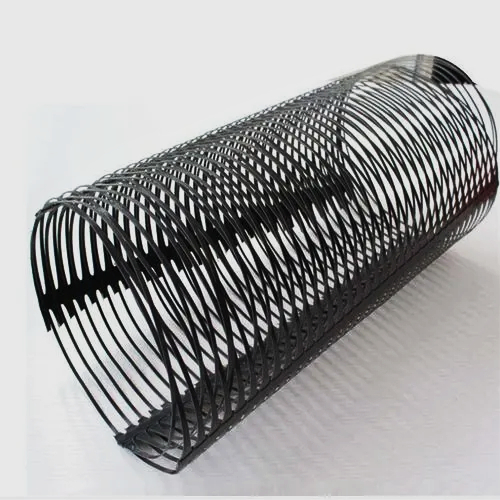
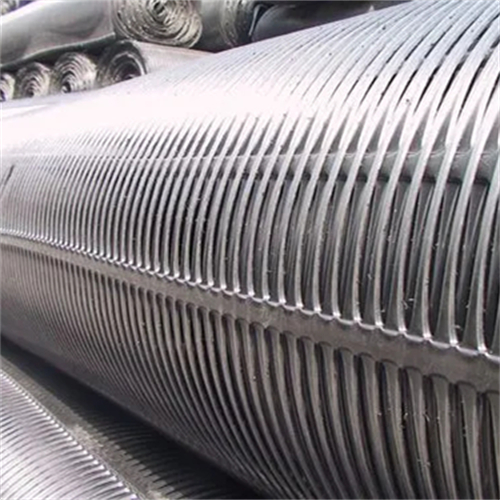
Uniaxial Reinforced Plastic Geogrid
Core Features:
·High Strength and Low Deformation: High longitudinal tensile strength, suitable for heavy-duty subgrades, high embankment slopes, and other engineering projects with stringent structural stability requirements
·Excellent Durability: Enhanced with anti-aging additives such as carbon black, offering resistance to ultraviolet radiation, acids and alkalis, corrosion, and low temperatures; capable of stable operation in environments ranging from -45℃ to -50℃; successfully applied in the permafrost region engineering of the Qinghai–Tibet Railway
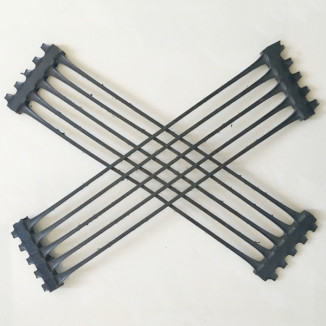
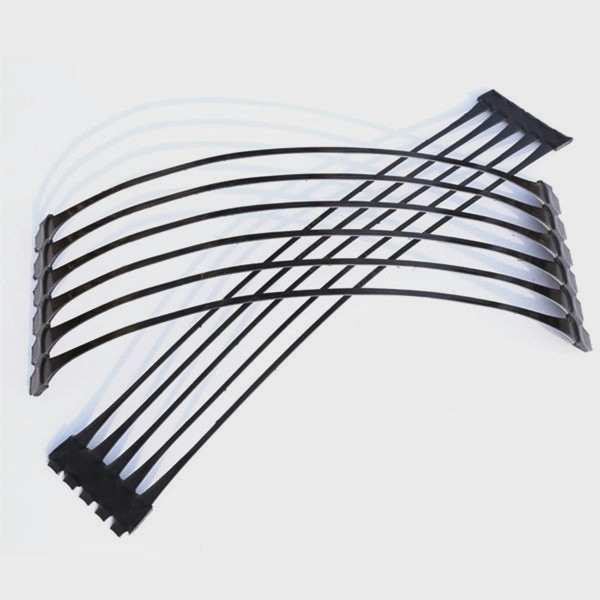
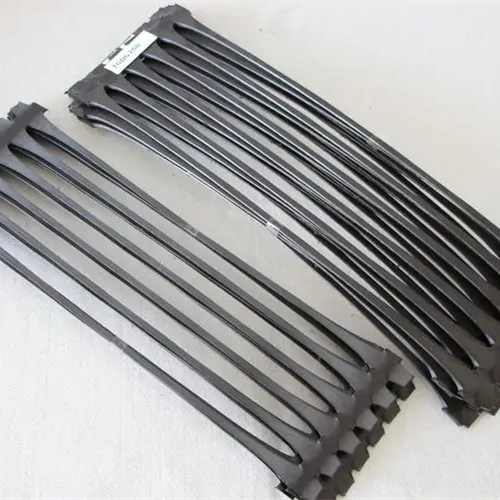
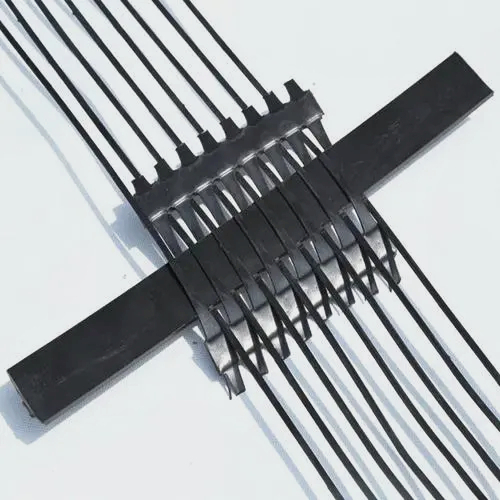
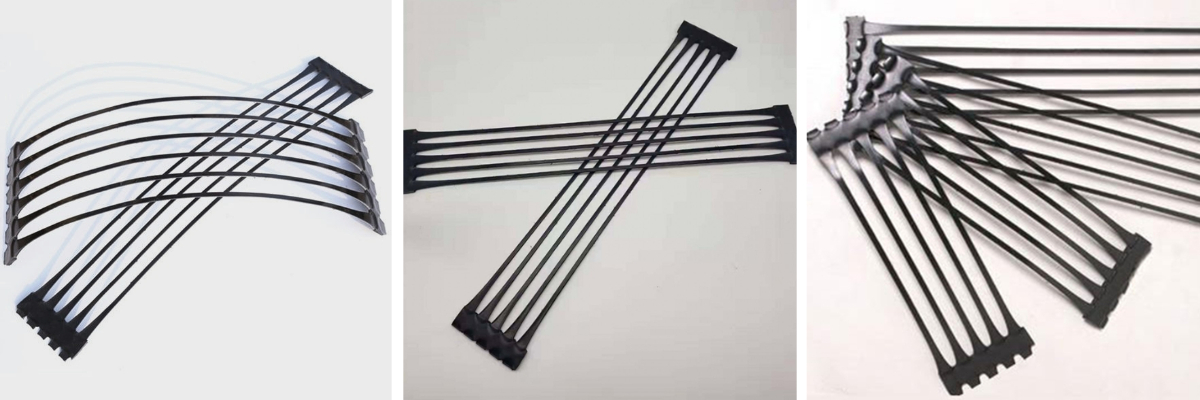
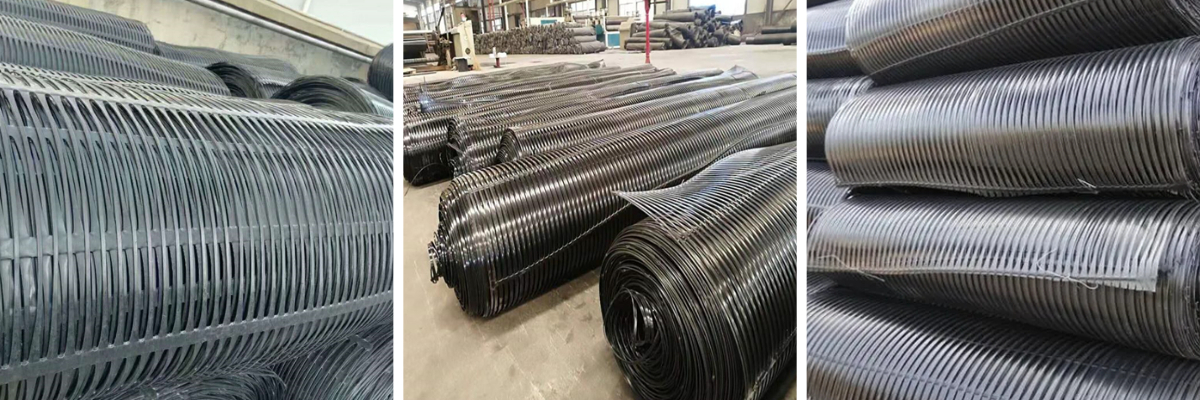
Uniaxial reinforced plastic geogrid is a high-strength geosynthetic material made from high-density polyethylene (HDPE) or polypropylene (PP) through extrusion, punching, and uniaxial stretching processes. Its primary function is to enhance the stability and load-bearing capacity of soil through directional reinforcement.
During the manufacturing process, the polymer chains are aligned in the longitudinal direction, forming a long oval-shaped network structure with high junction strength and uniform distribution. This imparts the material with extremely high tensile strength (100–200 MPa) and very low elongation (≤5%), achieving mechanical performance close to that of low-carbon steel and significantly outperforming traditional reinforcement materials.
Ⅰ. Core Features:
·High Strength and Low Deformation: High longitudinal tensile strength, suitable for heavy-duty subgrades, high embankment slopes, and other engineering projects with stringent structural stability requirements
·Excellent Durability: Enhanced with anti-aging additives such as carbon black, offering resistance to ultraviolet radiation, acids and alkalis, corrosion, and low temperatures; capable of stable operation in environments ranging from -45℃ to -50℃; successfully applied in the permafrost region engineering of the Qinghai–Tibet Railway
·Ease of Construction: Lightweight and highly flexible, allowing on-site cutting and overlapping (longitudinal lap: 150–200 mm, transverse lap: 50–100 mm), secured with U-shaped nails without the need for heavy machinery
·Cost Efficiency: Through lateral confinement, distributes loads over a wider area, reducing base layer thickness by up to 36%, lowering project costs by 20%–50%, and extending service life
Ⅱ. Main application areas:
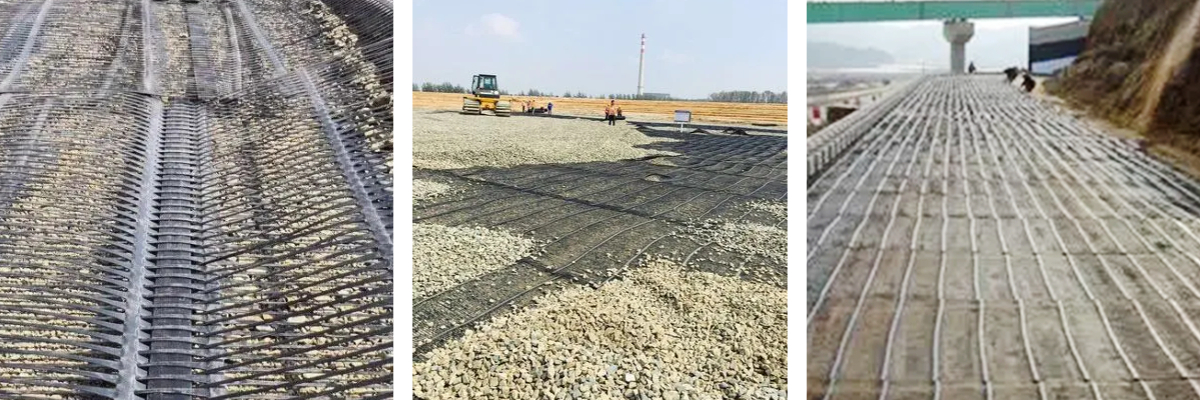
·Soft ground reinforcement: Improves subgrade bearing capacity, controls differential settlement, and is widely used in highway, railway, bridge abutment, and yard foundation projects
·Pavement reinforcement: Placed at the bottom of asphalt or concrete pavements, effectively reduces rut depth, delays reflective cracking, and extends pavement fatigue life
·Slopes and retaining walls: Enhances the stability of reinforced fill, allows for steeper slope designs, reduces land footprint, and improves structural safety
·River, coastal, and dike protection: Used in combination with gabions to strengthen resistance to erosion, prevent embankment collapse, and extend service life
·Landfills: Works in conjunction with impermeable barrier systems to control foundation settlement and gas emissions, maximizing landfill capacity utilization