Cellular confinement systems for subgrade stabilization
1. Greatly improve bearing capacity of weak foundation
Silt, collapsible loess, backfill and mucky soft soil can be effectively reinforced; subgrade bearing capacity increases 2–3 times without thick replacement of expensive aggregate.
2. Cut project material and transportation cost
The required thickness of aggregate cushion can be reduced by 50%–80%; local on-site sand and gravel can be reused as infill to lower stone purchase and freight costs.
3. High construction efficiency
Foldable packaging reduces transport volume by over 80%; workers can unfold and fix CCS manually without large heavy rollers, shortening construction period by more than 30%.
Introduction to Cellular Confinement Systems for Subgrade Stabilization
1. Definition
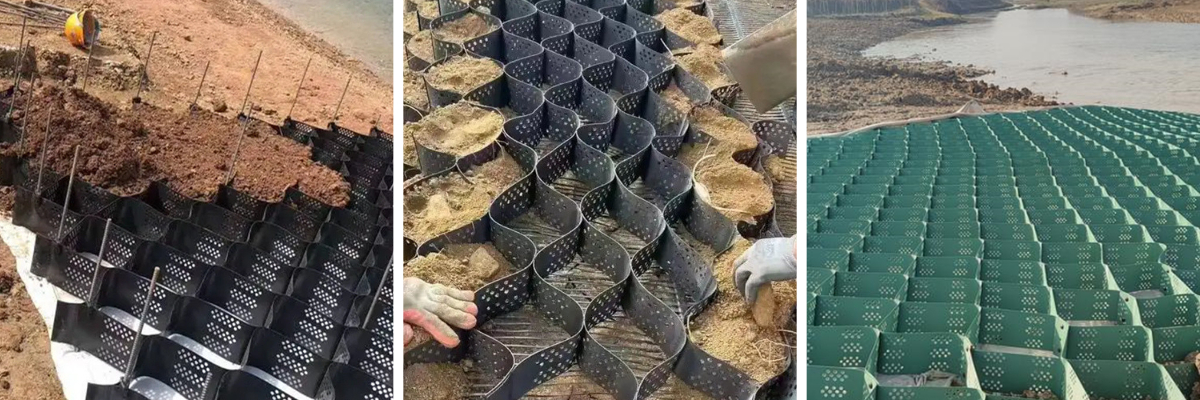
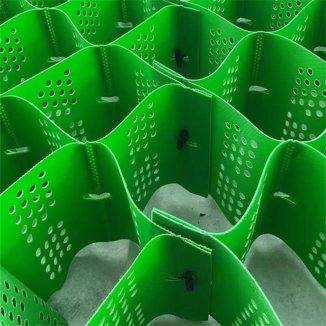
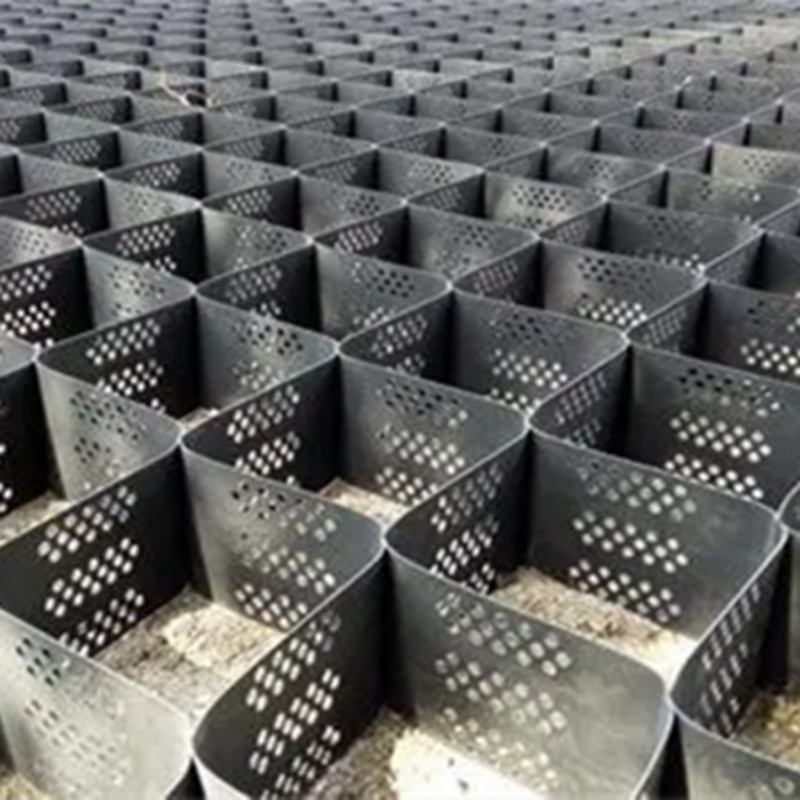
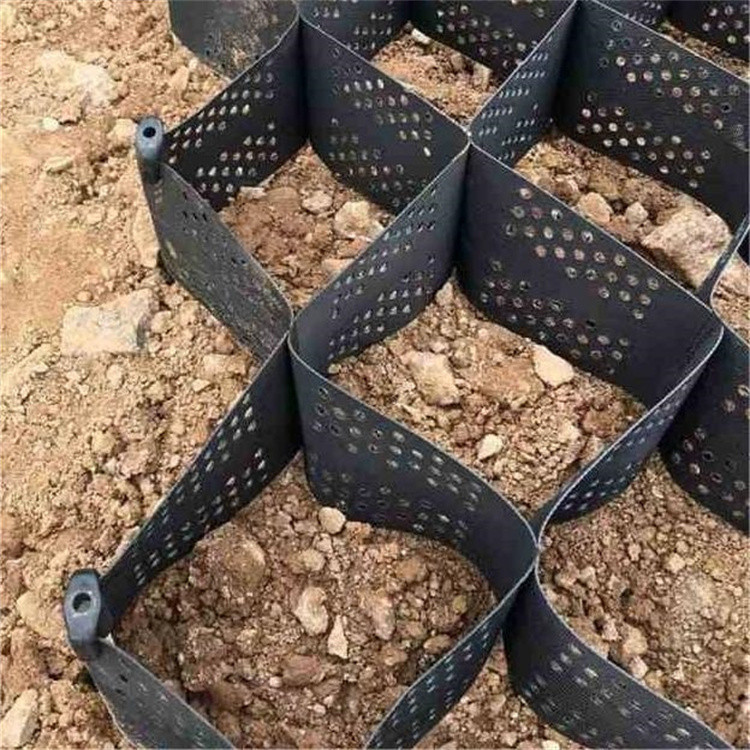
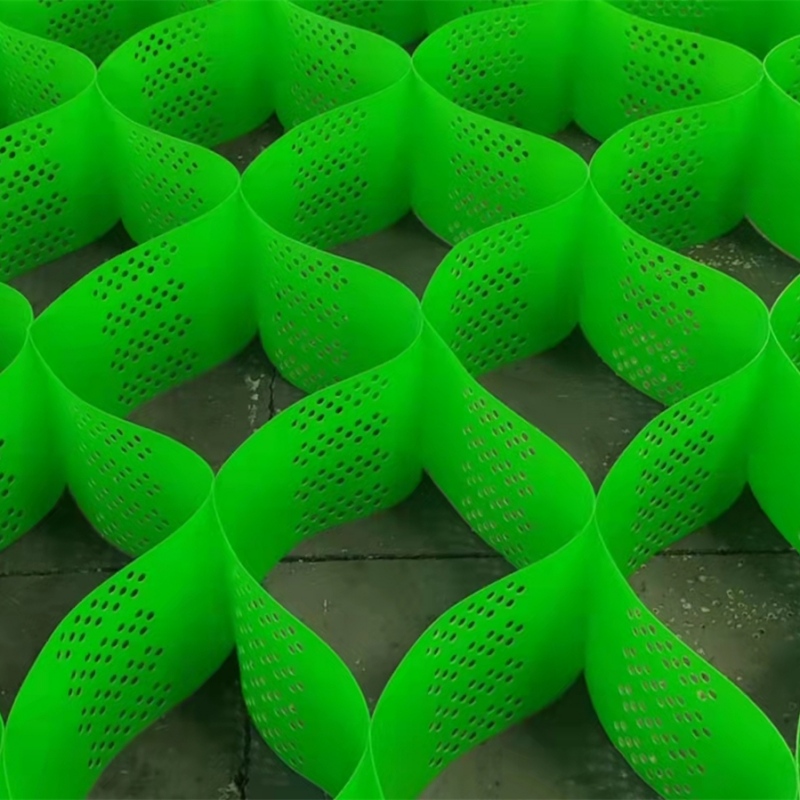
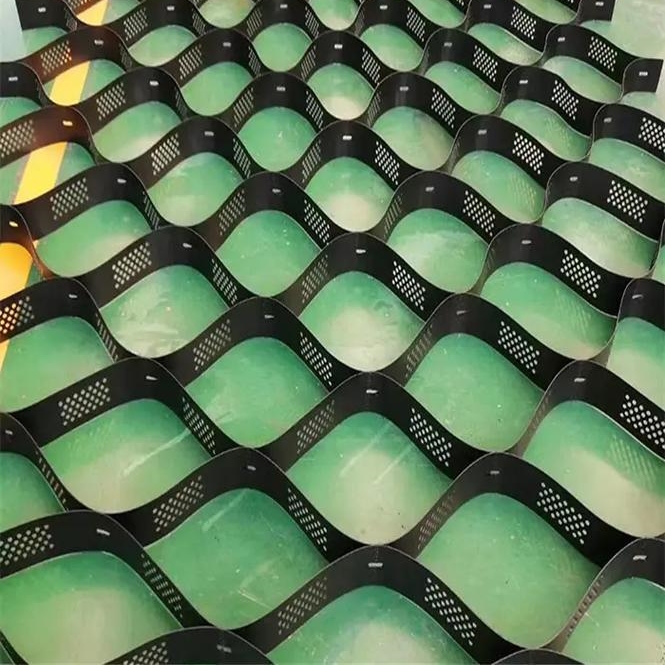
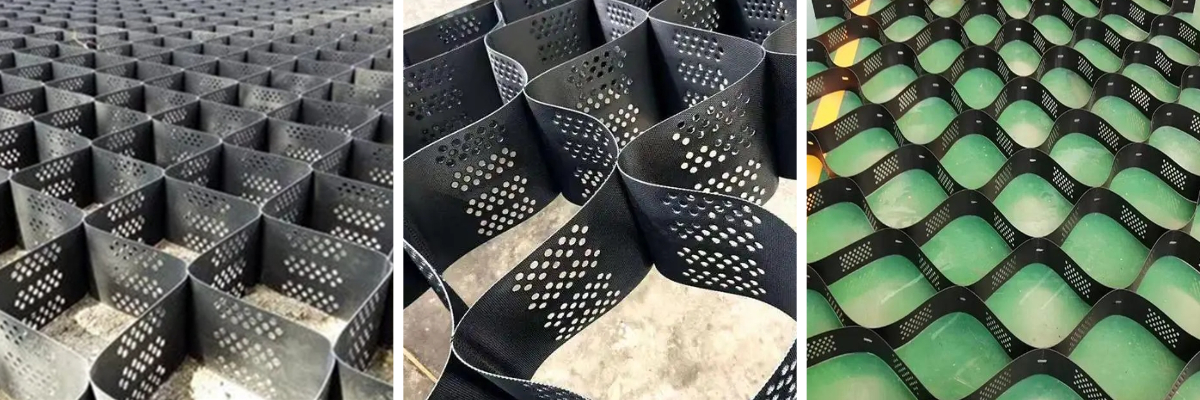
Cellular Confinement Systems (CCS), commonly known as geocell, are three-dimensional honeycomb geosynthetic structures specially designed for subgrade stabilization. Manufactured by ultrasonically welding modified HDPE strips at regular intervals, CCS is delivered folded and compact for low-cost transportation. After unfolding on-site and filling with crushed stone, sand or graded aggregate, it forms an integrated stiff load-bearing mattress to reinforce weak road foundations, restrain filler lateral movement and control differential settlement.
2. Core Working Mechanism for Subgrade
(1) Lateral Confinement Effect (Core Function)
Independent honeycomb cavities lock loose granular infill tightly. When vehicles apply vertical loads, cell walls generate hoop stress to stop aggregate outward sliding. Loose gravel gains artificial apparent cohesion, raising the shear strength of subgrade filling by 2–3 times and eliminating pavement rutting, shifting and spring soil.
(2) Uniform Load Dispersion (Snowshoe Beam Effect)
Interconnected cells work as a flexible rigid slab, dispersing concentrated wheel pressure to a wider range of underlying soft soil. Vertical compressive stress on the natural foundation is greatly reduced, cutting uneven settlement by 40%–65%.
(3) Drainage Function (Perforated CCS for Waterlogged Subgrade)
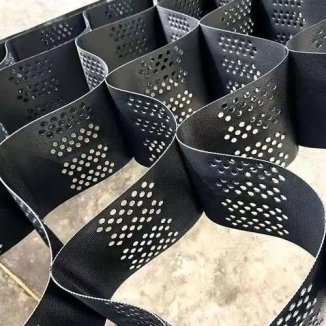
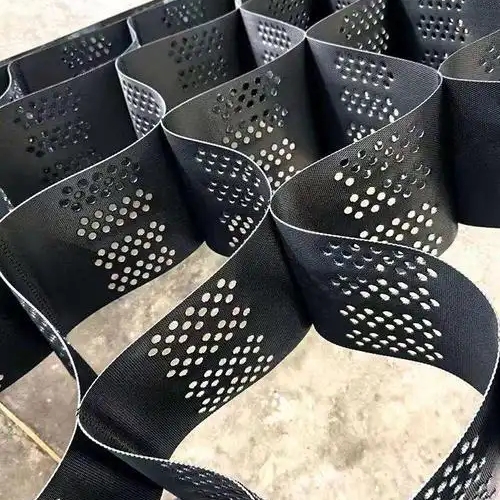
Perforated cellular confinement systems feature pre-punched holes to quickly drain pore water and rainwater trapped inside the subgrade layer. It lowers soil moisture content, improves bearing capacity of mucky soft ground and prevents mud pumping on rainy days.
(4) Stiffness Transition Adjustment
CCS effectively balances stiffness difference between new & old subgrade, bridge-culvert transition sections and embankment-abutment joints, reducing reflective cracks on asphalt or concrete pavement.
3. Main Material & Classification for Subgrade Use
Raw Material
Virgin HDPE blended with UV stabilizers, antioxidants and anti-freeze agents; design service life reaches 50–75 years for permanent highway, municipal and yard projects. Thin PP geocell is only suitable for temporary short-term access roads.
Three Main Types for Subgrade
1. Textured solid CCS (First choice for dry heavy-load subgrade)
Embossed rough surface boosts friction between cell walls and aggregate, maximizing confinement performance for expressways, mine haul roads and container yards without greening demands.
2. Perforated textured CCS (For low-lying, waterlogged soft subgrade)
Combines high friction and drainage capacity; ideal for saturated muddy foundation, valley roads and road shoulders requiring partial vegetation.
3. Smooth solid CCS (For temporary light-duty roads)
Low cost, simple structure, applied to construction temporary passages and low-volume residential lanes with light vehicle loads.
Common Subgrade Specifications
- Cell height: 100 mm (light traffic), 150 mm (standard highway), 200–250 mm (heavy mine/yard load)
- Sheet thickness: 1.0–1.2 mm (light load), 1.2–1.5 mm (general road), 1.5–1.8 mm (heavy haulage)
- Welding pitch: 330–400 mm (high rigidity for heavy load), 500–660 mm (cost-saving light traffic)
- Weld peel strength: ≥8 kN/m (standard), ≥10 kN/m (heavy-load permanent subgrade)
4. Key Advantages in Subgrade Reinforcement
1. Greatly improve bearing capacity of weak foundation
Silt, collapsible loess, backfill and mucky soft soil can be effectively reinforced; subgrade bearing capacity increases 2–3 times without thick replacement of expensive aggregate.
2. Cut project material and transportation cost
The required thickness of aggregate cushion can be reduced by 50%–80%; local on-site sand and gravel can be reused as infill to lower stone purchase and freight costs.
3. High construction efficiency
Foldable packaging reduces transport volume by over 80%; workers can unfold and fix CCS manually without large heavy rollers, shortening construction period by more than 30%.
4. Durable and low later maintenance
HDPE resists acid, alkali, seawater corrosion and freeze-thaw cycles; long-term vehicle loads will not easily damage the structure, significantly reducing pavement repair frequency caused by settlement and cracking.
5. Flexible adaptability
The integral flexible mattress tolerates slight uneven deformation of natural subsoil and avoids overall structural fracture compared with rigid concrete layers.
5. Typical Application Scenarios for Subgrade Stabilization
1. Highway & Traffic Engineering
Soft foundation of expressways, national/provincial highways; subgrade reinforcement during road widening; bridge-tunnel transition sections; mountain high-fill embankments; mine permanent haul roads and rural gravel highways.
2. Heavy-Duty Storage Yards
Logistics container stacking yards, large truck parking lots, airport cargo aprons, industrial raw material storage yards.
3. Municipal Urban Roads
Urban branch roads, residential community driveways, sponge city permeable pavement base, low-lying waterlogged municipal road subgrade.
4. Special Industrial Roads
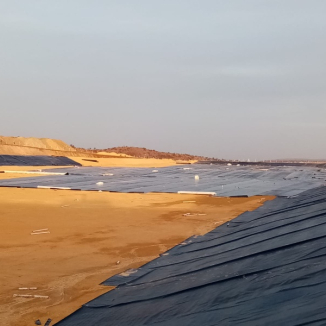
Internal access roads of photovoltaic power stations, landfill operation passages, desert sand-fixation transport roads.
6. Standard Construction Process for Subgrade CCS
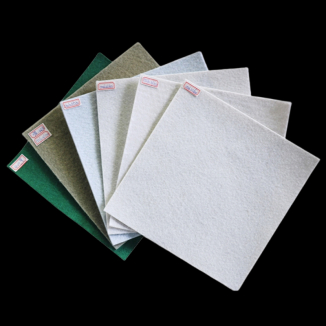
1. Foundation treatment: Clean, level and compact the original subsoil; lay non-woven geotextile as isolation layer to separate natural soil and aggregate.
2. Unfold and anchor CCS: Stretch the folded cellular system fully, fix edges, middle and splice joints with U-shaped steel ground nails to prevent rebound shrinkage.
3. Layered filling and compaction: Fill graded aggregate layer by layer (single layer height not exceeding cell height); compact step by step with light-to-heavy rollers to reach design compaction degree.
4. Upper pavement construction: After the CCS reinforced cushion is stable, lay cement stabilized base and asphalt/concrete surface layer according to road design standards.