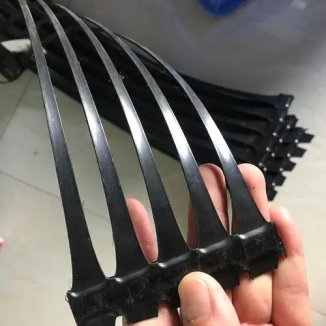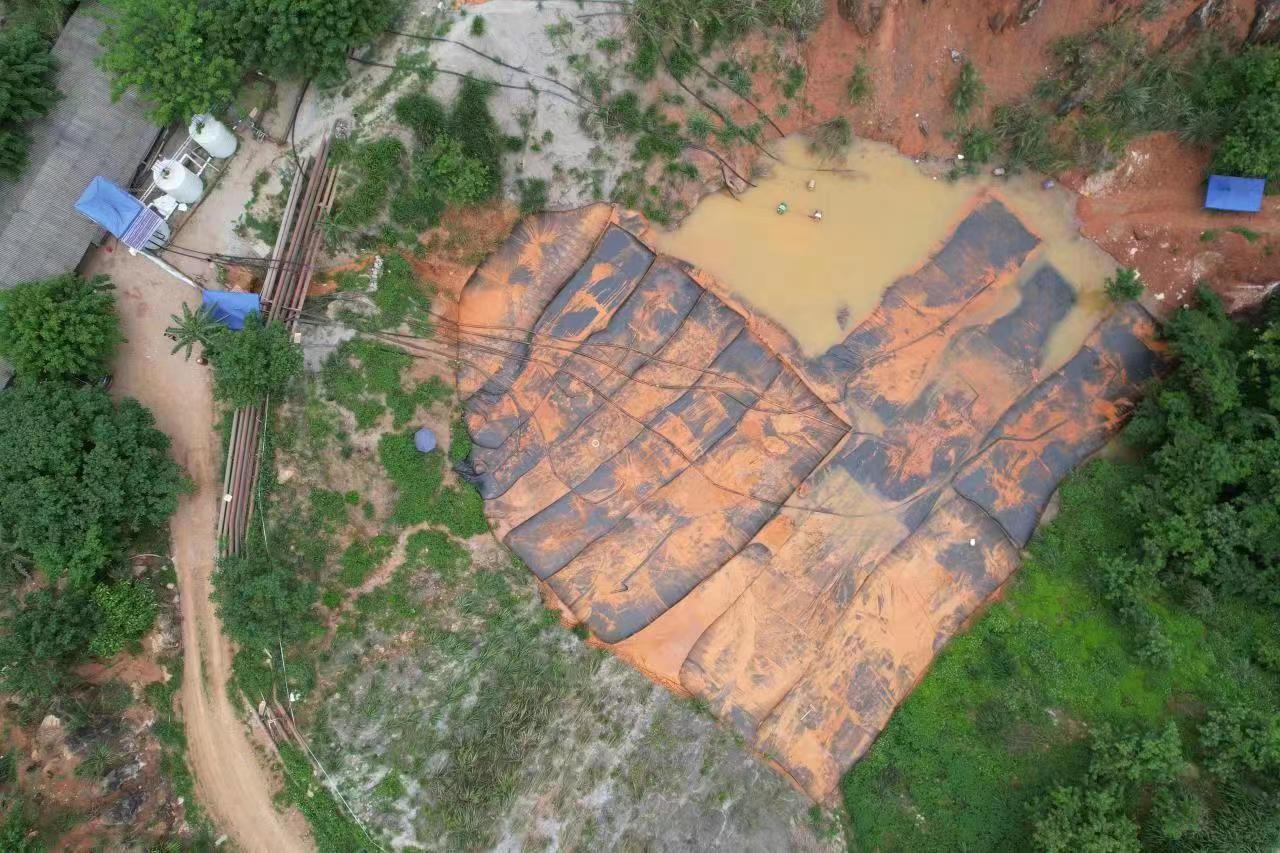

geotubes
High efficiency: Reduces sludge volume by 50–90%, reducing transport and operating costs.
Environmentally friendly: Physical process without chemicals; filtrate is reusable.
Easy installation: The equipment is easy to install on site and is highly adaptable.
Low Cost: Cheaper than traditional dewatering and disposal methods.
Multifunctionality: Combines dewatering, storage and transportation; sludge can be reused.
Safety: Forms a stable solid material, minimizing secondary contamination.
Geotextile tubular bags are large tubular bags sewn from high-strength geotextile material (specialized polypropylene or polyester fibers). Functioning like a giant permeable "sausage," they utilize their filtration and dewatering properties to achieve several objectives: separating solids from liquids, dewatering sludge, and protecting excavations.
Geotextile tubular bag technology originated in the 1950s and has developed significantly in recent years through theoretical research and practical application, becoming widely used in fields such as flood protection and water level regulation, breakwaters, coastal erosion control, wastewater storage in embankments, sedimentation and land reclamation projects.
Geotextile tubular bags have the advantages of simple production, quick installation and transportation, and high cost-effectiveness. When constructing dams, bags filled with sand or slurry are usually more economical and environmentally friendly than traditional concrete or stone structures, and it is possible to use local slurry as aggregate. For sludge treatment, such bags provide low cost and allow large-scale dewatering of sludge and wastewater.

I. Main characteristics:
Material:Geotextile resistant to ultraviolet radiation, aging and corrosion.
Construction:A tubular shape with cuffs or necks at both ends for securing and filling.
Function:Allows liquid (water) to pass through while keeping solids inside the bag.
II. Basic working principle: filtration and dewatering
Filling:The pulp with solid particles (for example, river silt, industrial sludge, tailings) is fed under pressure into a geotextile bag.
Dehydration:Under the action of its own weight (pulp pressure) and filling pressure, water is squeezed out through the micropores of the geotextile.
Hold:Solid particles are effectively retained inside the bag.
Consolidation:As water is continuously removed, the volume of solids inside the bag gradually decreases, the strength increases, and eventually a stable solid mass is formed.

III. Main areas of application
The greatest value of application:
Environmental protection and sludge dewatering (main application):
Dredging of rivers and lakes:Treatment of sludge with high moisture content to reduce volume and ensure safe disposal.
Industrial precipitation:Treatment of sludge from chemical plants, paper mills, wastewater treatment plants, etc.
Tailings storage facilities:Dewatering and storage of mine tailings.
Dredging of ports and waterways:Processing of marine mud and sediments.
Temporary and permanent cofferdams:Formation of breakwaters, coastal protection structures or construction pits after filling.
Artificial islands and wetlands:The base or outline of an embankment for construction.
Erosion protection:Protection of embankments and beaches from erosion by water.
Dehydration of animal manure:Efficient processing of animal manure.
Pond cleaning:Removal of bottom sediments from fish and shrimp ponds.

IV. Key points of construction and operation
Site preparation:A level and solid base is required, with a waterproof layer (such as a geomembrane) laid to protect the base.
Installation of tubular bags:Unfold the bags in the designated locations and secure the filling ports.
Filling with pulp:Using a pump, evenly feed the pulp in layers, controlling the pressure and filling speed.
Drainage and consolidation:Allow the sediment to settle completely and drain the water; if necessary, add flocculants to accelerate particle settling.
Multi-level stacking:After the first layer has consolidated, lay and fill the second layer to form larger structures.
Post-processing:Once fully consolidated, the structure can be landscaped or dismantled for final disposal.

V. How to choose suitable geotextile pipes?
When choosing, you need to consider the following key factors:
Geotextile parameters: Key characteristics include equivalent pore size (O90, which determines the size of retained particles), tensile strength, permeability, and anti-clogging properties. Geotextiles should be selected based on the particle size distribution of the pulp to ensure free drainage without sludge leakage.
Dimensions: The diameter and length of the tube are determined based on the volume of pulp being processed and site conditions.
Filling material properties: Solids content, particle size, pH level, organic content and other characteristics are taken into account.
Engineering Requirements: Determines whether the tube is used for dewatering or structural reinforcement, as well as the final strength and drainage time requirements.
Resume
Geotextile tubular bags provide an innovative, cost-effective and environmentally friendly solution for solid-liquid separation and containment structures. They are especially suitable for high-moisture, high-volume sludge dewatering projects where space is limited, converting liquid waste into manageable solid material. This technology is an effective tool to achieve the goals of “reduction, stabilization and safe disposal.”