Geotextiles: The Essential Geosynthetic Driving Global Infrastructure and Environmental Protection
Geotextiles: The Essential Geosynthetic Driving Global Infrastructure and Environmental Protection
Date: April 22, 2026
From the roads we drive on to the landfills that manage our waste, an invisible layer of engineered fabric is quietly shaping the modern world. Geotextiles—permeable synthetic textiles used in civil engineering and environmental applications—have become indispensable materials across construction, mining, agriculture, and environmental remediation sectors worldwide. As global infrastructure investment accelerates and environmental regulations tighten, these versatile fabrics are proving essential for building resilient, sustainable, and cost-effective solutions.
Market Growth: A Multi-Billion Dollar Industry on the Rise
The global geotextiles market is experiencing robust expansion. According to Fortune Business Insights, the market was valued at USD 3.86 billion in 2025 and is projected to grow from USD 4.13 billion in 2026 to USD 6.15 billion by 2034, exhibiting a compound annual growth rate (CAGR) of 6.80% during the forecast period. Research and Markets reports even broader figures, estimating the geotextiles market grew from USD 9.16 billion in 2025 to USD 9.76 billion in 2026, with a projected CAGR of 6.96% reaching USD 14.68 billion by 2032.
The geotextile products market has demonstrated strong numerical growth over the past five years, with market size increasing by 60.3% from 2021 to 2026, according to Dataintelo analysis. The expected market size by 2030 is projected to reach USD 16.5 billion at a CAGR of 10.8%.
Key Growth Drivers:
Infrastructure spending reached USD 3.2 trillion globally in 2025
Cost efficiency in road projects reduces construction costs by 15%–30%
Road lifespan increases by 25%–50% when geotextiles are used
Urban population reached 56% globally in 2025, requiring approximately 2.5 million km of new roads annually
Regional Leadership: Asia Pacific at the Forefront
Asia Pacific dominated the geotextiles market with a 35.40% share in 2025, driven by rapid urbanization, infrastructure development, and government initiatives for rural connectivity, particularly in India and China. The widespread use of geotextiles in road construction, erosion control, and agriculture further supports regional dominance.
The United States geotextiles market is projected to reach USD 0.98 billion by 2032, driven by booming automotive and home refurbishment industries along with advancements in fiber technology. Europe is seeing growth in natural fiber geotextiles such as jute and coir, driven by environmental regulations and green infrastructure demands.
Understanding Geotextile Types: Woven vs. Non-Woven
Geotextiles generally fall into two primary families, each with distinct characteristics and applications.
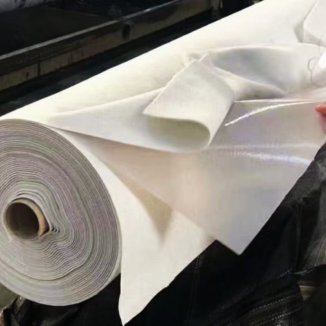
Non-Woven Geotextiles are created using needle-punched or heat-bonded synthetic fibers that form a flexible, porous sheet. Unlike woven types, they do not follow a regular weave pattern, giving them higher elongation properties and excellent permeability. These characteristics make them particularly effective in filtration, drainage, and protection roles.
Non-woven geotextiles remain the most commonly specified type due to their versatility across separation, filtration, and protection applications. In civil engineering, they are ideal for lining filter drains, protecting trenches, separating fine fill from granular bases, or acting as a barrier between soft subgrade and overlying layers.
Woven Geotextiles are manufactured by interlacing high-strength polymer yarns into a stable, durable fabric. Their tight, grid-like weave provides excellent tensile strength and dimensional stability, making them especially suitable for soil reinforcement applications. Woven geotextiles are particularly effective for reinforcement, separation, and stabilization—enhancing soil mechanical properties, preventing intermixing of different soil layers, and improving shear strength of subsoils.
Market Share Breakdown (2026):
Non-Woven Geotextiles: 48% market share, 11.5% CAGR (2021–2026)
Woven Geotextiles: 42% market share, 8.7% CAGR (2021–2026)
Knitted Geotextiles: 10% market share, 6.2% CAGR (2021–2026)
Non-woven geotextiles dominate due to higher filtration efficiency (up to 95%).
Four Core Functions: Separation, Filtration, Drainage, and Reinforcement
Geotextiles perform four essential functions that deliver measurable value across applications:
Separation prevents intermixing between different soil layers—for instance, separating subgrade from aggregate in road construction. This maintains structural integrity and extends service life. According to Terram, nonwoven separator fabrics in rail applications prevent fine subgrade particles from migrating into ballast, maintaining long-term stability and avoiding costly early renewals.
Filtration allows water to pass through while retaining fine soil particles, preventing clogging of drainage layers and maintaining long-term flow capacity. Non-woven geotextiles provide ideal solutions where water must flow freely while retaining fine soils.
Drainage enables water to flow both vertically and horizontally through the fabric, essential for subsurface water management in roadways, retaining walls, and landfills. Geotextiles support up to 30% higher water drainage efficiency compared to conventional methods.
Reinforcement enhances the mechanical properties of soil by adding tensile strength and distributing applied loads across a larger area. Geotextiles provide load distribution improvement of up to 40% increase in bearing capacity and a tensile strength range of 8 kN/m to 200 kN/m depending on application.
Applications Across Industries
Geotextiles have become essential across a broad range of sectors:
Road Construction and Railways: Geotextiles reduce construction costs by 15%–30% in road projects and increase road lifespan by 25%–50%. They stabilize soft subgrades, provide separation between layers, and improve drainage in highway and railway infrastructure. A notable real-world example: a contractor installed Solmax® MIRAFI® H2Ri wicking geotextile on Interstate 94 in Minnesota using a milling machine, resulting in accurate placement with reduced time and cost.
Erosion Control and Slope Stabilization: Geotextiles reduce soil erosion by up to 90%. Recent research published in the journal Geotextiles and Geomembranes (2025) has developed two innovative geotextile-based slope stabilization approaches: vegetation-geotextile composites and geotextiles treated with alkali-activated binder. Coconut fiber blankets were found to outperform straw fiber blankets in mechanical stability and plant growth promotion.
In practice, a river defense construction project was completed in Chilloroya, Livitaca district, Cusco, Peru, in April 2026. The project invested over 1.4 million soles and employed geotextiles in wall construction to control erosion and guarantee stability.
Landfills and Waste Management: Global waste generation reached 2.24 billion tons in 2024. Geotextiles improve landfill liner efficiency by 40% and reduce leachate contamination risks by approximately 35%. According to Envitech, a professional engineering organization, geosynthetics are essential in landfill basal liners—barrier systems composed of multiple layers, typically including geomembranes, geotextiles, and clay materials, to prevent leachate migration. They are also critical in leachate ponds, mine waste facilities, and landfill capping systems.
Mining and Environmental Remediation: Geotextile tubes have been proven as an environmentally sustainable, scalable, and best-practice solution for dewatering tailings and mine waste. With more than two decades of proven success, geotextile tube technology is highly resourceful, demonstrated by multiple projects achieving goals such as increasing storage capacity, recovering critical minerals, treating acid mine drainage, and enabling reuse of mine waste for geotechnical structures.
Agriculture: Geotextiles are widely used in agriculture for soil stabilization, drainage, and erosion control. The market continues to see increasing demand for high-performance and functional textiles in agricultural applications.
Innovation Driving the Industry Forward
The geotextiles industry is undergoing transformative shifts driven by converging technological, regulatory, and climate-related forces.
Smart Geotextiles with Embedded Sensors: Emerging innovations such as embedded sensors are setting new performance benchmarks across civil engineering, mining, urban drainage, and transportation sectors. The SmartOSE project, funded by the German Federal Ministry of Education and Research, demonstrated that polymer optical fiber sensors, interrogated by OTDR and processed with machine-learning algorithms, provide a scalable, economical, and robust solution for monitoring geosynthetics and earth-reinforced structures. Field tests showed the system could reliably detect strain changes associated with ground movement, even in harsh conditions, with performance metrics including monitoring a 100m fiber segment with a few centimeters of spatial resolution and micro-strain sensitivity. Cost analysis indicated a reduction of sensor and cabling expenses by more than 50% compared with conventional potentiometric arrays.
TenCate Geosynthetics has developed the TenCate GeoDetect® system, the first fiber optic monitoring solution designed specifically for geotechnical applications. It combines the benefits of geotextile materials with the latest fiber optic sensing technologies to monitor geotechnical structures and generate early warnings, detecting and localizing leaks or instability with accuracies of 1 l/min/m and 0.02% deformation respectively.
Biodegradable Geotextiles: A remarkable advancement is the development of biodegradable geotextiles from materials such as jute, coir, and biopolymers. These eco-friendly alternatives are especially effective in temporary erosion control applications where long-term presence of synthetic fabrics may be undesirable. Natural fiber-based geotextiles are increasingly utilized in slope stabilization, coastal defense, and landscape restoration. With mounting regulatory pressure to adopt circular economy principles and reduce synthetic polymer waste, biodegradable solutions are expected to capture a growing share of the geotextile market.
The Fibertex SlopeSaver 292, for example, is a biodegradable geojute designed as a surface stabilizer for pre-vegetated slopes. Manufactured from woven natural jute fibers forming a mesh of approximately 10 mm × 10 mm aperture, the jute eventually degrades into an organic mulch by which time planted vegetation has developed its own rooting system.
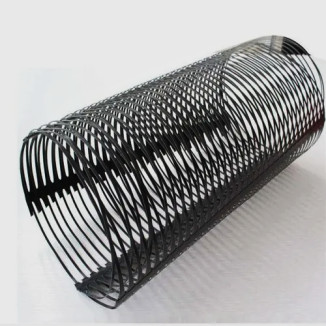
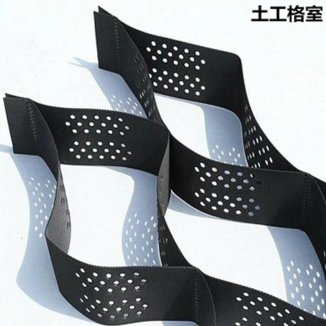
Advanced Composite Geotextiles: Recent breakthroughs have yielded composite geotextile systems with up to 40% greater tensile strength and enhanced durability. These advanced materials are designed to withstand extreme conditions, particularly in soil stabilization, drainage filtration, and erosion control. Composite solutions combining geogrids and geotextiles offer multi-functional performance in a single layer, reducing installation time while boosting reinforcement efficiency.
Environmental and Economic Benefits
Beyond technical performance, geotextiles deliver significant sustainability advantages. They reduce the carbon footprint in construction by 18%–25%. When comparing material costs, geotextiles provide initial cost savings of 20%–35% over traditional gravel layers, with maintenance reduction of approximately 59% over 10 years.
From a lifecycle perspective, decision-makers now evaluate geotextiles not only for short-term installation cost but for lifecycle performance, maintenance implications, and end-of-life considerations. Procurement criteria increasingly include durability metrics, biodegradability where applicable, carbon footprint disclosures, and compatibility with remediation or reclamation projects.
Material Trends
By material, polypropylene is expected to retain the largest market share, supported by its high strength, cost-effectiveness, and wide usage in infrastructure projects such as roads, dams, and riverbanks. Its lightweight and durability make it ideal for demanding construction environments.
Natural fibers such as jute and coir are gaining traction, particularly in rural road construction. Government programs such as India's PMGSY-III are promoting the use of coir geotextiles for rural road construction, enhancing market penetration in rural infrastructure projects.
Future Outlook
The geotextiles industry is bracing for an exciting wave of innovation and deployment. Late 2025 is expected to see expansion of smart-sensor geotextile projects across large civil infrastructure projects, including urban stormwater systems and bridge deck overlays. The industry continues to see rapid adoption of geotextile systems in solar farm foundations, stormwater filtration networks, and green building envelopes.
Advanced polymer science and manufacturing innovations are producing higher-performing synthetic options with improved tensile strength, elongation control, and engineered porosity, enabling designers to select materials precisely tuned to function-specific demands. Digital tooling and sensor integration are beginning to enter the value chain, allowing for condition monitoring and performance validation over time, supporting outcome-based contracting models.
As urbanization intensifies and climate variability increases the frequency of extreme weather events, stakeholders are recalibrating design specifications and procurement frameworks to prioritize materials that deliver multifunctional performance across filtration, separation, reinforcement, and protection roles. Geotextiles have evolved from niche civil-engineering commodities into strategic materials that influence long-term infrastructure resilience, environmental rehabilitation, and agricultural productivity.
From highway reinforcement to landfill lining, from slope stabilization to coastal protection, geotextiles are proving that sometimes the strongest foundation is the one you don't see. As global infrastructure demands intensify and environmental expectations rise, these engineered fabrics will continue to play an essential role in building a more resilient and sustainable world.
Keywords: geotextiles, geosynthetics, nonwoven geotextile, woven geotextile, geotextile market, soil reinforcement, erosion control, drainage, filtration, landfill liner, slope stabilization, smart geotextile, biodegradable geotextile, geotextile applications, infrastructure construction, civil engineering materials, separation layer, mining tailings dewatering, road construction
This article provides an overview of geotextile technology and market trends. For specific project applications and technical specifications, consulting qualified geotechnical engineers is recommended.