Common Materials, Weights and Specifications of Geotextiles for Landfill Sites
Common Materials, Weights and Specifications of Geotextiles for Landfill Sites
1. Main Materials: PP vs PET
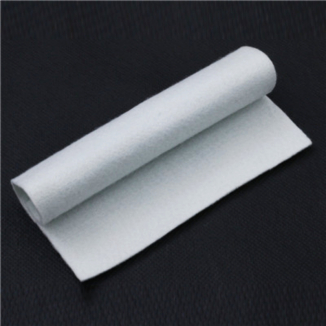
Two mainstream materials are adopted for landfill geotextiles: PP (Polypropylene) and PET (Polyester). Spunbond needle-punched filament geotextiles and staple fiber needle-punched geotextiles are the major types, complying with standards CJ/T 430-2013 and GB/T 17639.
1.1 PET (Polyester)
Advantages: Excellent anti-aging performance (UV resistance service life > 20 years), high tensile strength, good elongation, strong acid and alkali resistance (pH 2–12), low long-term creep.
Disadvantages: Higher density (1.37 g/cm³), slightly higher cost, mediocre low-temperature resistance.
Application: Protective layer above HDPE membrane, slope protection, capping system and areas exposed to the open air for long terms.
1.2 PP (Polypropylene)
Advantages: Outstanding acid and alkali resistance (pH 1–14), low density (0.91 g/cm³), cost-effective, hydrophobic property.
Disadvantages: Poor UV resistance (anti-aging additives required), inferior high-temperature resistance (softening point: 130–160 ℃), relatively larger creep.
Application: Isolation and filtration layer below HDPE membrane, leachate drainage layer.
Material Selection Guide
Area above membrane, side slopes & capping works: PET filament geotextile
Area below membrane & drainage layer: PP staple fiber geotextile
Hazardous waste landfills & highly corrosive environments: Prioritize PP
Exposed areas & projects requiring long service life: Prioritize PET
2. Common Weights & Applications (g/㎡)
2.1 300 g/㎡ (Mainly staple fiber)
Usage: Isolation and filtration under membrane, cushion protection for GCL, filtration for drainage layers.
Reference indicators: Tensile strength ≥ 10 kN/m; CBR burst strength ≥ 1.5 kN; Permeability coefficient ≥ 1×10⁻¹ cm/s.
2.2 600 g/㎡ (Mainly filament)
Usage: Protective layer for HDPE membrane, slope protection, isolation for capping system (minimum requirement for relevant projects).
Reference indicators: Tensile strength ≥ 20 kN/m; CBR burst strength ≥ 3.5 kN; Anti-aging performance ≥ 5000 hours.
2.3 800 g/㎡ (Filament)
Usage: Heavy load areas, steep slopes (gradient > 1:2), areas with heavy machinery compaction, hazardous waste landfills.
Reference indicators: Tensile strength ≥ 30 kN/m; CBR burst strength ≥ 5.0 kN.
2.4 200 g/㎡ (Staple fiber)
Usage: Filtration for blind ditches and leachate collection pipes, secondary isolation layers.