

Fiberglass Geogrid
1.Main Components: Glass fiber geogrids are primarily composed of silicon dioxide, making them inorganic materials with extremely stable physical and chemical properties.
2.High Tensile Strength and Low Elongation: Exhibits high tensile strength in both the warp and weft directions, with a breaking strength reaching over 30–200 kN/m, and a breaking elongation typically ≤3%.
3.No Long-Term Creep: Does not undergo plastic deformation under long-term loading, ensuring durable and stable material performance.
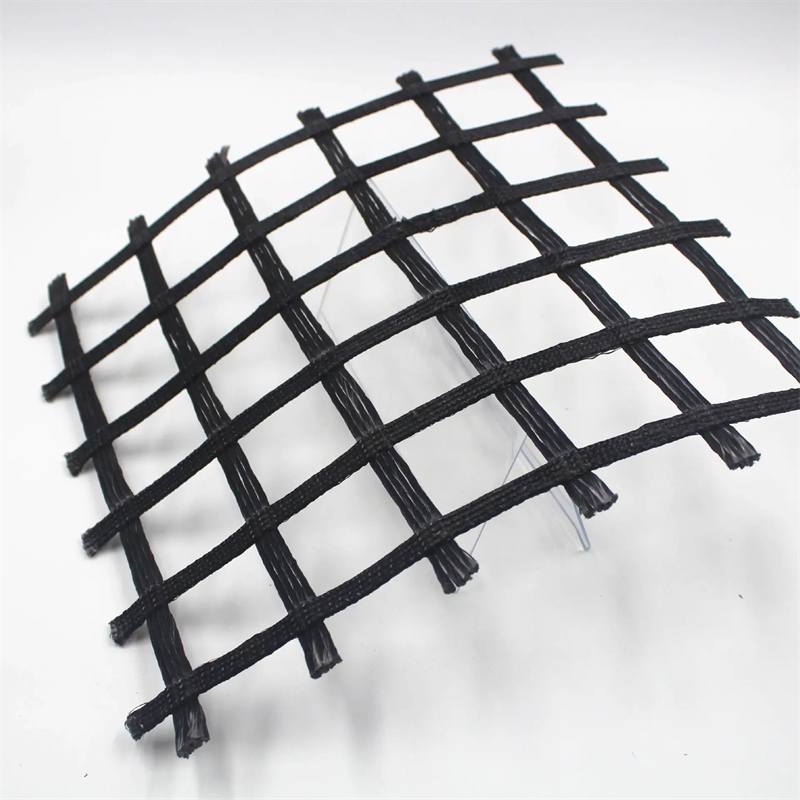
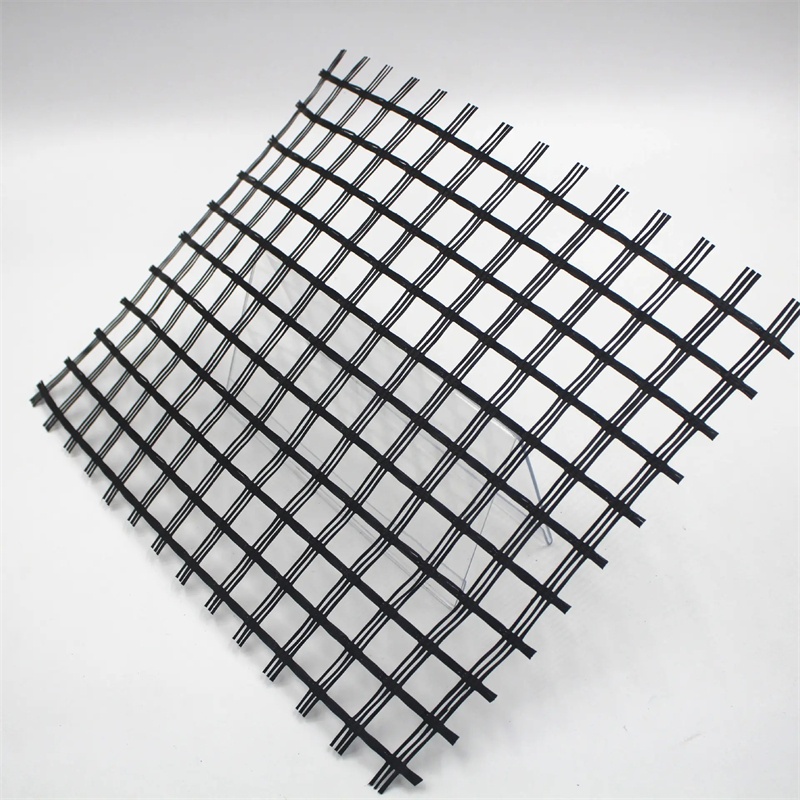
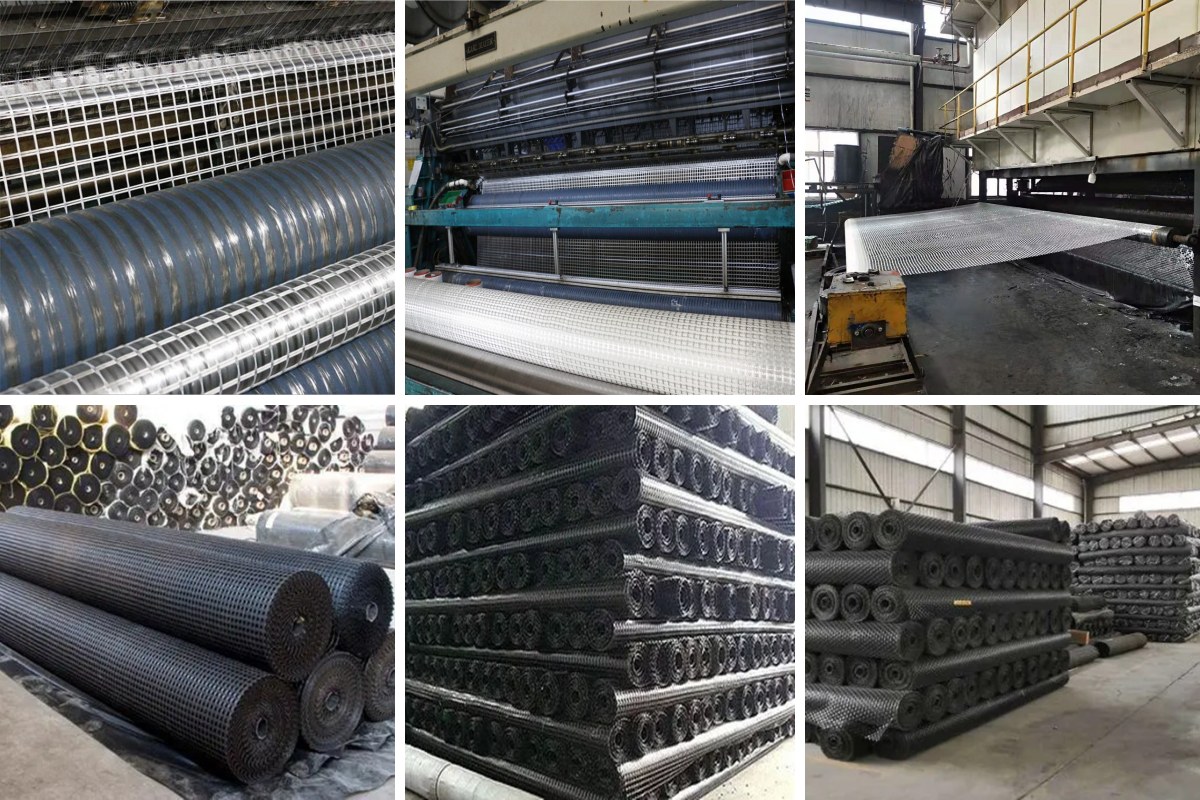
Fiberglass geogrid is a semi-rigid geosynthetic material made from high-strength, alkali-free fiberglass as the base material, formed into a mesh structure through warp knitting technology, and coated with a special protective layer. It is widely used in infrastructure projects such as roads, railways, and water conservancy, offering excellent reinforcement, crack resistance, and stability performance.

I. Main Components and Physical Properties
1.Main Components: Glass fiber geogrids are primarily composed of silicon dioxide, making them inorganic materials with extremely stable physical and chemical properties.
2.High Tensile Strength and Low Elongation: Exhibits high tensile strength in both the warp and weft directions, with a breaking strength reaching over 30–200 kN/m, and a breaking elongation typically ≤3%.
3.No Long-Term Creep: Does not undergo plastic deformation under long-term loading, ensuring durable and stable material performance.
4.Excellent Thermal Stability: Capable of withstanding extreme temperatures ranging from -100°C to 280°C, suitable for construction in extremely cold or hot environments, and particularly resistant to high temperatures up to 170°C during asphalt paving without damage.
5.High Elastic Modulus: Ranging from 67 to 76 GPa, effectively enhancing pavement stiffness and resistance to deformation.

II. Core Features and Technical Advantages
1.High Strength and Low Elongation
Fiberglass geogrids exhibit high tensile strength in both the warp and weft directions, with a typical tensile strength range of 30–200 kN/m and a tensile elongation of ≤3%. They effectively resist soil tensile deformation and prevent structural instability.
2.Excellent Thermal Stability and Durability
· With a temperature resistance range from -100°C to 280°C, these geogrids can withstand high temperatures up to 170°C during asphalt paving without performance degradation.
· Inorganic materials (primarily composed of silicon oxide) have stable physical and chemical properties, exhibiting resistance to aging, corrosion, and long-term creep, with a service life exceeding 25 years.
3.Superior Interface Bonding Capability
The surface of the geogrid is coated with modified asphalt or self-adhesive resin, enabling a strong bond between the grid and asphalt mixture. This creates a "mechanical interlock" effect, enhancing the overall structure’s resistance to shear and sliding.
4.Load Distribution and Stress Buffering
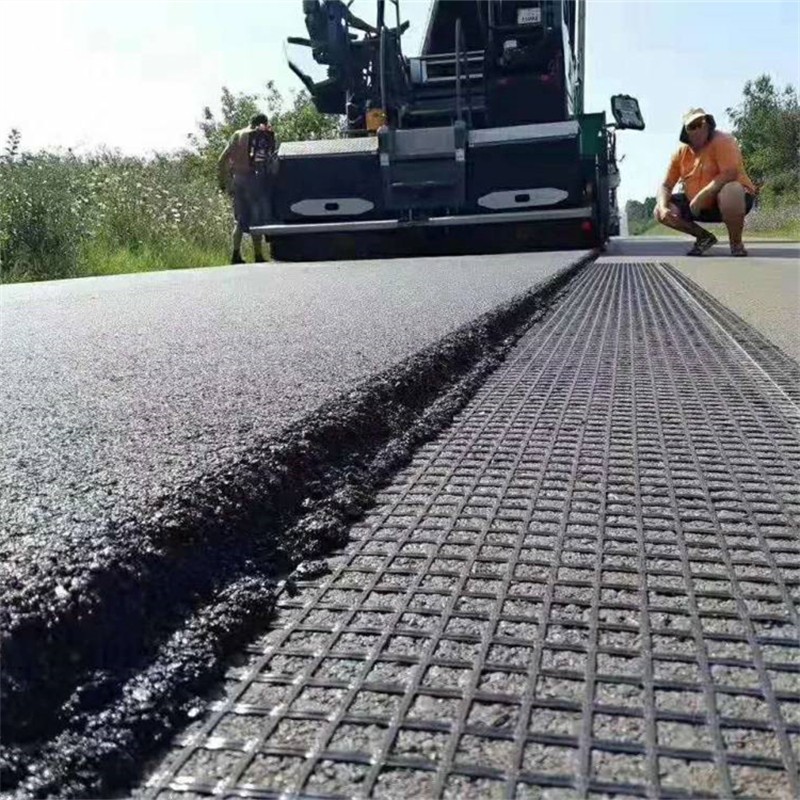
In pavement structures, the geogrid acts as a "skeleton," uniformly distributing concentrated loads, reducing stress concentration in the base layer, delaying the propagation of reflective cracks, and minimizing pavement deflection.
III. Typical Application Scenarios
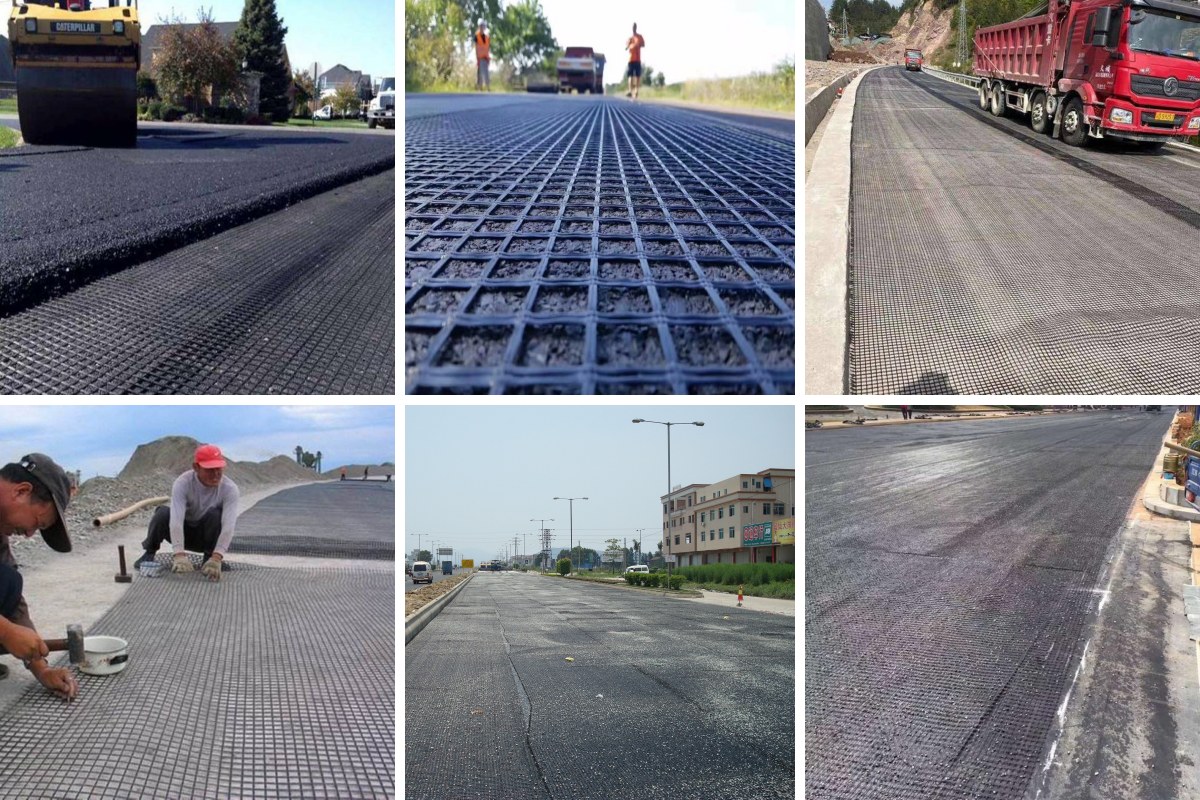
1.Retrofitting and Overlay of Existing Roads
Used for asphalt overlay on existing asphalt or cement concrete pavements to suppress reflective cracking and extend service life by 5–8 years.
2.Soft Soil Foundation Reinforcement
Laid in soft soil areas to facilitate drainage and consolidation, uniformly distribute stress, and reduce differential settlement.
3.High-Grade Roads and Airport Runways
Enhances overall subgrade strength, resists rutting and fatigue cracking, and is suitable for heavy-duty transportation infrastructure such as highways, railways, and airport runways.
4.Slope and Embankment Protection
Improves soil stability, prevents soil erosion and landslides, and is widely used in riverbanks, coastlines, and retaining wall projects.
5.Crack Prevention in Base Layers of New Roads
Glass fiber grids are installed in semi-rigid base layers to prevent shrinkage cracks from reflecting upward into the surface layer.
Shandong Yuanpeng Environmental Protection Technology Co., Ltd. was founded in 2022 with a registered capital ofRMB 50 milion. The company employs over 300 people, and its production facility covers 35,000 square metersEquipped with a professional technical and R&D team, the company is a comprehensive company integratingproduction, sales, and after-sales service.
Some production lines have reached full automation. Annual sales volume reached 120 million yuan. The company has established long-term partnerships with organizations such as CREC, CSCES, CCCC, MCC Group, POWERCHINA, Tongyuan Design Group, CSMDI, BMEDI, and others.