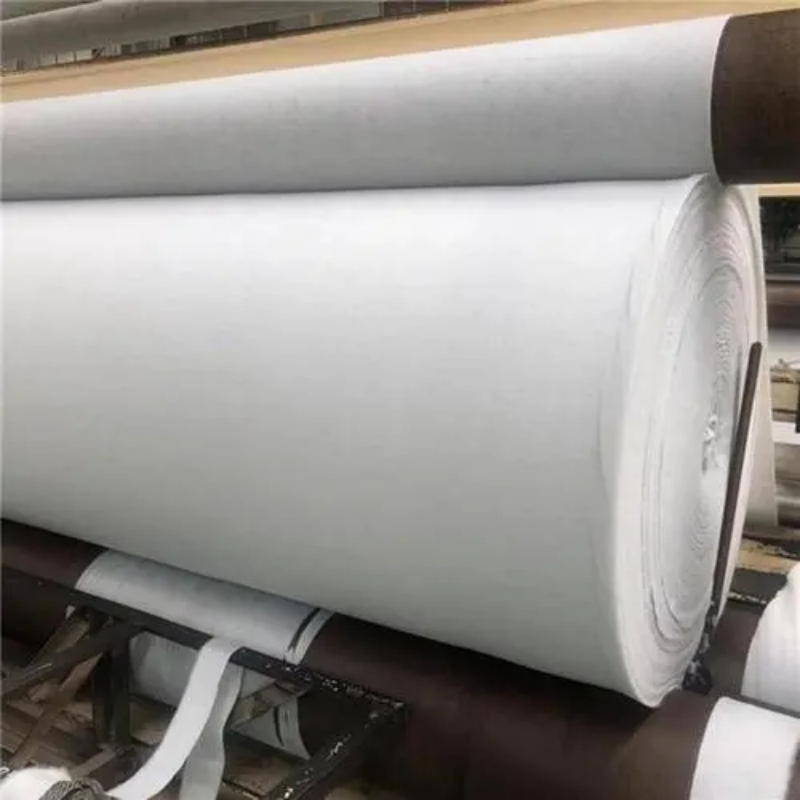
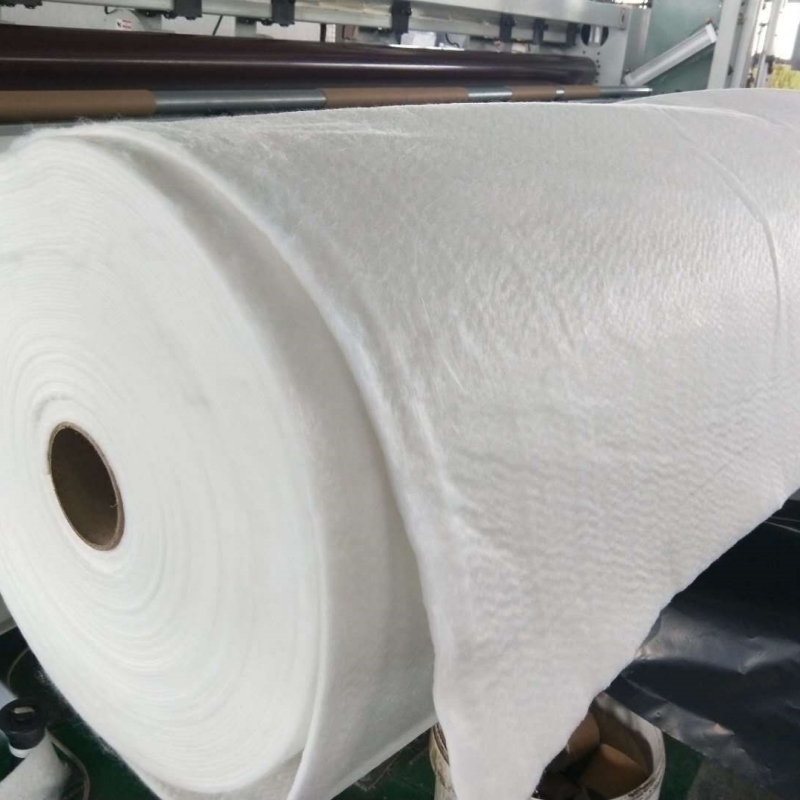

Staple Fiber Needle-punched PP Geotextile
1. Excellent Permeability and Anti-Filtering Properties: Its irregular fiber pore structure can effectively retain soil particles and prevent fine sand from leaking, while allowing water to pass through freely, avoiding pore blockage. It is an ideal filtering material.
2. Chemical Corrosion Resistance and Anti-Aging Properties: Polypropylene fibers are inherently resistant to acids and alkalis, and are not susceptible to insect infestation or mildew. They have a longer service life in soils or sewage environments with a wide pH range.
3. Mechanical Adaptability: Although the tensile strength of individual staple fibers is not as high as that of filament fibers, the three-dimensional network structure formed by needle punching has good strainability and mobility. It can effectively diffuse concentrated stress and adapt to uneven settlement of foundations.
Polypropylene staple fiber needle-punched geotextile is a non-woven permeable geosynthetic material made of polypropylene (PP) staple fibers. It is manufactured through processes including opening, carding, random webbing and needle punching consolidation. With excellent resistance to acid and alkali corrosion, high permeability and good isolation and filtration performance, it is widely used in the filtration, drainage and reinforcement sections of highway, railway, water conservancy and environmental protection projects.

I. Core Processes and Structural Features
The core of the production of this geotextile lies in the combination of "staple fibers" and "needle punching" processes.
Raw Material Characteristics: It adopts polypropylene staple fibers with a fineness of 6-12 denier and a length of 54-64mm. Polypropylene (PP), as the raw material, endows the material with excellent chemical stability, making it resistant to corrosion in acidic, alkaline and organic solvent environments. It is especially suitable for harsh working conditions such as landfills and areas around chemical plants.
Web Formation Mechanism: After the fibers are opened and carded, they are randomly laid into a web through air or mechanical methods, forming an isotropic fiber web. Then, using a needle board with barbs, repeated punching processes (pre-punching, main punching, etc.) are carried out to entangle and fix the fibers, forming a stable web structure without the need for chemical adhesives.
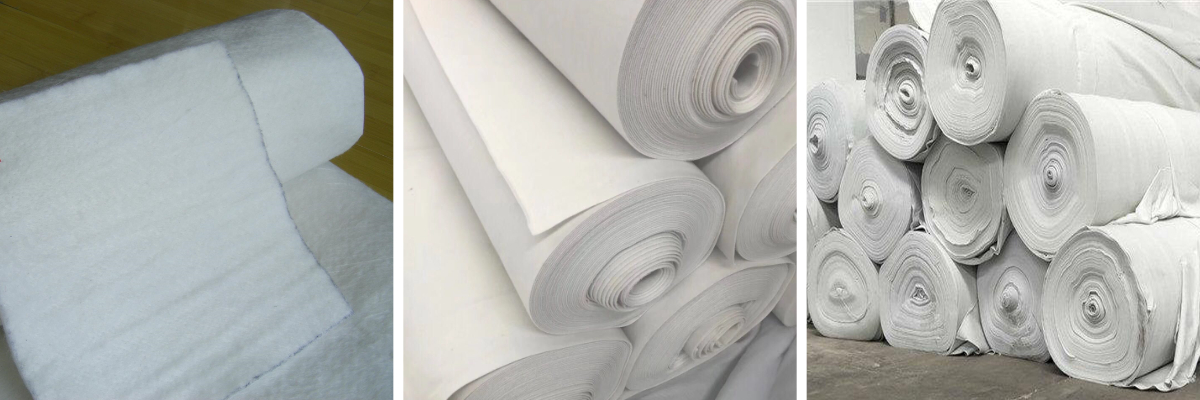
Physical Properties: The finished product is usually soft in texture and porous in structure, similar to felt. Its thickness can be adjusted according to the grammage (100-600g/㎡), and the width can reach up to 6 meters, which is convenient for large-scale construction.

II. Key Performance Advantages
Compared with other types of geosynthetic materials, polypropylene staple fiber needle-punched geotextile performs outstandingly in the following aspects:
Excellent Permeability and Anti-Filtering Properties: Its irregular fiber pore structure can effectively retain soil particles and prevent fine sand from leaking, while allowing water to pass through freely, avoiding pore blockage. It is an ideal filtering material.
Chemical Corrosion Resistance and Anti-Aging Properties: Polypropylene fibers are inherently resistant to acids and alkalis, and are not susceptible to insect infestation or mildew. They have a longer service life in soils or sewage environments with a wide pH range.
Mechanical Adaptability: Although the tensile strength of individual staple fibers is not as high as that of filament fibers, the three-dimensional network structure formed by needle punching has good strainability and mobility. It can effectively diffuse concentrated stress and adapt to uneven settlement of foundations.
III. Typical Engineering Application Scenarios
Considering your engineering background, this material is an "essential" configuration in the following fields:
Transportation Infrastructure: It is used as an isolation layer in highway and railway subgrades to prevent the mixing of subgrade gravel with the underlying soft soil, thereby enhancing load-bearing capacity and reducing reflective cracks.
Water Conservancy and Coastal Engineering: It is applied in embankment slope protection, river channel management, and backfilling behind ports and docks, utilizing its anti-filtering function to protect soil from erosion by water flow.
Environmental Protection and Seepage Prevention Engineering: In landfills and tailings reservoirs, it serves as a filtration layer in leachate drainage systems or is used for final cover to prevent the spread of pollutants.
Municipal and Landscape Engineering: It is used in underground drainage systems, roof greening drainage layers, and drainage foundations for sports fields.