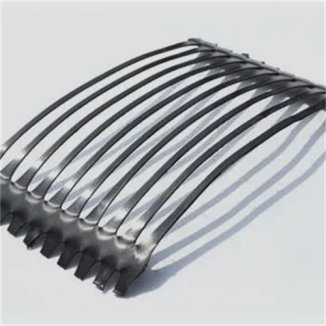
Hot-rolled polypropylene geotextile
· Superior Chemical Resistance: The stable molecular structure of polypropylene ensures that hydrolysis hardly occurs in acidic or alkaline environments with a pH range of 3–11. It effectively resists chemical erosion from soil and microbial degradation.
· Excellent Mechanical Properties: The hot-rolling process creates a stable network of bonds between fibers, imparting high longitudinal and transverse breaking strength (with some high-strength products exceeding 15 kN/m). This effectively disperses soil stress and prevents lateral displacement of the subgrade.
· Permeability and Filtration Functions: Its three-dimensional pore structure allows water to pass through freely while effectively retaining soil particles, thereby preventing soil erosion. This makes it an ideal material for filtration and drainage.
Hot-rolled polypropylene geotextile is a non-woven geosynthetic material manufactured from polypropylene (PP) raw materials. The production process involves melt spinning and web laying, followed by thermal bonding reinforcement using high-temperature rollers. Due to its excellent resistance to acid and alkali corrosion, high tensile strength, and superior water permeability, it is widely applied in engineering scenarios such as highway maintenance, railway subgrade reinforcement, hydraulic seepage control, and environmental isolation.

I. Core Characteristics and Advantages
This material demonstrates unique performance benefits in engineering applications, making it particularly suitable for your field of road engineering:
· Superior Chemical Resistance: The stable molecular structure of polypropylene ensures that hydrolysis hardly occurs in acidic or alkaline environments with a pH range of 3–11. It effectively resists chemical erosion from soil and microbial degradation.
· Excellent Mechanical Properties: The hot-rolling process creates a stable network of bonds between fibers, imparting high longitudinal and transverse breaking strength (with some high-strength products exceeding 15 kN/m). This effectively disperses soil stress and prevents lateral displacement of the subgrade.
· Permeability and Filtration Functions: Its three-dimensional pore structure allows water to pass through freely while effectively retaining soil particles, thereby preventing soil erosion. This makes it an ideal material for filtration and drainage.
· Ease of Construction: Compared to needle-punched geotextiles, hot-rolled geotextiles feature a smoother and flatter surface. This facilitates bonding with asphalt layers or other materials and reduces the risk of snagging or damage during transportation and installation.

II. Primary Application Scenarios
Based on its physical properties, hot-rolled polypropylene geotextile performs exceptionally well in the following scenarios:
· Highway and Railway Maintenance: Used for pavement crack repair and subgrade reinforcement. Data indicates that employing this material in highway maintenance can significantly reduce the recurrence rate of pavement cracks and extend maintenance cycles.
· Hydraulic and Dam Engineering: Serves as a filtration and separation layer to prevent piping and soil loss in embankments. Furthermore, its aging resistance (enhanced by the addition of UV stabilizers) allows it to withstand long-term outdoor exposure.
· Environmental and Isolation Projects: Utilized as an isolation layer in landfills or contaminated soil remediation projects. It prevents the mixing of materials with different properties and is often used in conjunction with impermeable membranes.