Woven Geotextiles: The Strong Foundation Driving Modern Infrastructure
Woven Geotextiles: The Strong Foundation Driving Modern Infrastructure
Date: April 22, 2026
Woven geotextiles are quietly revolutionizing the way we build roads, protect coastlines, and manage environmental challenges. As global infrastructure spending accelerates and environmental regulations tighten, these engineered fabrics have become indispensable across civil engineering, construction, and environmental protection. From highway reinforcement to coastal defense systems, woven geotextiles are delivering superior tensile strength, durability, and cost-effectiveness that traditional materials cannot match.
A Market on the Rise
The global woven geotextiles market is experiencing robust growth. Valued at USD 3.45 billion in 2024, the market is projected to reach USD 5.98 billion by 2032, growing at a compound annual growth rate (CAGR) of 6.8%. The broader geotextiles market—including woven, non-woven, and knitted products—reached USD 9.16 billion in 2025 and is forecast to grow to USD 14.68 billion by 2032, with a CAGR of 6.96%.
Driving this expansion is unprecedented global infrastructure development, which has seen projects increase by 7% annually since 2020. Road construction and railway networks alone account for nearly 65% of woven geotextile consumption, with emerging economies in Asia-Pacific and Africa leading demand. China’s Belt and Road Initiative has required millions of square meters of geotextiles, highlighting the scale of deployment in modern infrastructure.
What Makes Woven Geotextiles Different?
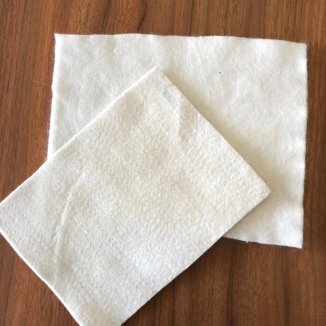
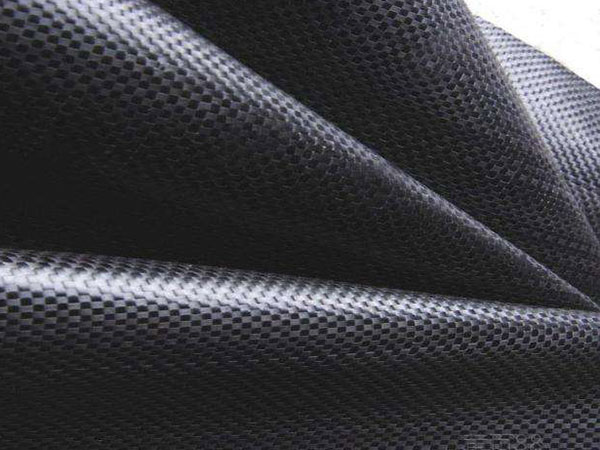
Woven geotextiles are permeable fabrics manufactured from synthetic materials—primarily polypropylene (PP) and polyester (PET)—using weaving techniques to create strong, durable sheets. Unlike their non-woven counterparts, which are felt-like and excel in filtration and drainage, woven geotextiles are designed for load-bearing applications where high tensile strength is paramount.
The product range spans three main categories:
Slit-film woven geotextiles: Economical, suitable for separation and light reinforcement
Monofilament woven geotextiles: Excellent filtration with high permeability
Multifilament woven geotextiles: Maximum tensile strength for heavy civil works
Each type offers distinct tensile strength and permeability characteristics, allowing engineers to match product selection to specific project demands. Ultimate tensile strengths typically range from 35 to 140 kN/m, and specialized products can achieve even higher values.
Testing standards are well-established. Key properties are evaluated according to ASTM D5261 (mass per unit area), ASTM D4632 (tensile properties under grab conditions), ASTM D4595 (permeability), ASTM D4355 (UV resistance), and ASTM D4886 (abrasion resistance). These rigorous standards ensure that woven geotextiles meet the demanding requirements of infrastructure projects worldwide.
Four Core Functions That Deliver Value
The versatility of woven geotextiles stems from their ability to perform four essential functions simultaneously:
Reinforcement: This is the core advantage of filament-woven geotextiles. Acting much like steel reinforcement bars, they distribute stress across soft soil subgrades, slopes, and embankments, significantly enhancing stability and bearing capacity.
Separation: Woven geotextiles prevent intermixing between different soil layers—for instance, separating ballast from roadbed or roadbed from soft subgrade. This maintains the structural integrity of each layer and extends service life.
Filtration: While allowing water to pass through, woven geotextiles retain soil particles, preventing erosion and loss of fines. This function is critical in hydraulic engineering applications, where they serve as drainage bodies within earth-rock dams and protection layers behind impermeable geomembranes.
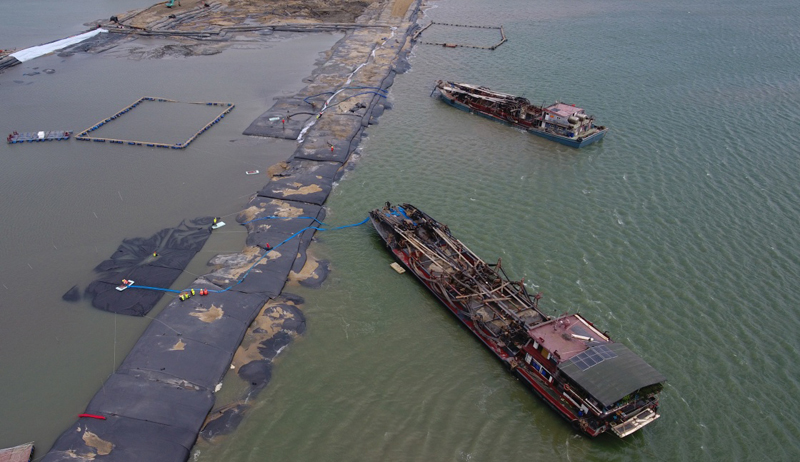
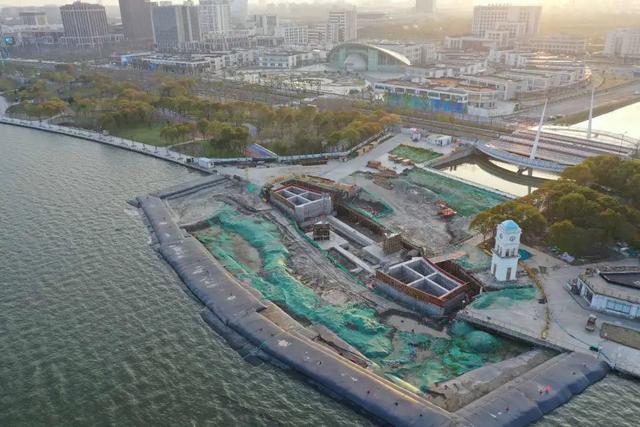
Protection: Woven geotextiles provide scour protection for embankments, slope surfaces, riverbeds, and seabeds. They can be fabricated into geotextile mattresses or fascine mats for demanding hydraulic environments.
Applications Across Industries
The versatility of woven geotextiles has made them essential across a broad range of sectors:
Railways and Highways: In road and rail construction, woven geotextiles reinforce soft ground, form reinforced cushion layers beneath roadbeds to enhance bearing capacity and control settlement, and reinforce flexible pavements to prevent reflective cracking.
Dams and Hydraulic Engineering: Woven geotextiles serve as vertical or horizontal drainage bodies within earth-rock dams, drainage layers behind impermeable geomembranes, and scour protection for embankments and slope surfaces.
Tunnel Engineering: They drain seepage water surrounding tunnels, reducing external water pressure on tunnel linings, and serve as reinforcement layers for bentonite waterproofing blankets.
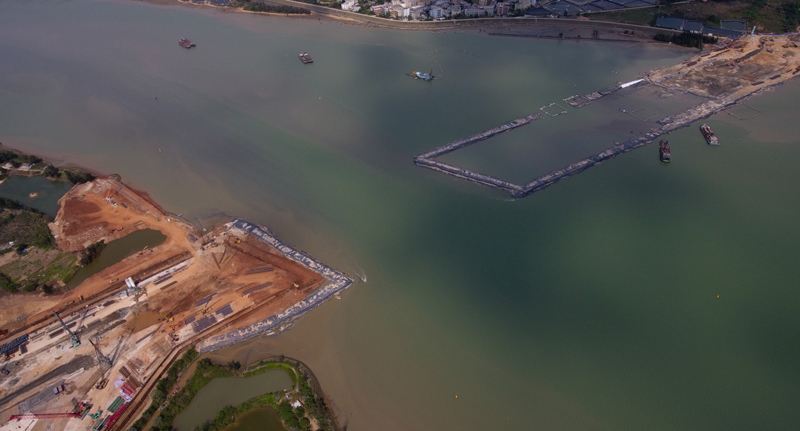
Coastal Beaches and Land Reclamation: Woven geotextiles provide basal reinforcement for seawalls, breakwaters, and groynes, as well as foundation treatment and drainage for artificial islands and land reclamation projects.
Environmental Engineering: In landfills, they serve as protective and drainage layers within impermeable lining systems. For tailings and slag ponds, they cover fly ash to control dust pollution. They are also used in impermeable lining systems for sewage ponds and leachate collection ponds.
Sports Stadiums: Woven geotextiles stabilize soft foundations to prevent differential settlement and serve as drainage layers for sports fields constructed on artificial fill.
Environmental and Economic Advantages
Beyond technical performance, woven geotextiles deliver significant sustainability benefits. These materials can reduce aggregate usage by up to 50% in road construction while improving longevity, aligning perfectly with circular economy principles. Stringent environmental policies worldwide—particularly in the European Union and North America—now mandate erosion control measures that specifically recommend geotextile solutions.
From a cost perspective, the superior tensile strength of woven geotextiles allows for reduced material thickness compared to non-woven alternatives, lowering transportation and installation carbon footprints. Manufacturers are now engineering woven geotextiles with multi-filament yarns that provide higher tensile strength at lower unit weights, further reducing environmental impact.
Innovation Driving the Industry Forward
The woven geotextile industry is undergoing a transformation driven by material science and digital technology:
High-Performance Polymers: Innovations in polymer science are yielding fibers with superior creep resistance and long-term durability under extreme temperatures and UV exposure. Newer formulations offer 40% greater puncture resistance compared to traditional products.
Smart Geotextiles: Perhaps the most exciting frontier is the development of sensor-embedded woven geotextiles. By integrating fiber-optic sensors and conductive filaments directly into the weave, these “intelligent” fabrics enable real-time monitoring of strain, temperature, pore water pressure, and early signs of rupture or clogging. In slope stabilization projects, a smart woven geotextile can send alerts when lateral earth movement exceeds safe thresholds, enabling proactive maintenance before catastrophic failure.
Sustainability Innovations: The industry is embracing fully recyclable woven geotextiles designed for temporary applications, which can be recovered, reprocessed, and reintroduced into the manufacturing stream. Bio-based polymers and recycled content are gaining traction without compromising mechanical integrity.
Advanced Erosion Control: Next-generation erosion control woven geotextiles are moving beyond simple slit-film fabrics toward sophisticated, three-dimensional woven structures with variable aperture sizes that create gradient filtration effects, preventing internal erosion better than conventional products.
Regional Dynamics and Outlook
Asia Pacific dominates the geotextiles market with a 35.4% share in 2025, driven by rapid urbanization, infrastructure development, and government initiatives for rural connectivity, particularly in India and China. The United States market is projected to reach USD 0.98 billion by 2032, supported by growth in automotive, house refurbishment, and fiber technology advancements.
Government initiatives promoting sustainable construction practices and stringent environmental regulations continue to propel adoption. Manufacturers are responding with high-performance polypropylene and polyester variants that meet both technical specifications and sustainability benchmarks.
The Road Ahead
As the industry looks forward, woven geotextiles are evolving from passive construction supplies into active components of smart infrastructure systems. The integration of Internet of Things (IoT) technology is expected to make sensor-enabled geotextiles standard for high-risk or high-value assets. Meanwhile, advances in polymer science and manufacturing precision are expanding the palette of available materials, allowing designers to match specific performance characteristics—tensile strength, permeability, and durability—to discrete application demands.
From highway reinforcement to coastal protection, from landfill lining to sports field drainage, woven geotextiles are proving that sometimes the strongest foundation is the one you don’t see. As global infrastructure demands intensify and environmental expectations rise, these engineered fabrics will continue to play an essential role in building a more resilient and sustainable world.
This article provides an overview of woven geotextile technology and market trends. For specific project applications and technical specifications, consulting qualified geotechnical engineers is recommended.
Keywords: woven geotextiles, geotextile market, soil reinforcement, erosion control, geosynthetics, infrastructure construction, civil engineering materials, separation layer, filtration geotextile, coastal protection