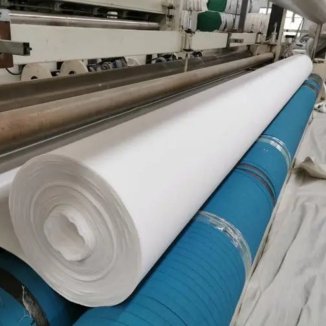
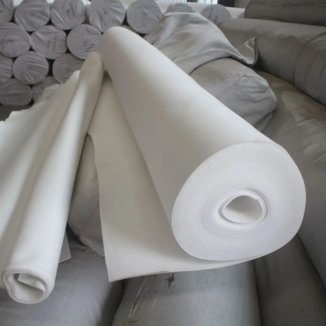
Geomembrane for hydraulic engineering
1. Waterproofing and Seepage Control
The primary function of hydraulic geomembranes is to block water infiltration, preventing the loss of reservoir water, irrigation water, or groundwater. With a permeability coefficient as low as 10⁻¹⁴–10⁻¹⁷ cm/s, they are nearly impermeable, significantly improving water conveyance efficiency and water storage capacity.
2. Structural Protection
When installed on the inner surfaces of dams or channels, geomembranes prevent soil erosion and structural weakening caused by water erosion, mitigating safety hazards such as landslides and collapses. They are particularly suitable for emergency leak sealing and reinforcement of defective or high-risk reservoirs.
Hydraulic geomembrane is a highly efficient anti-seepage material specifically used in hydraulic engineering. Made from polymers such as high-density polyethylene (HDPE), low-density polyethylene (LDPE), or polyvinyl chloride (PVC) as the base material, it features extremely low permeability, high tensile strength, excellent resistance to aging, and chemical corrosion resistance. It is widely applied in projects such as reservoirs, canals, dams, and artificial lakes, effectively preventing water leakage, enhancing structural stability, and extending the service life of engineering structures.

I. Core Functions and Applications
1. Waterproofing and Seepage Control
The primary function of hydraulic geomembranes is to block water infiltration, preventing the loss of reservoir water, irrigation water, or groundwater. With a permeability coefficient as low as 10⁻¹⁴–10⁻¹⁷ cm/s, they are nearly impermeable, significantly improving water conveyance efficiency and water storage capacity.
2. Structural Protection
When installed on the inner surfaces of dams or channels, geomembranes prevent soil erosion and structural weakening caused by water erosion, mitigating safety hazards such as landslides and collapses. They are particularly suitable for emergency leak sealing and reinforcement of defective or high-risk reservoirs.
3. Water Conservation and Efficiency Improvement
In irrigation channels in arid regions, the use of geomembranes for seepage control can increase the water utilization coefficient from 0.4–0.5 to over 0.9, substantially reducing seepage losses during water conveyance.
4. Extended Service Life
Resistant to ultraviolet radiation, low temperatures (without brittleness down to -60°C), and environmental stress cracking, geomembranes have a design service life of more than 50 years, making them an ideal alternative to traditional clay cores or concrete linings.

II. Main application scenarios
Engineering Type | Specific Applications |
Reservoir Dam | Installed on the waterside slope or dam foundation to prevent reservoir water from seeping into the dam body, avoiding internal erosion and landslide risks. |
Irrigation channels | Lining the interior walls with a waterproof layer reduces water loss and improves agricultural irrigation efficiency in arid regions. |
Artificial lakes / reservoirs | Complete impermeable sealing of the bottom and slopes to ensure long-term, stable water retention for landscape water bodies. |
Levees and Slope Protection | Combined with geotextiles to form a composite structure, enhancing resistance to erosion and overall stability. |