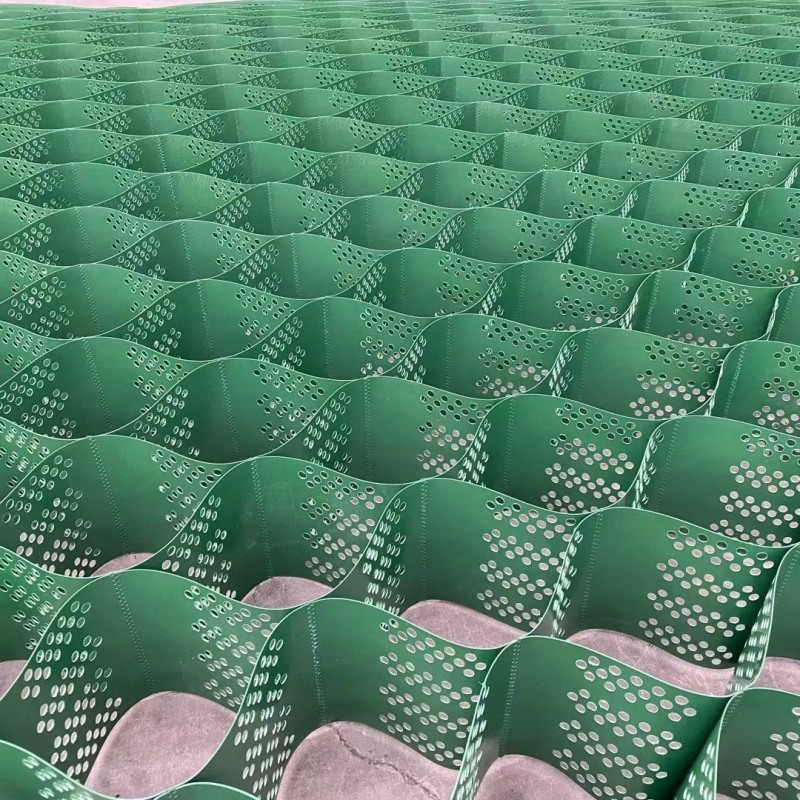
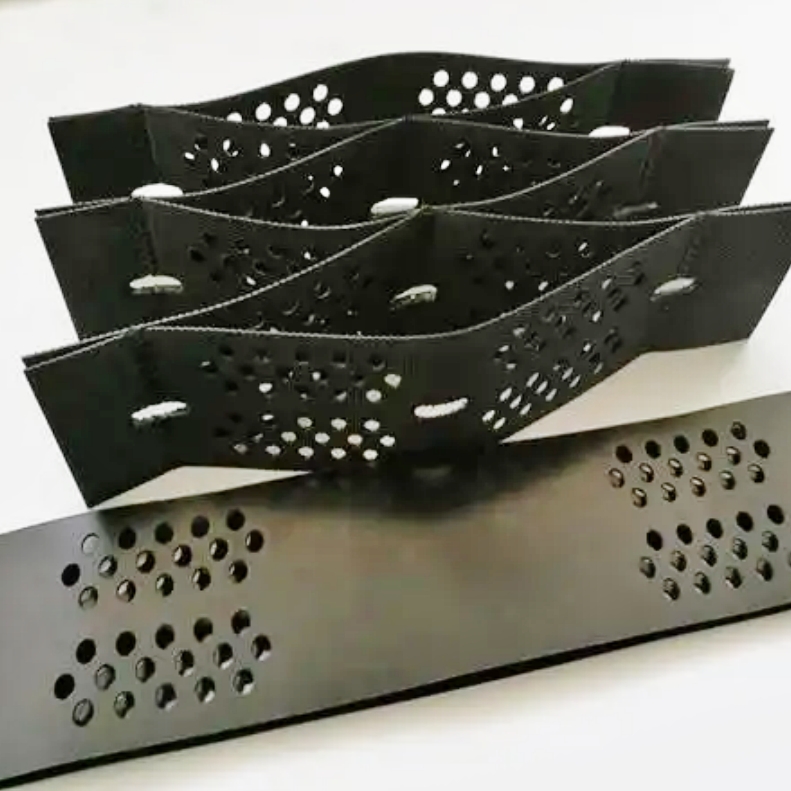
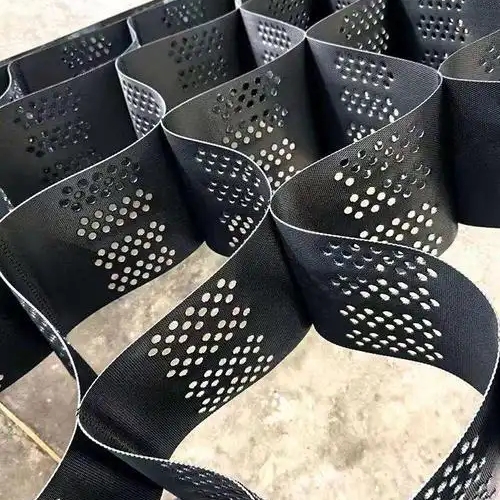
HDPE cellular confinement system
1. Outstanding long-term durability
Strong anti-aging, anti-UV and anti-corrosion performance; suitable for mines, coastal areas and saline soil environments.
2. Excellent creep resistance
Under sustained static and dynamic loads, HDPE sheets maintain stable dimension without gradual permanent deformation.
3. Foldable for low-cost transportation
Transport volume reduced by over 80%; lightweight for manual laying without large construction machinery, shortening construction period.
4. Remarkable cost reduction
Cut the required thickness of aggregate cushion by 50%–80%; local on-site sand and soil can be reused as infill materials.
Introduction to HDPE Cellular Confinement System (HDPE Geocell)
1. Definition
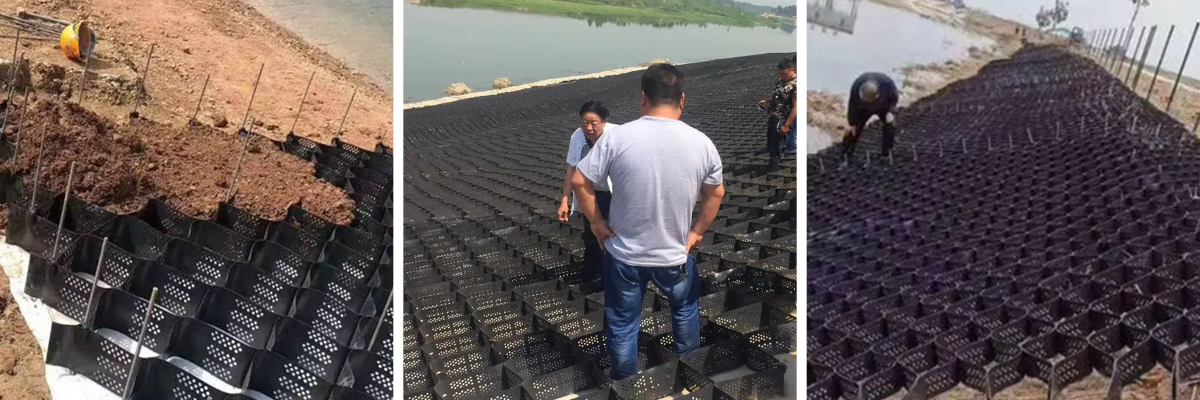
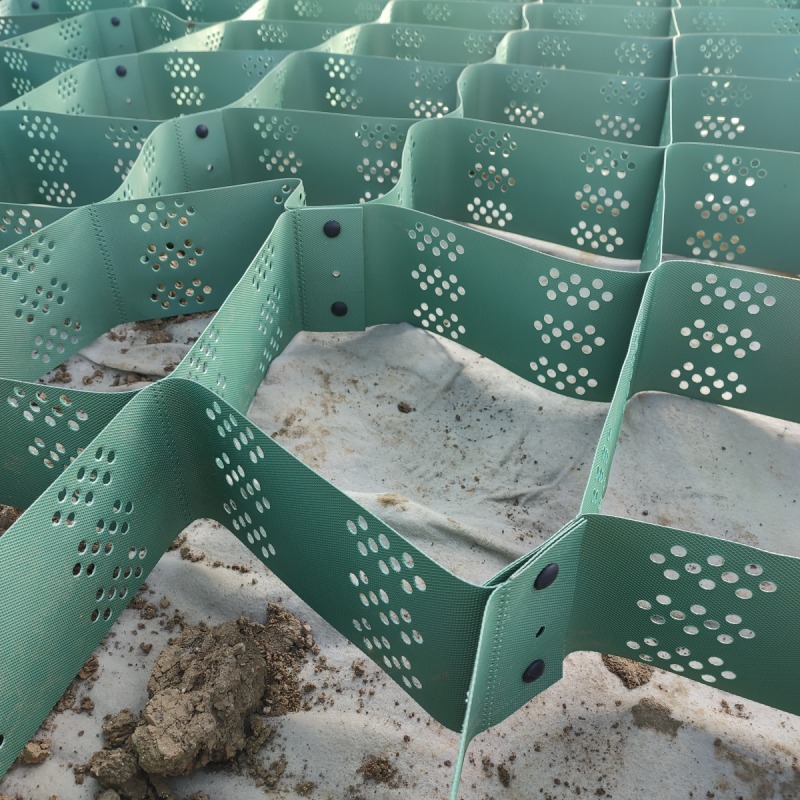
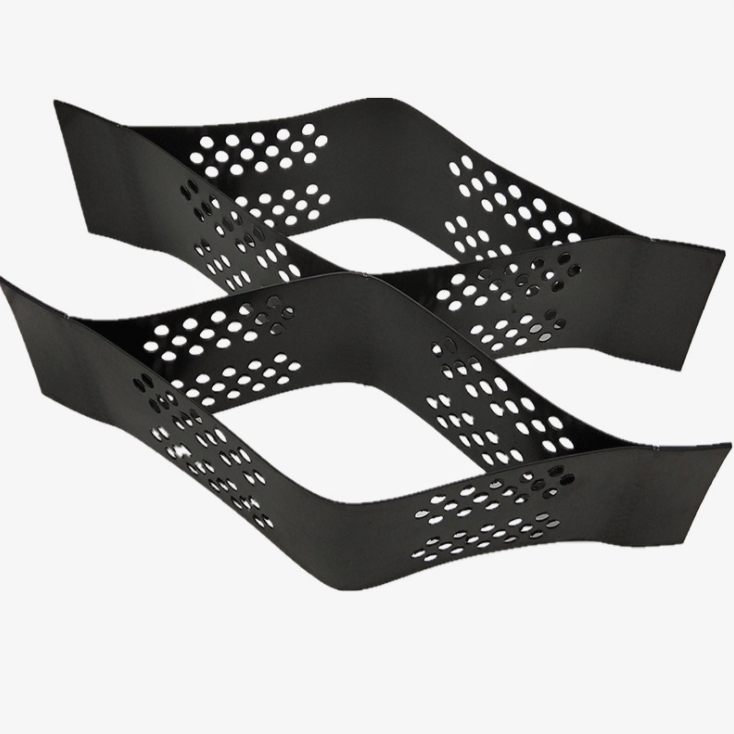
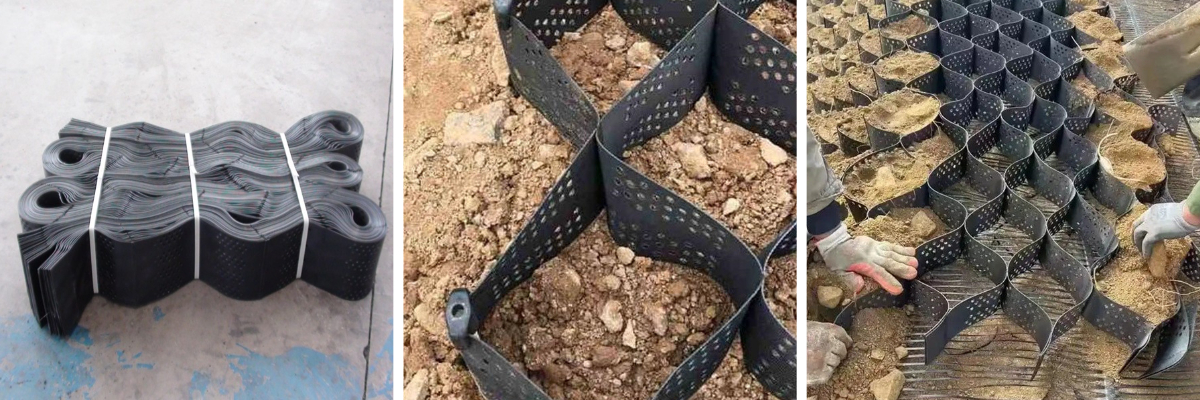
HDPE Cellular Confinement System, widely known as HDPE geocell, is a high-performance three-dimensional honeycomb geosynthetic material. It is manufactured by ultrasonically welding modified **virgin High-Density Polyethylene (HDPE)** strips at regular intervals. The product is delivered in compact folded form. After unfolding on-site and filling with sand, crushed aggregate, planting soil or concrete, it forms an integrated stiff composite mattress for subgrade reinforcement, slope stabilization, erosion control and ecological restoration.
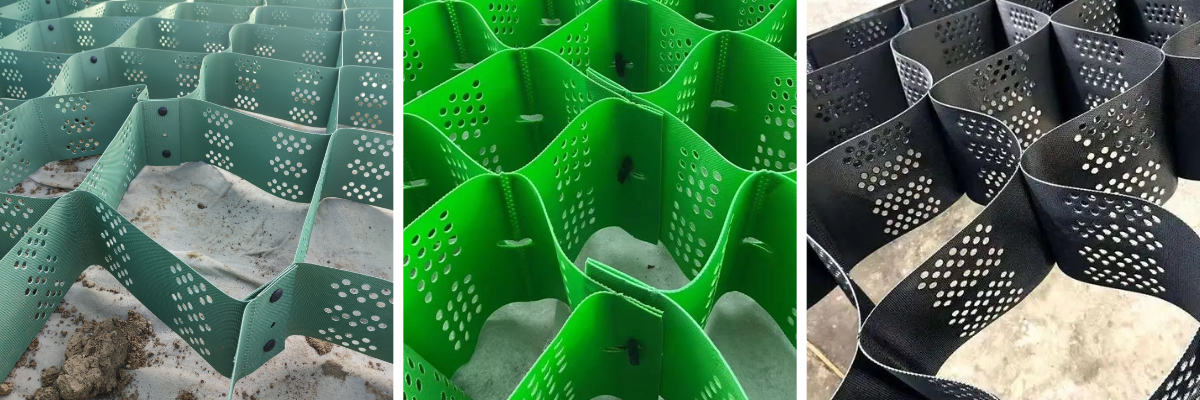
2. Raw Material: Modified HDPE
Only virgin HDPE (not recycled material) is adopted for permanent engineering projects, compounded with carbon black, UV stabilizers, antioxidants and anti-freeze additives.
Core Material Properties
- Density: 0.94–0.96 g/cm³
- Carbon black content: ≥1.5% for anti-ultraviolet performance
- Excellent environmental stress crack resistance (ESCR >4000 hours)
- Wide operating temperature: -60℃ ~ +80℃, resistant to freeze-thaw cycles
- Inert to acid, alkali, saline soil and seawater corrosion
- Non-toxic, pollution-free and partially recyclable
Distinction: PP geocell is only suitable for temporary projects. HDPE geocell is the preferred choice for permanent infrastructure with a design service life of 50–75 years.
3. Product Classification
Classified by Surface Structure
1. Solid Textured HDPE Geocell
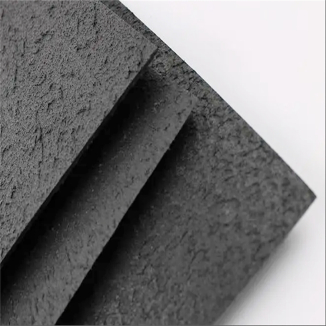
Embossed rough surface improves friction between cell walls and fillers. First option for dry heavy-load subgrade without vegetation requirements.
Pre-punched drainage holes to release pore water and enable plant root penetration; used for slope greening, river revetment and waterlogged soft foundation.
3. Solid Smooth HDPE Geocell
Cost-effective for temporary light-duty access roads.
Common Standard Specifications
- Cell height: 100 / 150 / 200 / 250 / 300 mm
- Sheet thickness: 1.0–1.8 mm
- Welding spacing: 330 / 400 / 500 / 660 mm
- Weld peel strength: ≥8 kN/m (standard grade); ≥10–14 kN/m (high tensile heavy-duty grade)
4. Working Mechanism
1. 3D Lateral Confinement (Core Function)
Independent honeycomb cavities lock loose infill materials. Vertical loads generate hoop stress on cell walls to restrict lateral displacement of aggregate, significantly improving soil shear strength and avoiding pavement rutting and slope sliding.
2. Uniform Load Dispersion (Snowshoe Effect)
The interconnected honeycomb mattress disperses concentrated wheel loads to a wider area, reducing vertical stress on weak subsoil and controlling differential settlement.
3. Drainage & Anti-buoyancy (Perforated Type)
Drainage holes eliminate accumulated pore water and hydrostatic pressure; balance water pressure on both sides of cell sheets for river and reservoir fluctuation zones to prevent uplift deformation.
4. Composite Ecological Reinforcement
Plant roots penetrate perforations to interlock soil and geocell, forming stable soil-root-geocell anti-erosion system for ecological slope protection.
5. Unique Advantages of HDPE Cellular Confinement System
1. Outstanding long-term durability
Strong anti-aging, anti-UV and anti-corrosion performance; suitable for mines, coastal areas and saline soil environments.
2. Excellent creep resistance
Under sustained static and dynamic loads, HDPE sheets maintain stable dimension without gradual permanent deformation.
3. Foldable for low-cost transportation
Transport volume reduced by over 80%; lightweight for manual laying without large construction machinery, shortening construction period.
4. Remarkable cost reduction
Cut the required thickness of aggregate cushion by 50%–80%; local on-site sand and soil can be reused as infill materials.
5. Flexible structural adaptability
Conforms to uneven terrain; tolerates slight foundation deformation without overall fracture, better than rigid concrete structures.
6. Main Application Fields
· Road & Yard Subgrade Stabilization
Expressways, municipal roads, road widening transition sections, mine haul roads, logistics container yards, truck parking lots.
· Slope Protection & Ecological Restoration
Highway cut/fill slopes, open-pit mine waste dump greening, landfill closure anti-slip slopes, landscape slopes.
· Water Conservancy Ecological Revetment
Rivers, reservoirs, irrigation channels, tidal flats and seawall slopes in seasonal water fluctuation zones.
· Special Engineering
Photovoltaic power station access roads, desert sand fixation projects, lightweight eco retaining walls.