Steel-plastic composite geogrid
Core Features
1. High Strength and Low Creep: Steel wires serve as the primary load-bearing unit, with a rupture elongation rate ≤3%. The material exhibits virtually no long-term creep, meeting the requirements of permanent engineering structures.
2. Corrosion Resistance and Anti-Aging: The outer polyethylene layer provides resistance to acids, alkalis, and ultraviolet radiation, enabling long-term service in complex environments such as seawater erosion and saline soils.
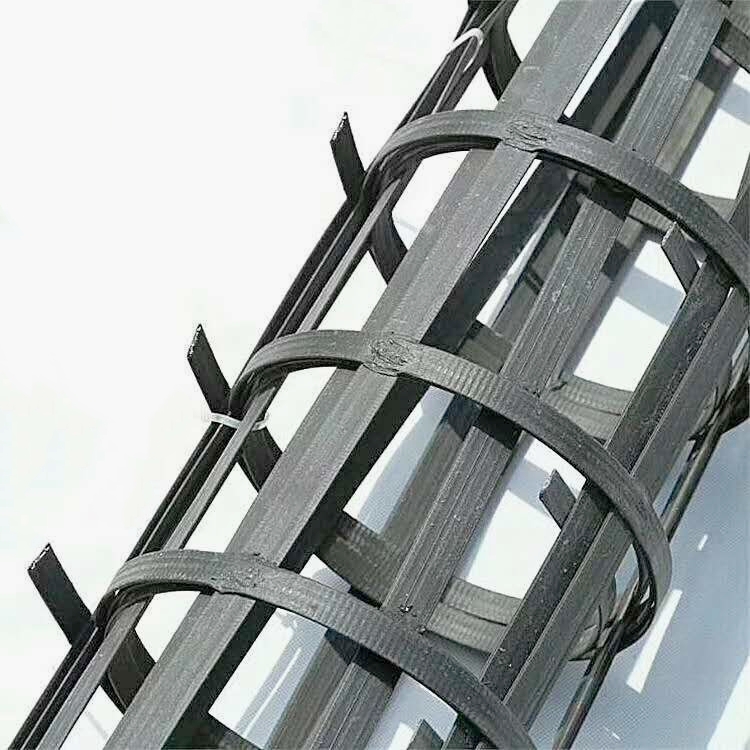
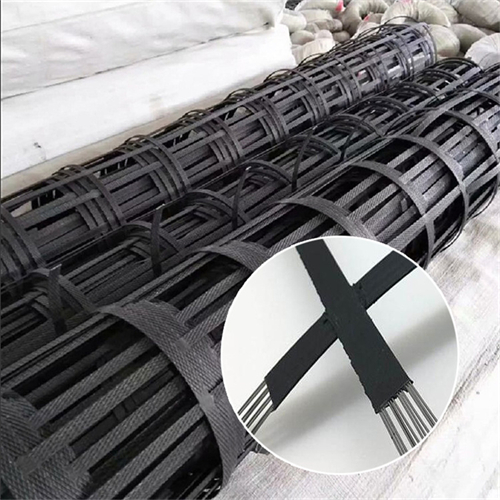
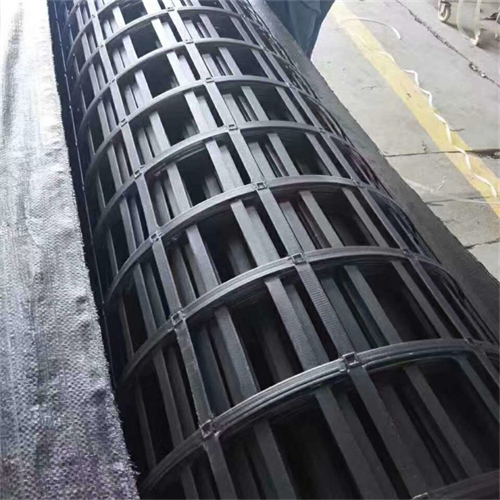
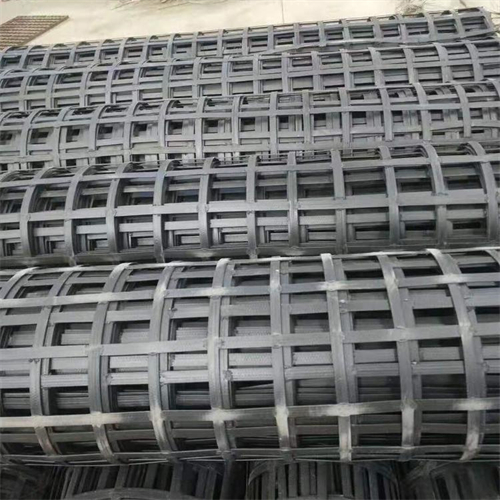
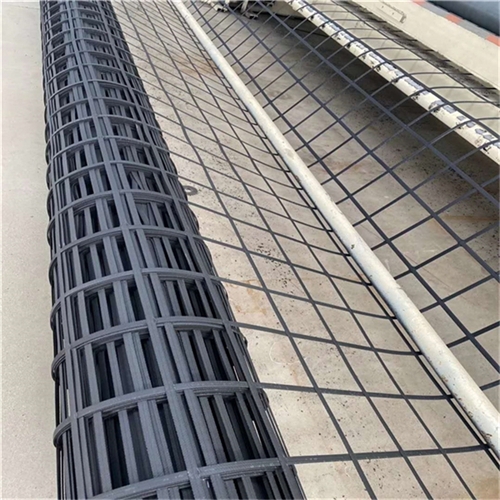
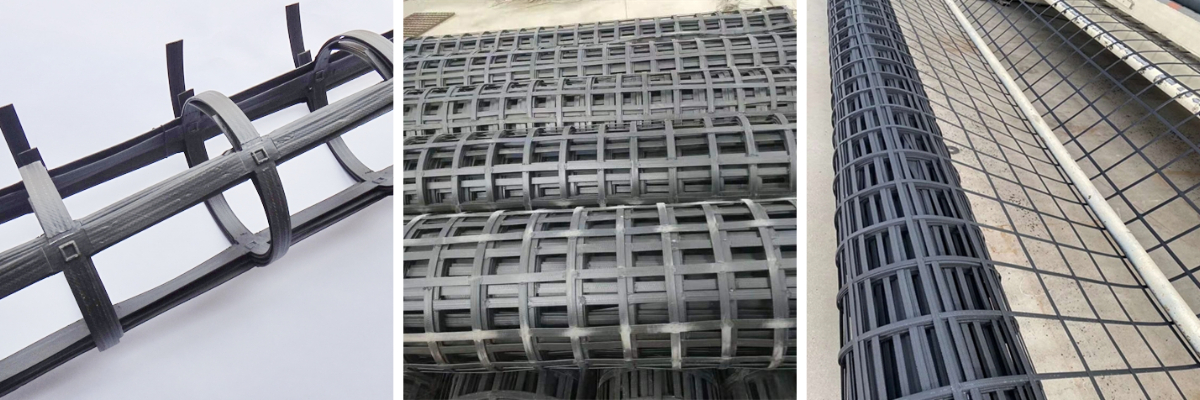
Steel-plastic composite geogrid is a high-performance geosynthetic material with high-strength steel wire as the reinforcing core and coated with high-density polyethylene (HDPE), formed through ultrasonic welding. It is widely used in civil engineering applications such as highways, railways, embankments, and slopes to enhance the bearing capacity of foundations and prevent settlement and cracking.
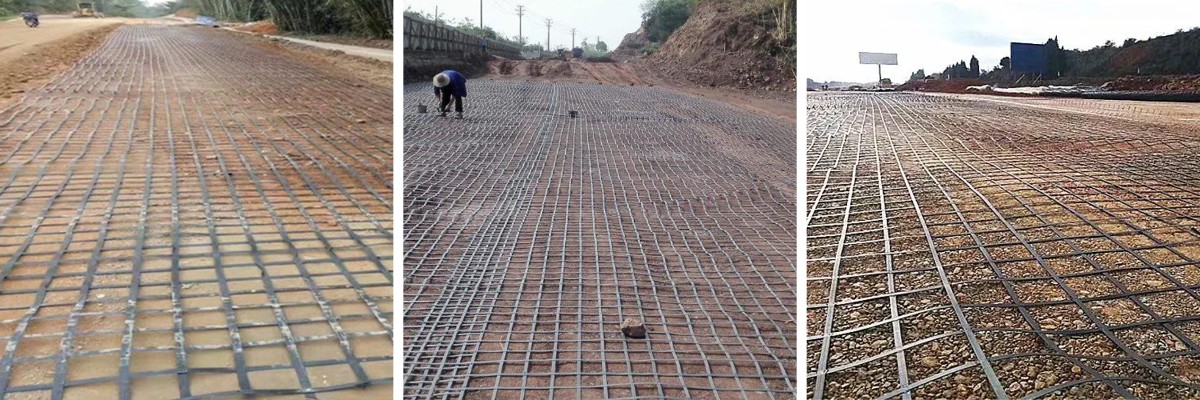
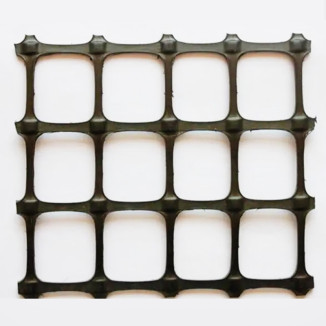
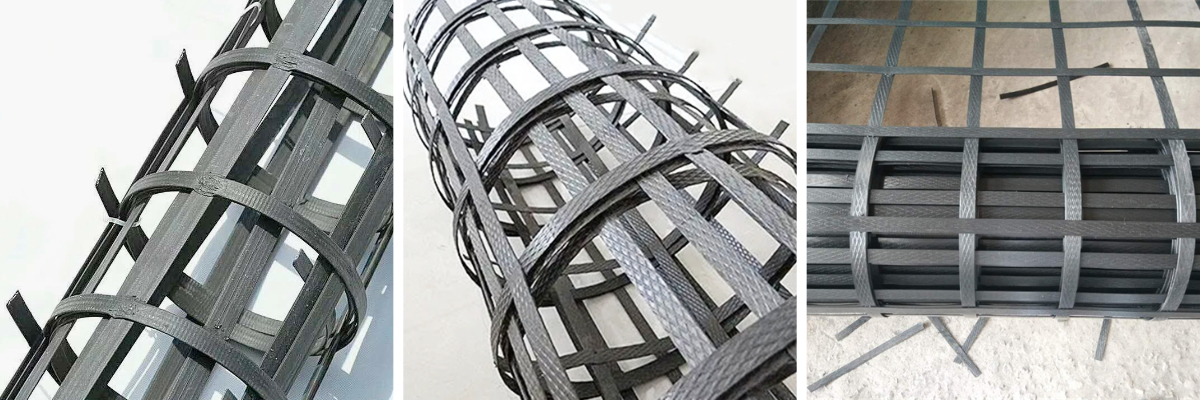
The material is available in two types: uniaxial (GDZ) and biaxial (GSZ). The warp and weft woven steel wire mesh bears the primary tensile load, exhibiting extremely high tensile modulus even at low strain levels. Its surface is embossed with a rough texture, significantly improving the friction coefficient with soil and achieving an effective interlocking effect.
Ⅰ. Core Features
1. High Strength and Low Creep: Steel wires serve as the primary load-bearing unit, with a rupture elongation rate ≤3%. The material exhibits virtually no long-term creep, meeting the requirements of permanent engineering structures.
2. Corrosion Resistance and Anti-Aging: The outer polyethylene layer provides resistance to acids, alkalis, and ultraviolet radiation, enabling long-term service in complex environments such as seawater erosion and saline soils.
3. High Friction Coefficient: The surface features a rough embossed pattern that enhances interlocking with fill materials, effectively restraining lateral soil movement.
4. Up to 6-Meter Width: Enables improved construction efficiency, reduces lap-joint costs, and achieves economical and efficient soil reinforcement.
Ⅱ. Main Application Areas
·Road Engineering: Used for subgrade reinforcement, pavement crack resistance, and treatment of abutment transition sections, reducing differential settlement
·Slope and Retaining Wall: Construction of reinforced soil retaining walls to enhance structural stability and prevent landslides
·Soft Soil Foundation Treatment: Laid on soft ground to improve bearing capacity and reduce project costs by 10%-50%
·Marine and Coastal Engineering: Replaces traditional gabion materials, solving the problem of strength degradation caused by long-term seawater erosion