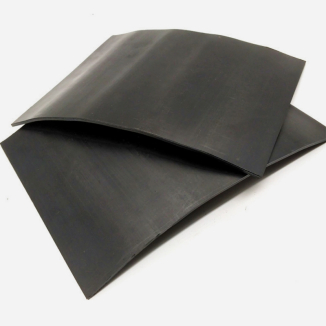
Anti-cracking geotextile
Core Performance Characteristics
· High tensile strength and elongation at break, capable of absorbing and distributing stress at crack tips;
· Excellent resistance to acids, alkalis, ultraviolet (UV) radiation, and biological degradation, suitable for various harsh environments;
· Strong adhesion to asphalt layers (achieved through singeing or coating treatments), preventing interlayer slippage;
· Moderate permeability, allowing the escape of moisture vapor from the base layer and reducing moisture-induced damage.
Anti-cracking geotextile is a type of nonwoven or composite geosynthetic material specifically designed to inhibit and delay reflective cracking in pavements and structural cracking. It is widely used in road expansion and reconstruction projects as well as in overlaying existing pavements. Its primary functions include distributing thermal and load-induced stresses, enhancing interlayer bonding, and preventing water infiltration that could exacerbate crack development.

I. Core Performance Characteristics
· High tensile strength and elongation at break, capable of absorbing and distributing stress at crack tips;
· Excellent resistance to acids, alkalis, ultraviolet (UV) radiation, and biological degradation, suitable for various harsh environments;
· Strong adhesion to asphalt layers (achieved through singeing or coating treatments), preventing interlayer slippage;
· Moderate permeability, allowing the escape of moisture vapor from the base layer and reducing moisture-induced damage.

II. Main Application Scenarios
· Reflective crack prevention in asphalt pavements: Installed between an existing concrete pavement and an asphalt overlay to prevent cracks in the old slab from propagating upward; also placed between base and surface layers in new pavement construction to delay drying shrinkage and thermal contraction cracks.
· Subgrade and slope reinforcement: Used in soft soil stabilization and road widening projects to prevent cracking caused by differential settlement.
· Airfield runways and bridge deck pavements: Applied to suppress cracks induced by repeated thermal cycling and traffic loading.