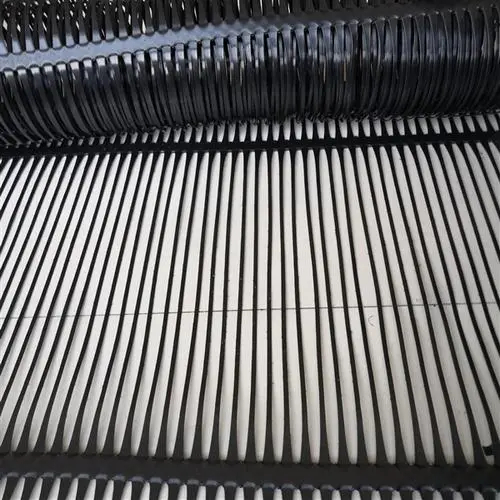
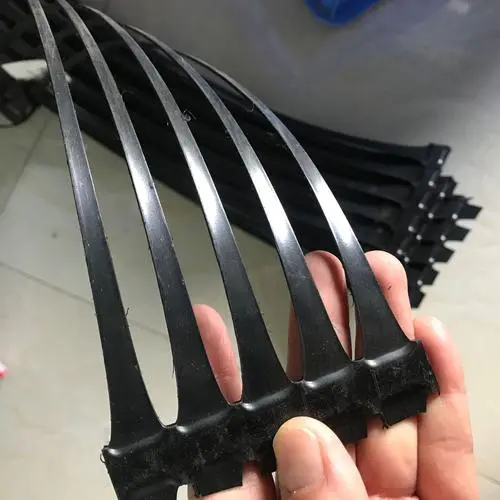
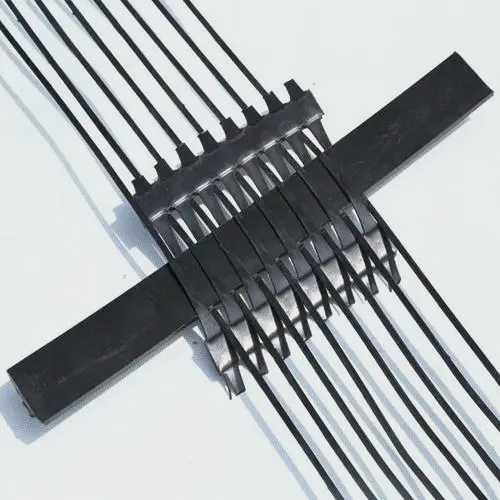
Uniaxial Plastic Geogrid
Main Features:
·High Strength and Low Elongation: High tensile strength (>150 kN/m), low elongation (only 2%–5%), and excellent creep resistance
·High Durability: Enhanced with anti-aging agents such as carbon black, offering outstanding resistance to acids, alkalis, corrosion, ultraviolet radiation, and low temperatures (suitable for extreme environments from -45°C to -50°C)
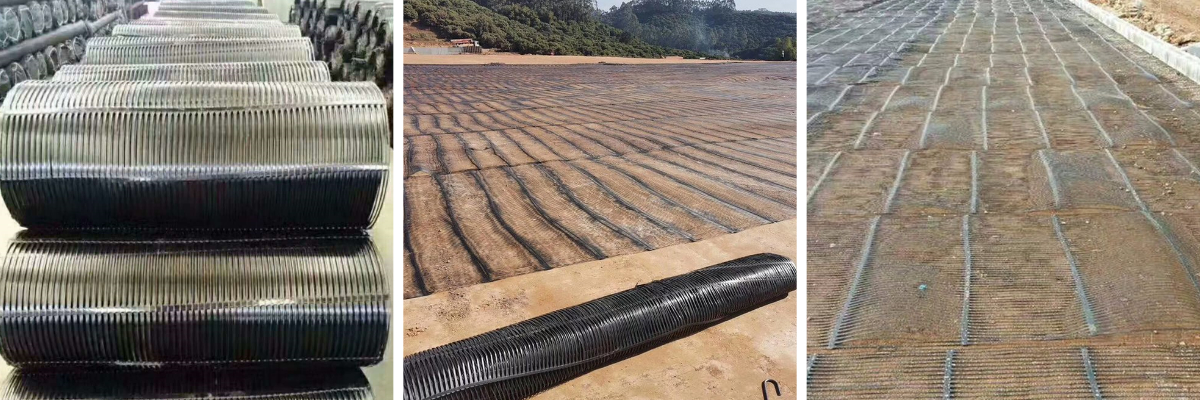
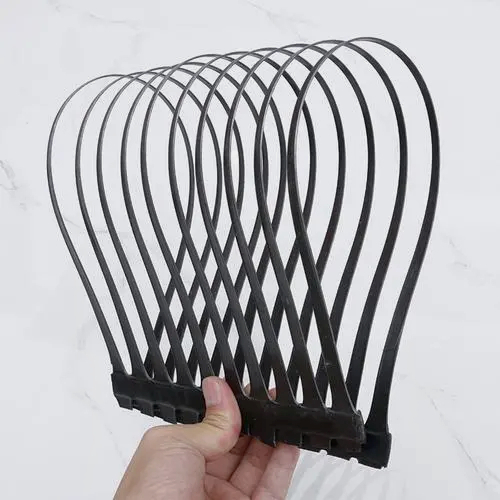
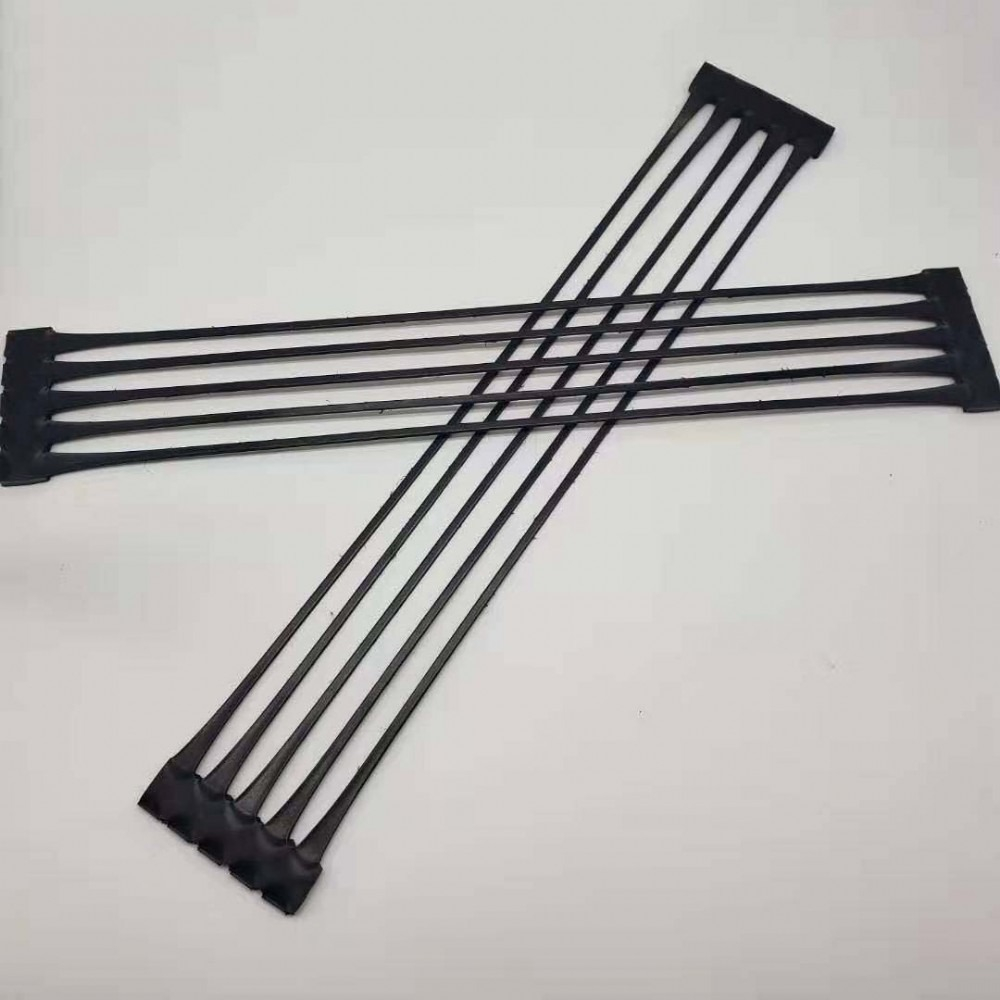
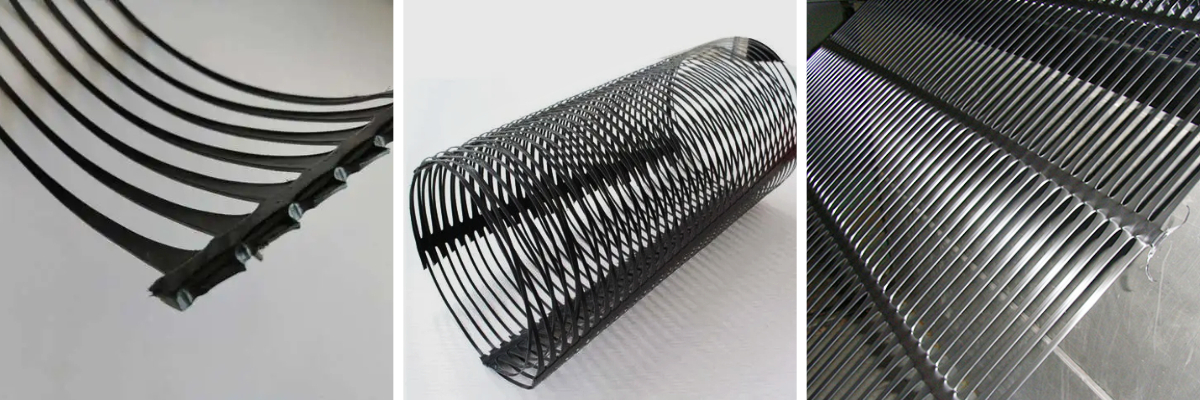
Uniaxial plastic geogrid is a high-strength geosynthetic material made from high-density polyethylene (HDPE) or polypropylene (PP) through extrusion, punching, and uniaxial stretching processes, featuring excellent properties such as high tensile strength, low elongation, corrosion resistance, and anti-aging performance.
Through oriented stretching, the polymer chains in the material are aligned linearly in the direction of applied force, forming a long elliptical mesh structure with uniform distribution and high node strength. The tensile strength can reach 100–200 MPa, surpassing even that of low-carbon steel, enabling the material to effectively withstand and distribute soil stresses.
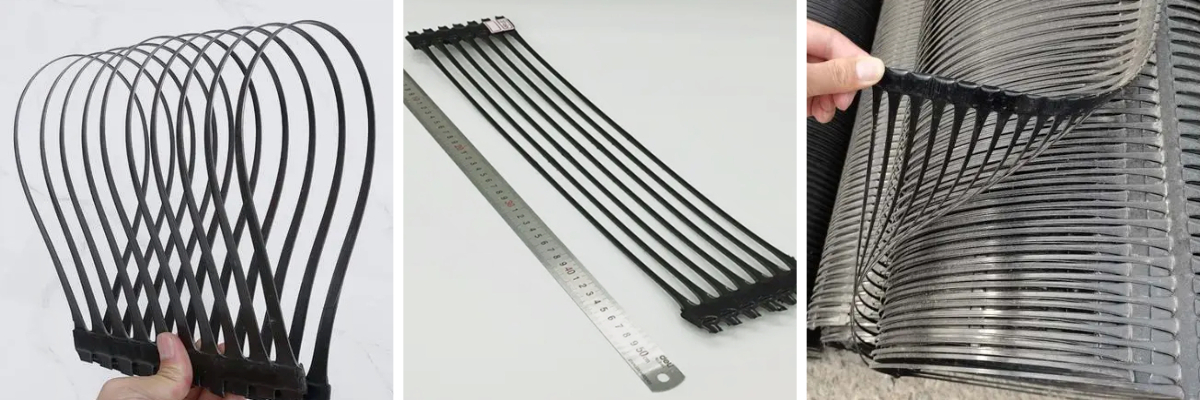
Ⅰ. Main Features:
·High Strength and Low Elongation: High tensile strength (>150 kN/m), low elongation (only 2%–5%), and excellent creep resistance
·High Durability: Enhanced with anti-aging agents such as carbon black, offering outstanding resistance to acids, alkalis, corrosion, ultraviolet radiation, and low temperatures (suitable for extreme environments from -45°C to -50°C)
·Easy Installation: Lightweight and flexible, easily cut, joined, and laid without the need for heavy machinery
·Cost-Effective: Reduces subgrade thickness by up to 36%, lowers construction costs by 20%–50%, and extends service life to over 50 years
Ⅱ. Main applications:
·Subgrade and pavement reinforcement: Used in highway and railway subgrades to reduce rutting, prevent cracking, and enhance load-bearing capacity
·Slope and retaining wall stabilization: Improves the self-stability of backfilled soil, reduces land footprint, and enhances structural stability
·Dams and river/coastal embankments: Used in combination with gabions to prevent erosion and collapse, extending the service life of engineering structures
·Landfill sites: Controls foundation settlement and improves the stability of landfill liner systems
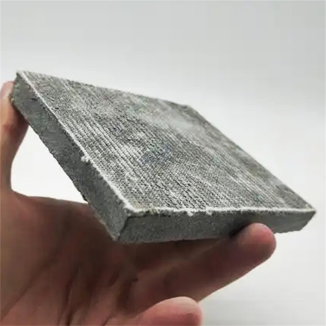
·Special engineering applications: Innovative uses in challenging environments such as the permafrost zone of the ·Qinghai-Tibet Railway and flexural strengthening of GFRC foundation slabs