News Center

Main Application Fields of High‑Tensile Cellular Confinement SystemsMain Application Fields1. Heavy‑duty road & railway subgrade reinforcement: Soft‑soil subgrade reconstruction, heavy‑haul access roads, mine haul roads, parking lots, fire lanes; reduce aggregate thickness, mitigate rutting and…
2026/08/26 17:22

Key Technical Advantages of High‑Tensile Cellular Confinement SystemsKey Technical Advantages1. Superior mechanical performance: Strip tensile strength typically ≥100‑200 kN/m; welding seam strength matches or exceeds strip strength, low fracture elongation (≤15 %), good anti‑creep property, long‑…
2026/08/26 17:17

Core Functions of High‑Tensile Cellular Confinement SystemsCore Working Mechanism1. 3D lateral confinement: Honeycomb cells restrain lateral displacement of fill materials, turning loose granular fill into a unified high‑stiffness composite mattress.2. High tensile resistance: High‑tensile base…
2026/08/26 17:12
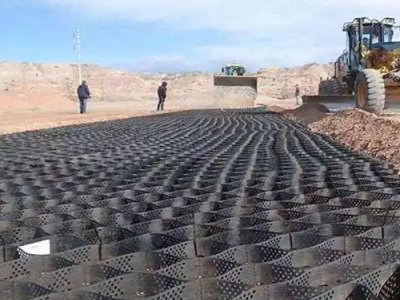
Standard Installation Procedure for Erosion‑Control Cellular Confinement SystemsStandard Installation Procedure1. Slope preparation: Trim and level slope surface, remove sharp stones; lay non‑woven geotextile as separation filter layer.2. Deploy CCS panels: Unfold cellular confinement systems from…
2026/08/22 10:49

Core Advantages of Erosion Control Cellular Confinement Systems1. Powerful Anti‑Erosion PerformanceThe 3D cellular confinement locks infill soil in place, restricts soil lateral movement. It dissipates surface runoff energy, effectively mitigating sheet erosion, rill erosion and slope collapse…
2026/08/22 10:44

Mechanism of Erosion‑Control Cellular Confinement Systems1. Lateral Confinement EffectThe interconnected honeycomb cell units restrain infill soil or aggregate, limiting lateral displacement of filling materials. It improves the overall shear strength and bearing capacity of the slope surface layer…
2026/08/22 09:54
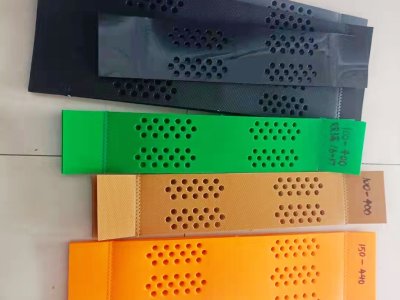
How to Select Proper Specifications of Cellular Confinement Systems (CCS / Geocell)This guideline can be directly used for foreign trade catalog, technical proposal and customer communication.1. Select Cell Height (Most critical parameter)Determined by load level, subgrade condition and project…
2026/08/13 14:56

Cellular Confinement Systems for Subgrade Stabilization — Standard Construction Procedure1. Subgrade Preparation- Clear the construction zone: remove weeds, mud, organic debris and loose topsoil.- Level and compact the natural subsoil to meet specified compaction requirement.- Inspect slope…
2026/08/13 14:48

1. Powerful 3D Lateral Confinement (Core Advantage)The honeycomb cellular structure locks granular infill materials. Under vertical traffic load, the cell walls generate hoop stress to restrict lateral displacement of aggregate. It significantly improves soil shear strength, effectively preventing…
2026/08/13 14:35

Construction Procedure for Cellular Confinement System (CCS / Geocell)1. Substrate PreparationClear, level and compact the base. Lay non‑woven geotextile as separation & filtration layer with required overlap. Inspect geocell panels for weld damage.2. For Road / Subgrade Stabilization (…
2026/08/05 16:32

Wide Application Scenarios - CCS (Cellular Confinement Systems)1. Road & Driveway StabilizationSoft subgrade reconstruction and expansion of national highways, provincial highways and urban roads; new-old embankment joint treatment; mine heavy-haul roads, temporary construction access roads,…
2026/08/05 15:54

Advantages of CCS (Cellular Confinement Systems)1. 3‑Dimensional Lateral ConfinementRestrains infill materials inside honeycomb cells, improves bearing capacity and modulus of subgrade. Mitigates differential settlement, rutting and pavement cracking on soft soil and joint sections of old‑new road…
2026/08/05 13:59