CCS cellular confinement systems
1. Greatly upgrade soft ground bearing capacity
Effectively reinforce silt, mucky soil, collapsible loess and backfilled weak subgrades; bearing capacity rises 2–3 times, and required gravel cushion thickness reduces by 50%–80%.
2. Low logistics & rapid construction
Foldable design cuts transport volume by over 80%; lightweight for manual unfolding without large heavy machinery, shortening construction period by 30%+.
3. Cost-saving & local infill available
On-site native soil/sand can replace purchased aggregate, lowering stone mining and transportation expenses.
Introduction to CCS – Cellular Confinement Systems
1. Definition & Origin
CCS (Cellular Confinement System), universally known as **geocell / 3D honeycomb geocell**, is a three-dimensional geosynthetic soil stabilization technology first developed by the U.S. Army Corps of Engineers in the 1970s for temporary soft-ground military roads.
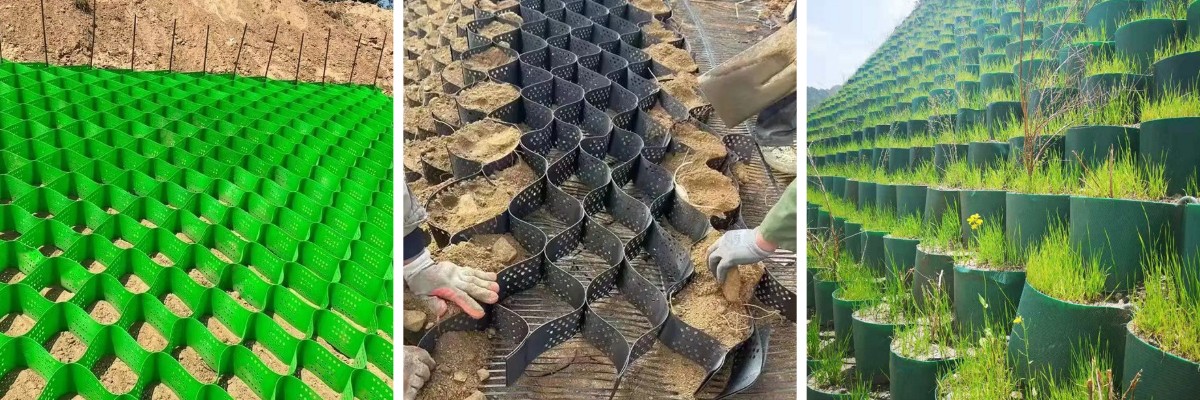
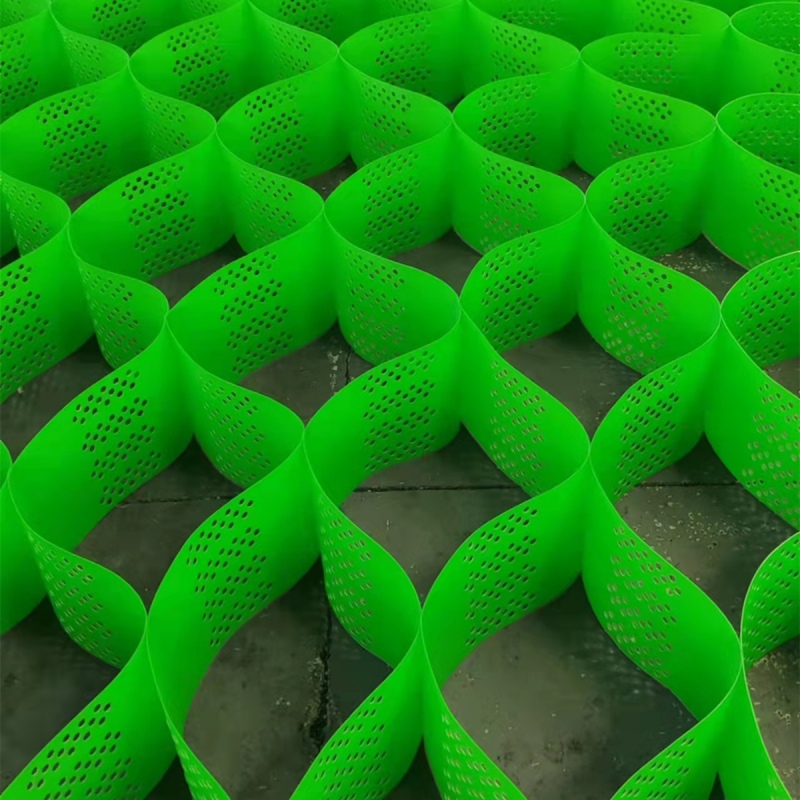
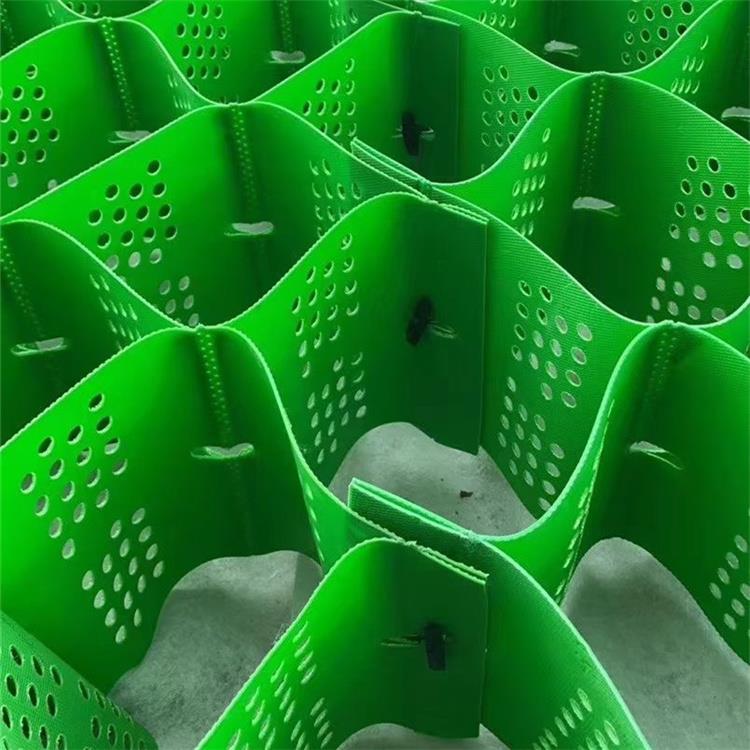
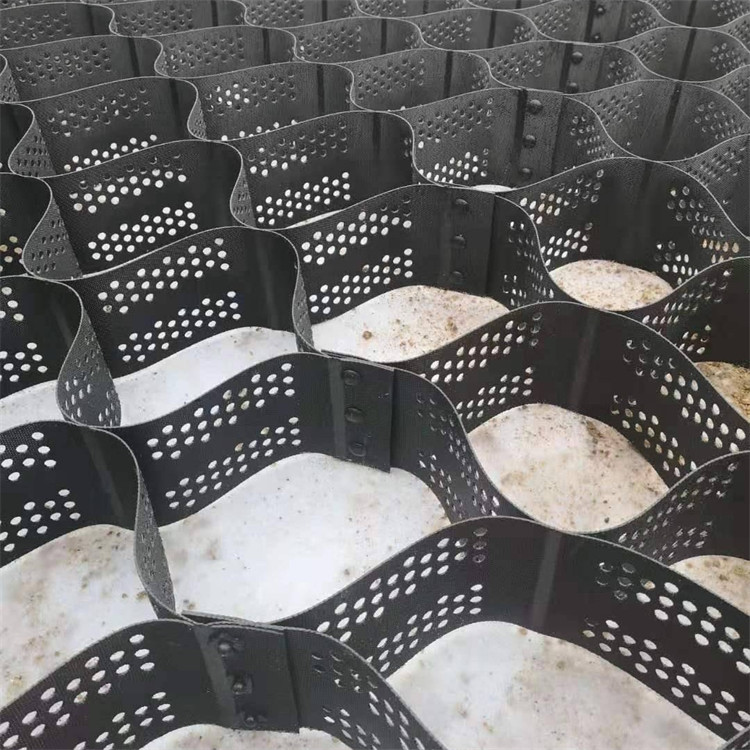
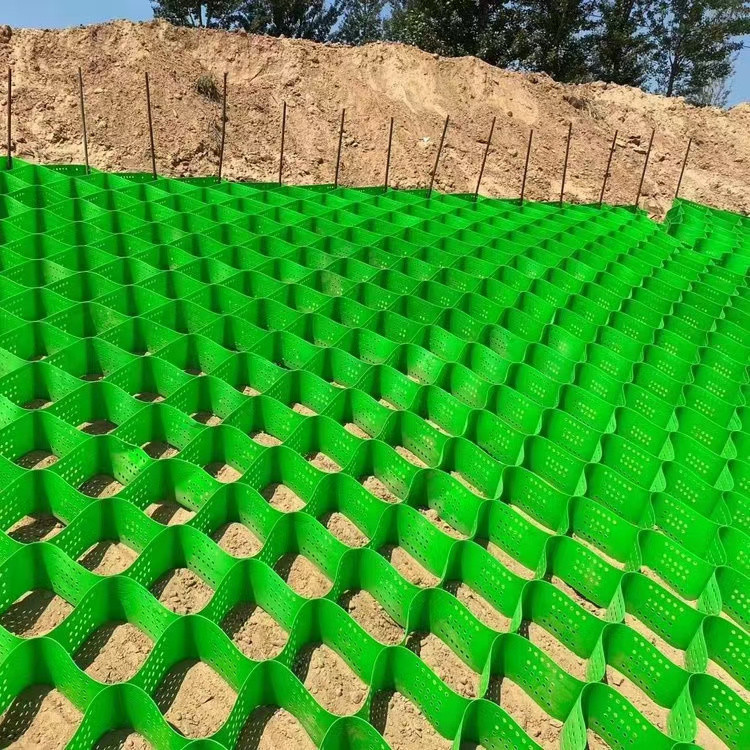
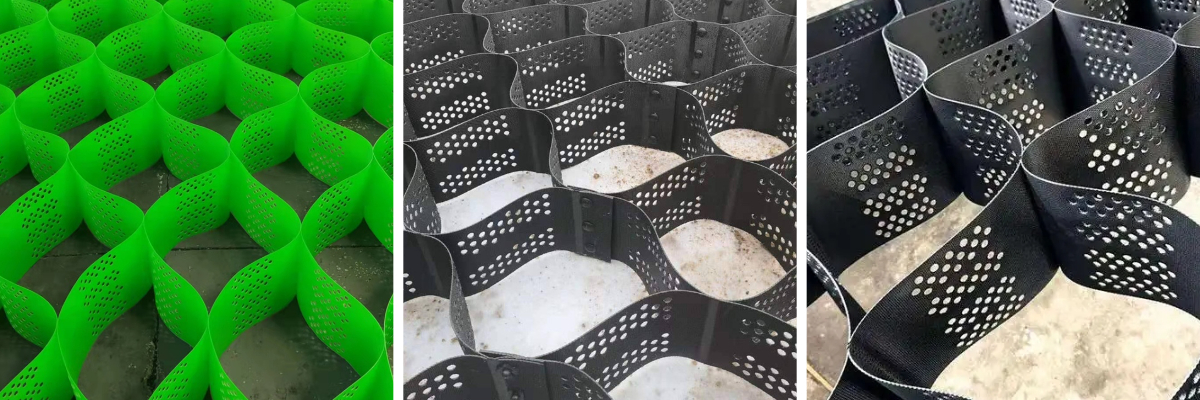
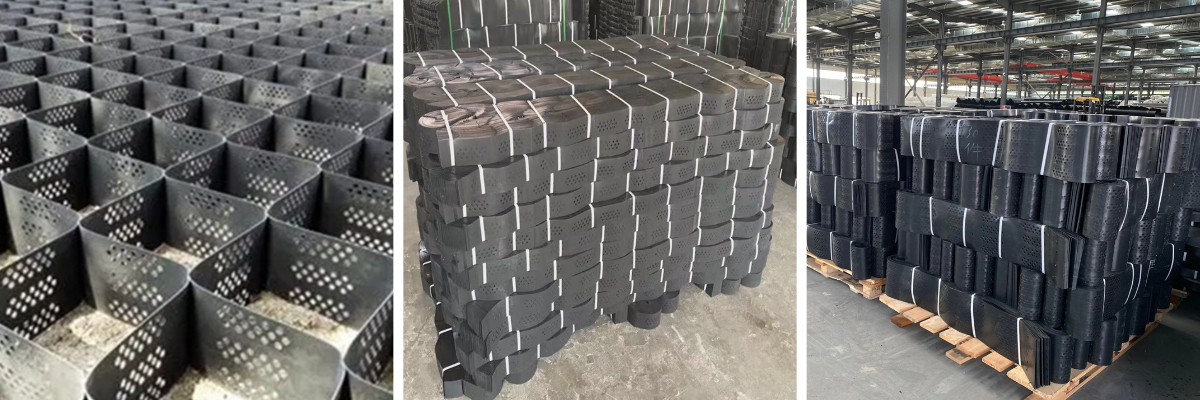
It consists of strips of modified virgin HDPE (or novel polymeric alloy NPA) ultrasonically welded at regular intervals. Delivered folded compactly, the material expands on-site into interconnected honeycomb cavities. After filling with sand, gravel, soil or aggregate, it forms an integrated rigid composite mattress for ground reinforcement, erosion control and ecological slope protection.
2. Core Working Mechanism
The performance of CCS relies on 3D lateral confinement, hoop stress & beam effect:
1. Lateral Confinement & Apparent Cohesion (Core)
Vertical vehicle or gravity load pushes infill outward; cell walls generate hoop stress to lock granular materials and block lateral sliding. Cohesionless sand/gravel gains artificial apparent cohesion, raising soil shear strength by 2–3 times to eliminate rutting, slip and slope creep.
2. Beam Effect & Uniform Load Distribution
Interlinked honeycomb cells work as a flexible stiff mattress (snowshoe effect). Concentrated wheel load disperses across a wider subsoil area, cutting vertical compressive stress and differential settlement by 40%–65%.
3. Drainage & Hydrostatic Relief (Perforated CCS)
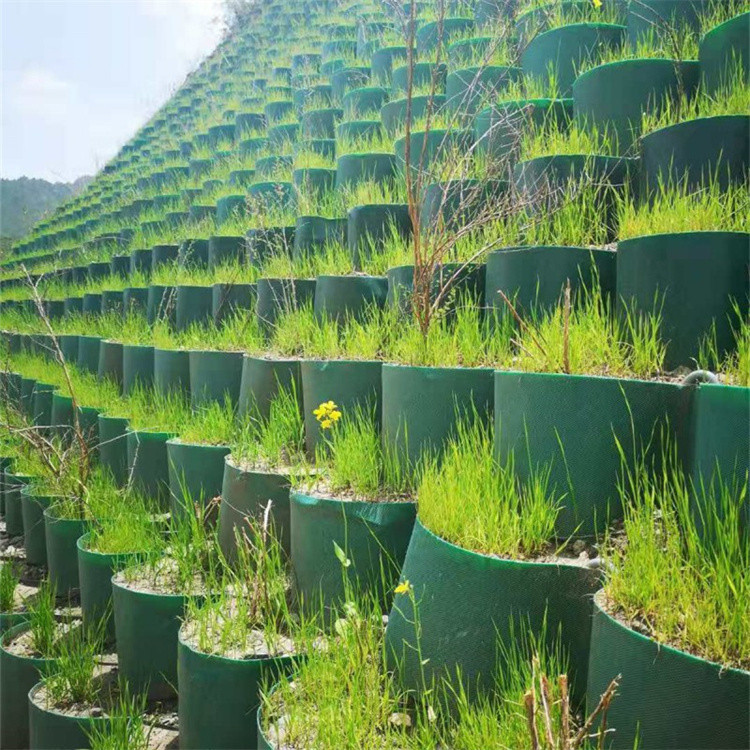
Pre-punched holes discharge pore water and rainwater inside soil layers, eliminating hydrostatic pressure that triggers subgrade mud pumping and shallow slope collapse. Plant roots penetrate holes to build soil-root-CCS composite eco-reinforcement.
4. Flexible Adaptation to Deformation
The whole CCS mattress tolerates minor uneven foundation deformation without integral cracking, superior to rigid concrete or stone structures.
3. Main Material & Product Types
Raw Material
- Standard grade: Virgin HDPE blended with UV stabilizer, antioxidant and antifreeze additives; service life 50–75 years for permanent infrastructure.
- High-performance grade: Neoloy polymeric alloy (NPA), higher tensile stiffness and creep resistance for heavy-load long-term projects.
Surface Classification
1. Perforated CCS: For slope greening, river revetment, waterlogged soft subgrade; drainage & root penetration.
2. Textured/embossed CCS: Boost friction between cells and aggregate; standard for highway & mine heavy-duty subgrade.
3. Solid smooth CCS: No holes, only for dry heavy-load base without vegetation requirements.
Common Specifications
- Cell height: 100/150/200/250/300 mm
- Sheet thickness: 1.0–1.8 mm
- Welding spacing: 330/400/500/660 mm
- Weld peel strength: ≥8 kN/m (general); ≥10 kN/m (steep slopes & heavy haul roads)
4. Core Advantages of CCS
1. Greatly upgrade soft ground bearing capacity
Effectively reinforce silt, mucky soil, collapsible loess and backfilled weak subgrades; bearing capacity rises 2–3 times, and required gravel cushion thickness reduces by 50%–80%.
2. Low logistics & rapid construction
Foldable design cuts transport volume by over 80%; lightweight for manual unfolding without large heavy machinery, shortening construction period by 30%+.
3. Cost-saving & local infill available
On-site native soil/sand can replace purchased aggregate, lowering stone mining and transportation expenses.
4. Long durability & minimal later maintenance
HDPE resists UV radiation, acid, alkali, seawater corrosion and freeze-thaw cycles; drastically reduce pavement cracking, settlement and slope repair frequency.
5. Eco-friendly green infrastructure
Replace rigid concrete/masonry; perforated CCS supports vegetation restoration for slopes, river banks and mine wasteland, complying with sponge city & soil conservation standards.
5. Full Application Range
1) Subgrade & Load Support Stabilization
Expressway, national/provincial highway soft foundation, road widening transition zones, bridge-road joint sections, mine haul roads, logistics container yards, large parking lots, airport aprons.
2) Slope Protection & Ecological Restoration
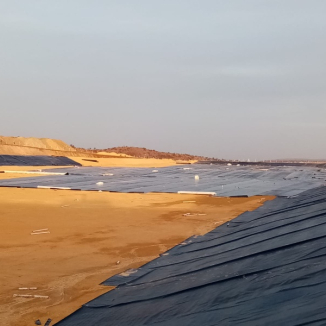
Traffic cut/fill slopes, mountain steep slopes, open-pit mine waste dump reclamation, landfill closure anti-slip cover slopes, park landscape green slopes, desert sand fixation slopes.
3) Water Conservancy Revetment
Rivers, reservoirs, irrigation channels, tidal flats and seawalls; resist wave scouring and adapt to seasonal water level fluctuation zones.
4) Municipal & Special Works
Sponge city rain gardens, lightweight eco retaining walls, photovoltaic & wind farm mountain slope protection.