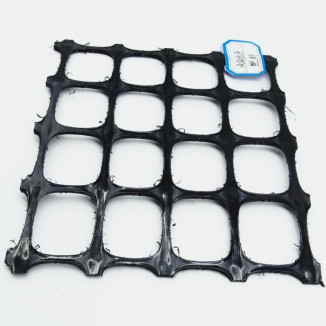
Geocell for landscaping
Typical application scenarios:
1. Road and railway slope greening: Prevent surface soil loss caused by rain erosion, and achieve rapid vegetation establishment by combining with hydroseeding technology.
2. River and embankment ecological restoration: Resist water erosion, protect the integrity of riverbanks, and create ecotonal landscapes at the interface of water and land.
3. Mine and bare land reclamation: Construct planting substrates on soil-less rock surfaces or infertile lands to facilitate ecological restoration.
4. Urban vertical greening: Applied in rooftop gardens, ecological retaining walls, and other scenarios to increase urban green space utilization.
Geocell for landscaping is three-dimensional honeycomb grid structures formed by ultrasonic welding of high-strength polymer sheets such as high-density polyethylene (HDPE), specifically designed for slope protection, ecological restoration, and vegetation recovery projects. Their core function is to provide lateral confinement to the filled soil through the three-dimensional cellular structure, effectively preventing soil erosion while offering a stable growth medium for vegetation, thereby achieving the dual objectives of engineering protection and ecological greening.

I. Main Features and Advantages:
1. Enhanced Slope Stability
Geocells utilize a three-dimensional grid structure to "lock" loose soil within individual cells, significantly improving soil shear strength and overall integrity. When applied to high, steep slopes or soft foundations, they can reduce the risk of slippage by over 40%, making them particularly suitable for erosion-prone terrains such as weathered rock and sandy soils.
2. Accelerated Vegetation Recovery
Nutrient-rich soil can be filled into the cells, allowing direct seeding of grass or planting of shrubs. The honeycomb structure effectively retains moisture and nutrients, enhancing seed germination rates and plant survival. For example, in cold northern regions, the heat-absorbing properties of black HDPE material can shorten seedling emergence time by 7 days; in mine reclamation projects, vegetation coverage can increase from 30% to 85%.
3. High Durability and Environmental Adaptability
The material exhibits excellent resistance to ultraviolet radiation, acids, alkalis, and aging, with a service life exceeding 10 years. Some nano-modified products achieve a tensile strength of up to 35 MPa—1.8 times that of conventional products—making them suitable for harsh natural conditions such as deserts, saline-alkali lands, and permafrost regions.
4. Easy Installation and Cost Efficiency
The product can be folded for transport and then unfolded on-site and filled with locally available soil or gravel, reducing material consumption by more than 50%. In a highway slope project, the use of geocells shortened construction time by 30% and reduced maintenance costs by 25%.

II. Typical application scenarios:
1. Road and railway slope greening: Prevent surface soil loss caused by rain erosion, and achieve rapid vegetation establishment by combining with hydroseeding technology.
2. River and embankment ecological restoration: Resist water erosion, protect the integrity of riverbanks, and create ecotonal landscapes at the interface of water and land.
3. Mine and bare land reclamation: Construct planting substrates on soil-less rock surfaces or infertile lands to facilitate ecological restoration.
4. Urban vertical greening: Applied in rooftop gardens, ecological retaining walls, and other scenarios to increase urban green space utilization.