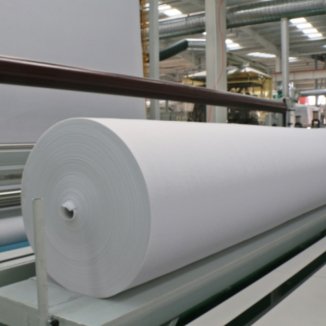
River Slope Protection Cement Blanket
1. Excellent flexibility — perfectly adapts to complex terrain.
Remains soft and fabric-like before curing, allowing bending, folding, and cutting; perfectly conforms to curved, trapezoidal, steep-sloped, and irregular channel profiles.
2. Extremely fast installation — no formwork required.
· On-site procedure only involves: unroll → secure → hydrate.
· Initial set in 2 hours, ready for use in 24 hours, and reaches near full strength within 7 days.
· Reduces construction time by over 70% compared to traditional concrete.
River Slope Protection Cement Blanket (also known as Concrete Cloth) is a flexible cement-based composite material specifically designed for water conservancy projects such as irrigation channels, drainage ditches, and riverways. Its primary functions include rapid lining, seepage prevention, erosion resistance, and slope protection.

I. Core Features (Advantages for Channel Applications)
1. Excellent flexibility — perfectly adapts to complex terrain.
Remains soft and fabric-like before curing, allowing bending, folding, and cutting; perfectly conforms to curved, trapezoidal, steep-sloped, and irregular channel profiles.
2. Extremely fast installation — no formwork required.
· On-site procedure only involves: unroll → secure → hydrate.
· Initial set in 2 hours, ready for use in 24 hours, and reaches near full strength within 7 days.
· Reduces construction time by over 70% compared to traditional concrete.
3. Seepage Resistance and Durability
· After hardening, forms a dense concrete layer with excellent impermeability, freeze-thaw resistance, and resistance to acids and alkalis.
· Resists water erosion and penetration by plant roots.
· Service life of 10 to 30 years.
4. Lightweight and Cost-Effective
· Weighs only 1/10 that of traditional cast-in-place concrete.
· Significantly reduces transportation, labor, and machinery costs.

II. Typical Applications
· Lining for agricultural irrigation channels and water conveyance canals
· Drainage ditches, stormwater channels, and flood control channels
· Riverbanks, reservoir slope protection, and seepage prevention
· Liners for fish ponds, reservoirs, and landscape lakes
· Emergency repair of pipelines, culverts, and small-scale hydraulic structures