Case Study of Geotextile Project for Small-scale Agricultural Reservoir
Case Study of Geotextile Project for Small-scale Agricultural Reservoir
This is a representative rainwater collection and irrigation project in arid areas, with a designed storage capacity of 1,000 cubic meters. Its core goal is to solve the problem of water shortage for irrigation in dry seasons.
1. Project Overview
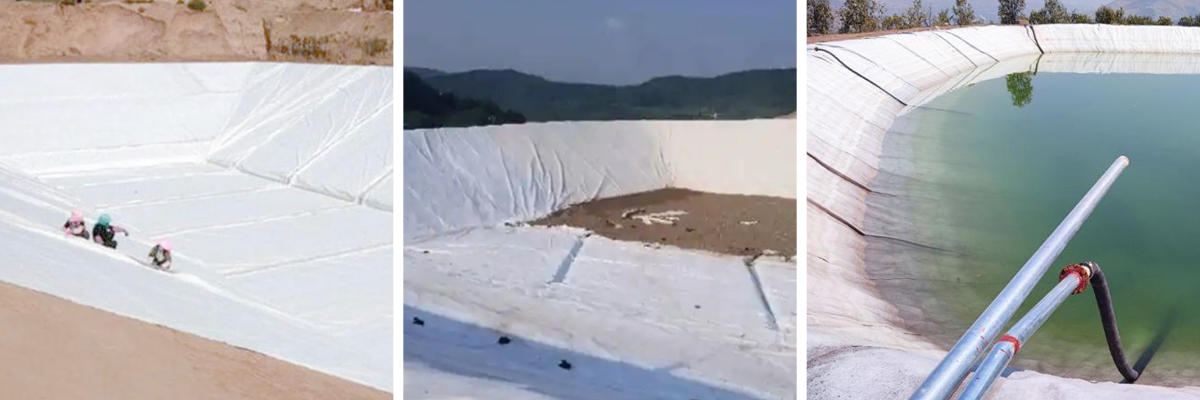
The project is located in a semi-arid agricultural area, with a total storage capacity of 1,000 cubic meters. Its function is to collect rainwater for farmland irrigation in dry seasons. The pond is a naturally excavated soil pond, and a two-fabric one-membrane anti-seepage structure with a 0.5mm thick HDPE geomembrane matched with geotextile is adopted.
2. Geotextile Application Scheme
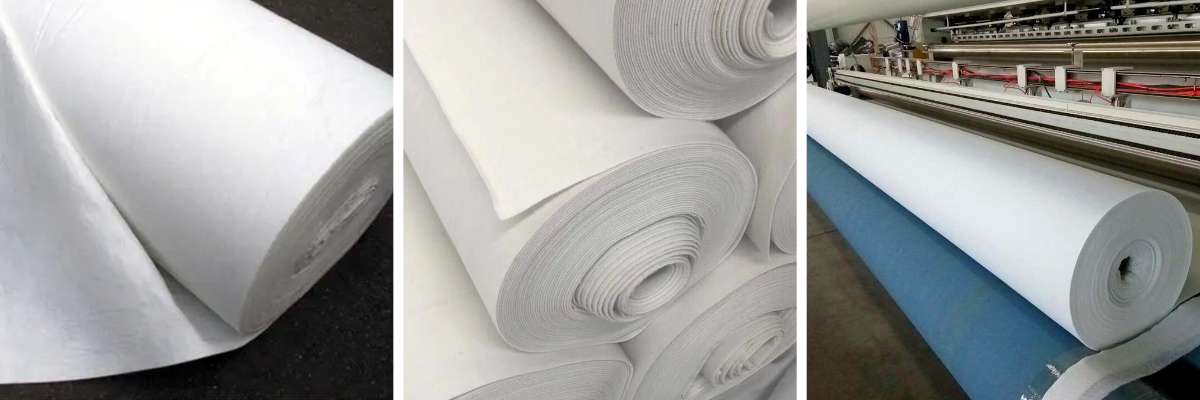
Specification selection: 300 g/m² staple fiber geotextile is selected for both upper and lower layers. It is suitable for the gentle geological soil pond bottom without sharp stones, balancing cost and protection requirements.
Construction process:
·Clean the site in advance: remove weeds and stones, then level the land and compact the foundation to ensure overall flatness.
·Cut and lay the lower geotextile, and use hot-melt welding at the joints to ensure sealing, avoiding residual wrinkles or bubbles.
·After laying the HDPE anti-seepage membrane, cover the upper layer with geotextile as a protective layer, and finally cover the membrane with sand.
·Set up anchor trenches to fix the edge of the membrane, and conduct a water storage leakage test after completion.
3. Implementation Effect
After the completion of the project, the anti-seepage effect of the reservoir has been significantly improved, and the water resource utilization rate has increased by about 30%. Compared with the traditional concrete reservoir, the construction cost is reduced by more than 40%. In the later period, only regular cleaning of sediment and inspection of the membrane are required, and the maintenance cost is greatly reduced.