Woven Tube Bag Cofferdam Technology Shines in Haikou Wenming East Cross-River Passage Project
HAIKOU, CHINA – As a landmark project for the construction of Hainan Free Trade Port and the first urban road tunnel crossing the Nandu River in Hainan Province, the Haikou Wenming East Cross-River Passage Project has set a new benchmark for efficient and safe construction of cross-river tunnel projects in tropical monsoon climate areas. Among them, the innovative application of woven tube bag cofferdam technology has become a key highlight, effectively solving the construction difficulties caused by frequent typhoons, large tide changes and tight construction period, and providing a valuable reference for similar cross-river and cross-sea projects around the world.
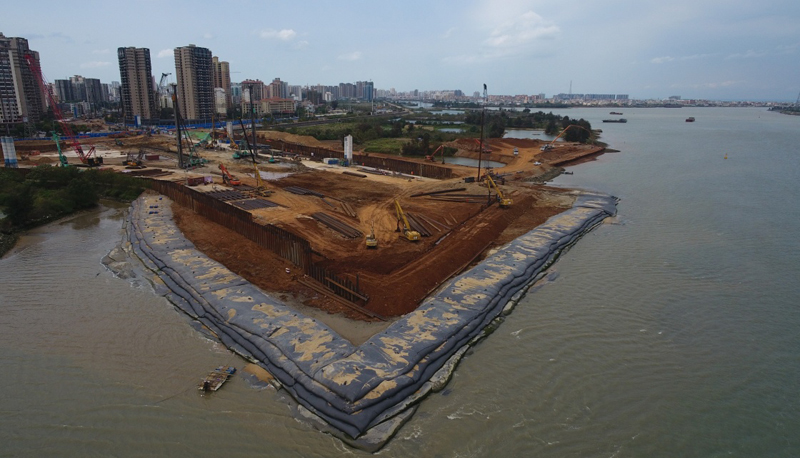
The Haikou Wenming East Cross-River Passage Project, constructed by Haikou Urban Construction Investment Co., Ltd. and constructed by Shanghai Urban Construction Municipal Engineering (Group) Co., Ltd., starts from the intersection of Wenming East Road and Bailong Road in the west and ends at the intersection of Dongheng Second Road and Qiongshan Avenue in Jiangdong New Area in the east. With a total length of 4.38km, the project includes a 2.72km tunnel section and a 1.66km connecting road, and 4 interchange ramps with a total length of about 2.3km are set on Binjiang West Road. As an important link connecting Haikou's downtown area and Jiangdong New Area, the project plays a crucial role in promoting the construction of Jiangdong New Area, relieving the pressure of Qiongzhou Bridge and optimizing the urban traffic pattern.
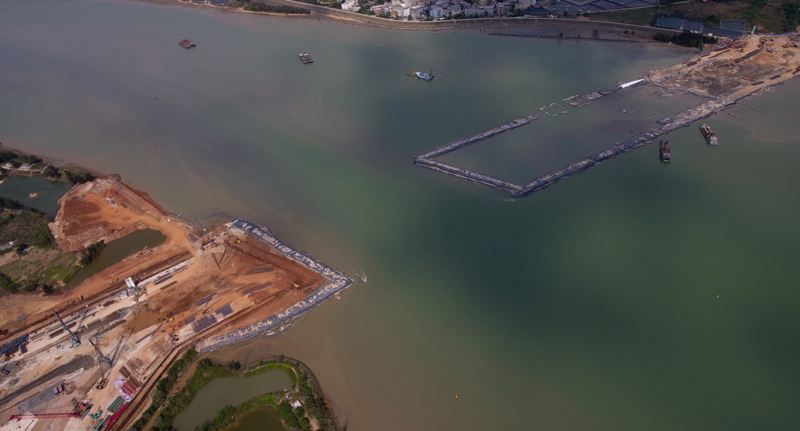
The biggest challenge in the project construction is the complex construction conditions of the section crossing the Nandu River. The area is affected by frequent typhoons and large tide changes, with strong water fluidity, and the construction period is extremely tight. In addition, the maximum excavation depth of the tunnel exceeds 23m, and the construction of the cofferdam, which is the key to ensuring the safe construction of the tunnel, faces severe tests. Initially, the traditional steel sheet pile cofferdam scheme was planned, but it was difficult to meet the requirements of flood control, typhoon resistance and construction progress due to the long construction period and high difficulty of underwater operation.
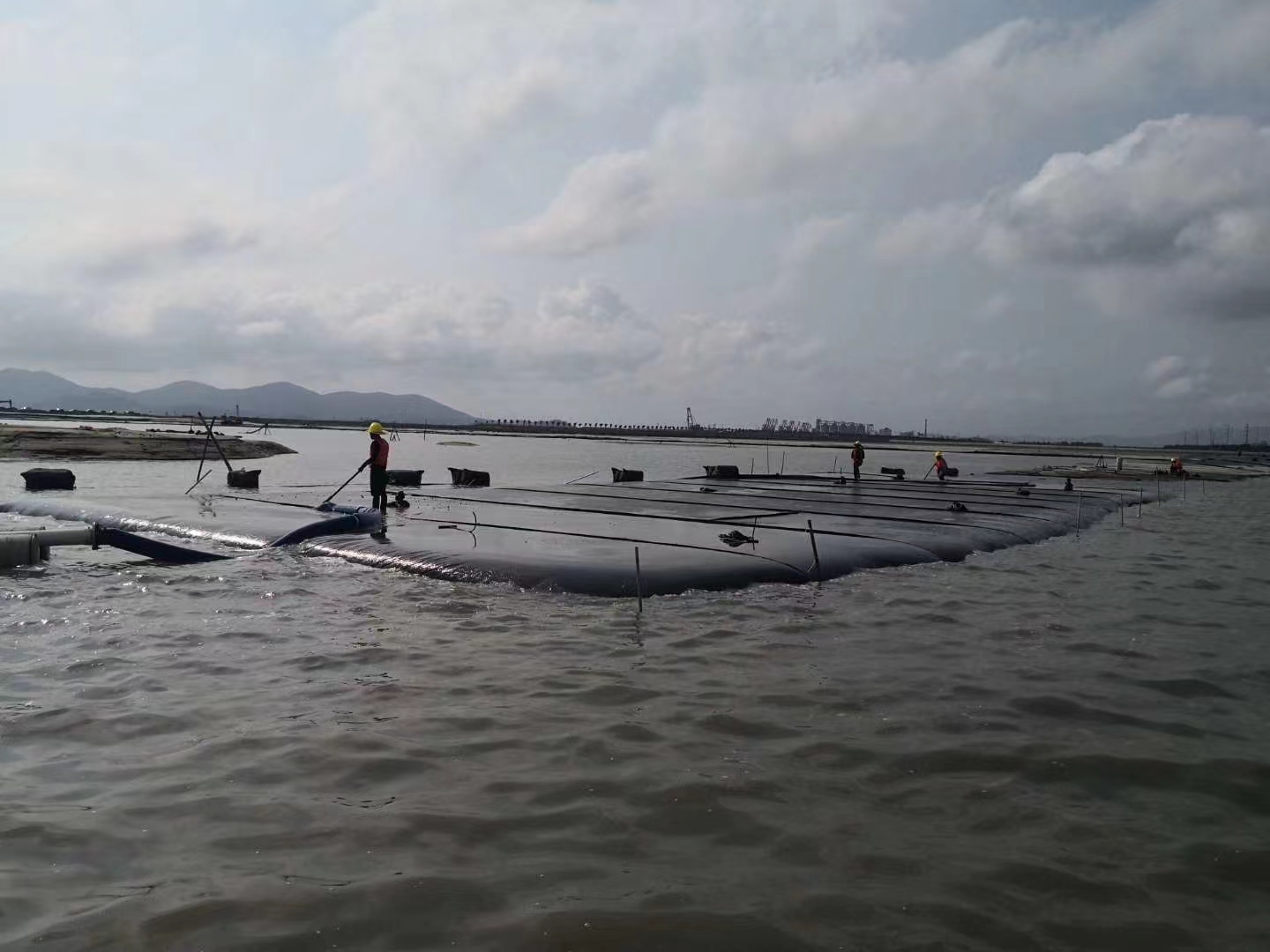
To break through the construction bottleneck, the project team boldly innovated and adopted a new type of combined cofferdam construction method of "woven tube bag (geotextile membrane bag) + steel sheet pile", with woven tube bags as the core material to build the cofferdam foundation. The woven tube bags used in the project are high-performance geosynthetic materials, mainly made of polypropylene and polyester fibers through professional weaving and composite processing, which have the characteristics of high tensile strength, strong anti-aging, corrosion resistance and good water permeability, and can withstand the impact of tides and high-pressure filling, fully adapting to the complex hydrological environment of the Nandu River.
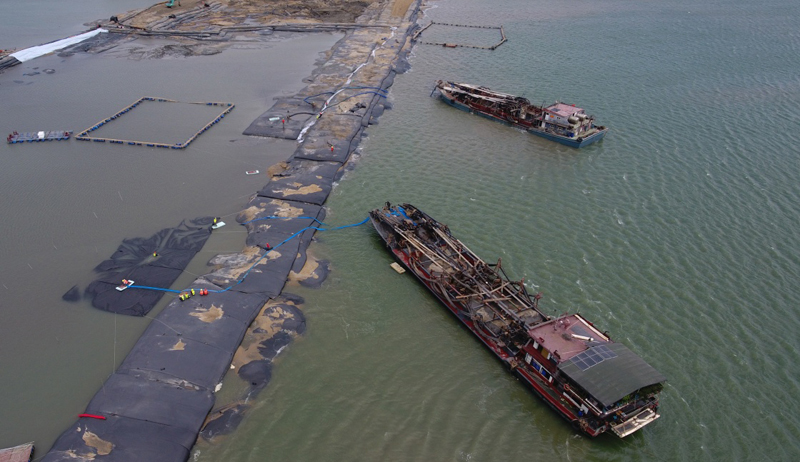
The core construction process of the woven tube bag cofferdam in the project is scientific and efficient. The construction team first laid the prefabricated woven tube bags in the designated area of the river, then used high-pressure mud pumps to fill the bags with sand (the sand used in the project was mainly imported from Malaysia due to the shortage of qualified sand resources in Hainan Island), and relied on the self-weight of the sand particles and the constraint effect of the tube bags to make the sand body drain and consolidate quickly, forming a stable堰体 (weir body) that emerged from the water. On this basis, the team used crawler cranes and vibratory hammers to drive Larsen steel sheet piles (the longest of which is 27m) on the woven tube bags, changing the traditional underwater piling operation to land operation, which greatly reduced the construction difficulty and improved the construction efficiency.
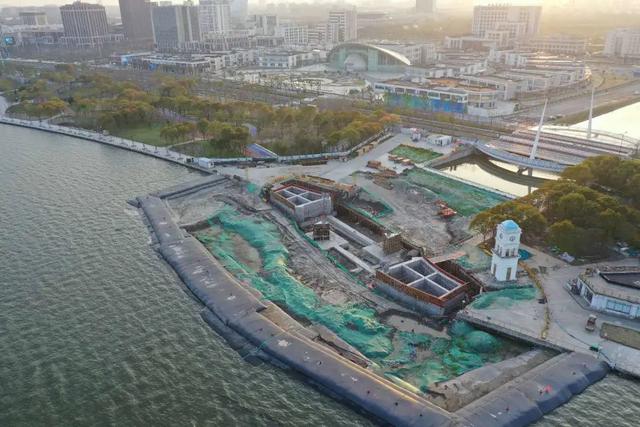
The application of woven tube bag cofferdam technology has brought remarkable effects to the project. Firstly, it significantly shortened the construction period. By optimizing the construction process, the cofferdam project was completed more than 2 months ahead of schedule, ensuring that the first phase of the cofferdam was completed and closed in March 2019 as scheduled, laying a solid foundation for the subsequent foundation pit excavation and tunnel main structure construction. Secondly, it ensured construction safety. The combined structure of woven tube bags and steel sheet piles formed a "soft outside and hard inside" cofferdam system, which effectively blocked seepage and resisted the impact of tides and typhoons. The measured deformation of the steel sheet piles and weir body was less than 3cm, far lower than the allowable deformation of 30cm in the original design, fully meeting the flood control requirements of the Nandu River. Thirdly, it realized green and efficient construction. The use of woven tube bags avoided a large number of earth-rock mining and long-distance transportation, reduced dust and noise pollution, and the steel sheet piles used in the cofferdam can be recycled, which is in line with the concept of green construction.