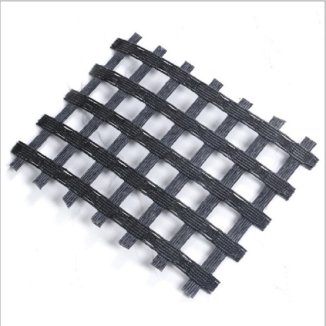
honeycomb geocell for slope protection
Core Functions of Honeycomb Geocell for Slope Protection
1. Confine Soil and Prevent Shallow Slope Landslides (Core Function)
· The independent three-dimensional honeycomb cells firmly lock the planting soil and gravel on the slope surface, restrict lateral and downward sliding of soil, and greatly improve the shear strength of soil.
· It avoids slope slumping and shallow collapse caused by rain erosion and self-weight, and is applicable to steep slopes, filled embankment slopes and loose sandy slopes.
2. Reduce Rain Erosion and Control Soil Erosion & Water Loss
· The honeycomb grid disperses slope runoff, slows down water flow velocity and reduces gully formation from direct rain scouring.
· Perforated geocells quickly drain accumulated water inside the slope and eliminate hydrostatic pressure triggered by ponding, fundamentally lowering landslide risks.
· It fixes the surface planting soil to prevent large-area soil loss washed away by rainfall.
3. Ecological Greening to Achieve Long-Term Slope Stabilization by Vegetation
· Geocell cavities store planting medium and provide stable growing space for grasses and shrubs without nutrient soil being washed away by rain.
· Plant roots penetrate the holes of geocells to form a composite reinforcement system of geocell + plant roots with HDPE geocells.
· Vegetation covers the slope surface to buffer rain impact and form long-lasting ecological protection, replacing rigid concrete and mortar stone pitching.
4. Reinforce River Embankments and Channel Slopes to Resist Water Scouring
After laying on slopes of rivers, reservoirs and channels, the honeycomb structure withstands continuous scouring by waves and running water to prevent hollowed embankment toes and bank collapse. Compared with hard revetments, it features both water permeability and ecological performance.
5. Reduce Slope Load and Enable Lightweight Construction
· Geocells are extremely light in self-weight; heavy concrete and large stone blocks are not required, so no extra load is imposed on slopes.
· It can construct lightweight eco retaining walls to solve insufficient bearing capacity of soft soil and weak subgrade slopes.
6. Long Service Life and Lower Subsequent Maintenance Costs
· HDPE material resists UV radiation, acid & alkali, freeze-thaw cycles and seawater corrosion, with a service life of over 50 years.
· The formed structure is stable and not easy to damage. After vegetation fully grows, frequent repairs are barely needed, drastically cutting later slope maintenance expenses.
7. Eco-Friendly and Cost-Effective with Local Material Utilization
On-site native soil can be directly used for backfilling to reduce procurement costs of externally transported gravel and earthwork.
It avoids rigid hardening, restores natural slope ecology, and meets environmental requirements for soil and water conservation, mine restoration and sponge city construction.
Summary of Functions Corresponding to Application Scenarios
· Highway & railway slopes: Anti-slumping and ecological revegetation
· Rivers and embankments: Anti-scouring and bank stabilization
· Wasteland mine restoration: Sand & soil fixation and vegetation reclamation
· Landscape hills and park slopes: Slope stabilization plus green landscaping
· Landfill cover slopes: Prevent sliding and loss of covering soil layer