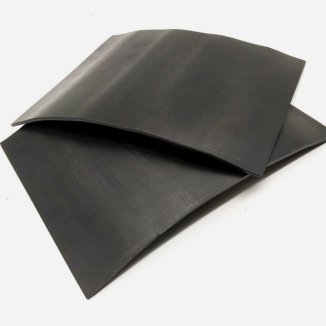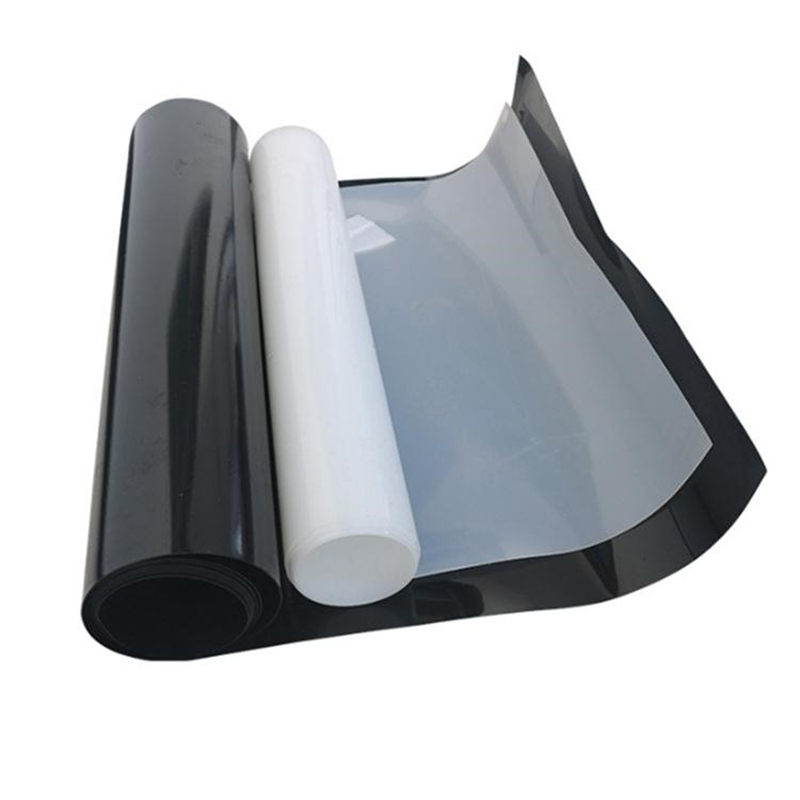
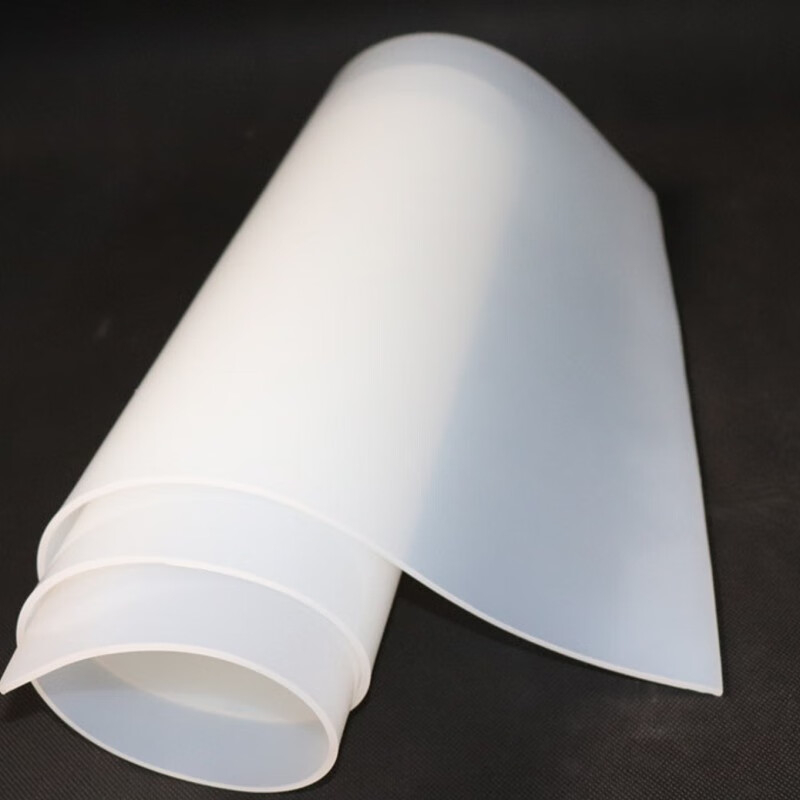
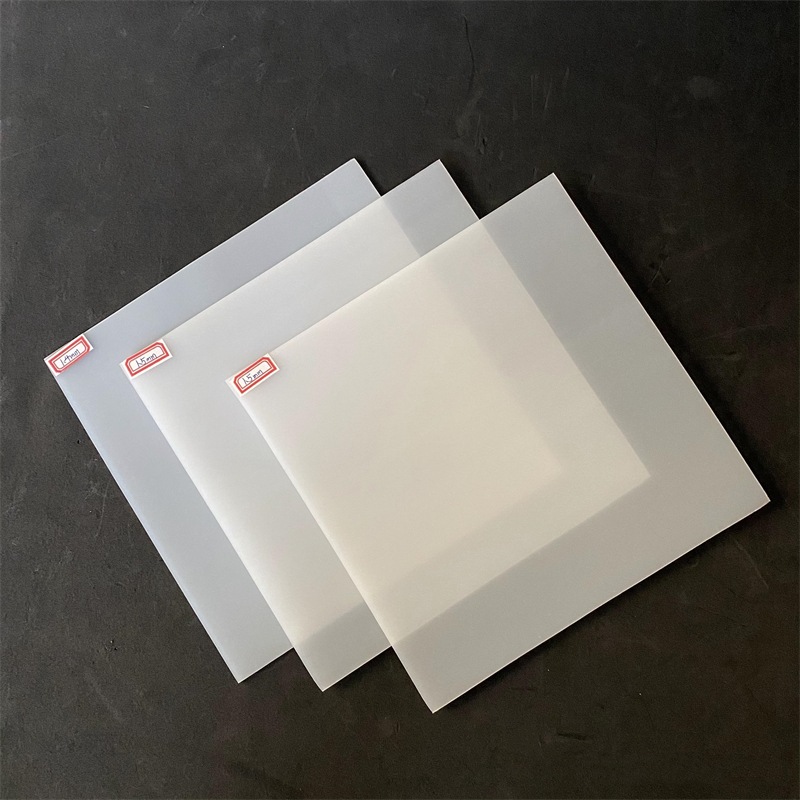
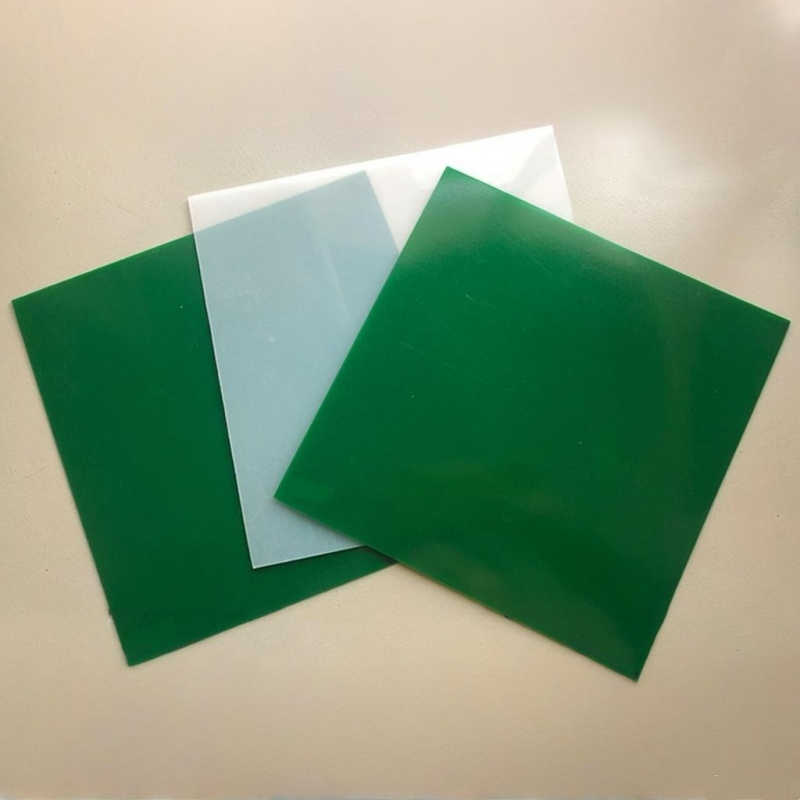
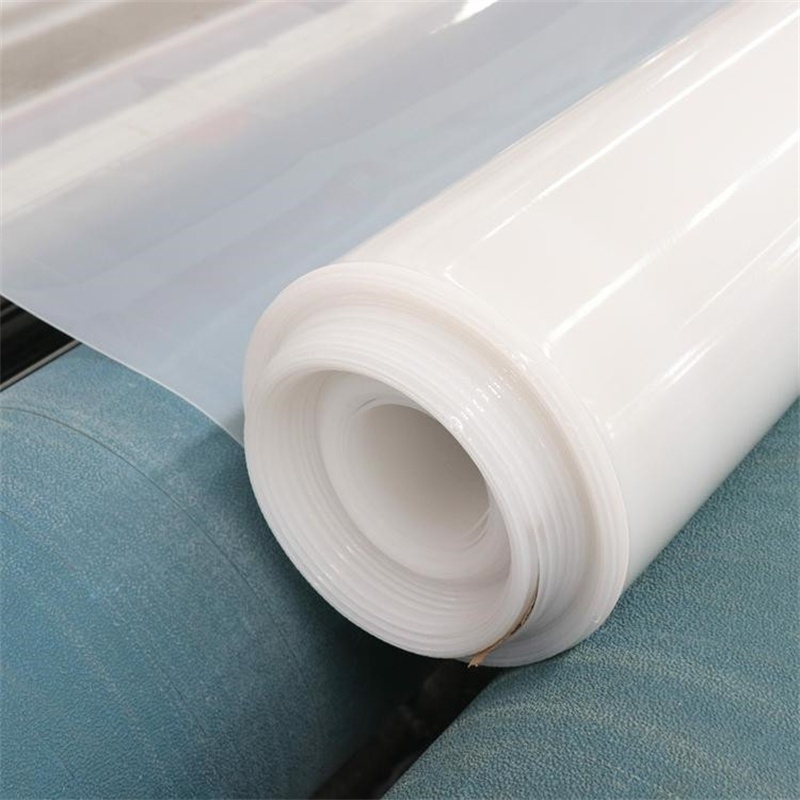
EVA geomembrane
- Material: Made of ethylene‑vinyl acetate copolymer, with special anti‑aging and anti‑UV additives as required.
- Core performance: Excellent low‑temperature flexibility, high elongation, good tear and puncture resistance.
- Feature: Soft, easy to weld and conform to irregular base surfaces; less brittle at low temperature compared with HDPE geomembrane.
- Main applications: Tunnel waterproofing, underground engineering, landfill, water conservancy, reservoir and sewage treatment anti‑seepage.
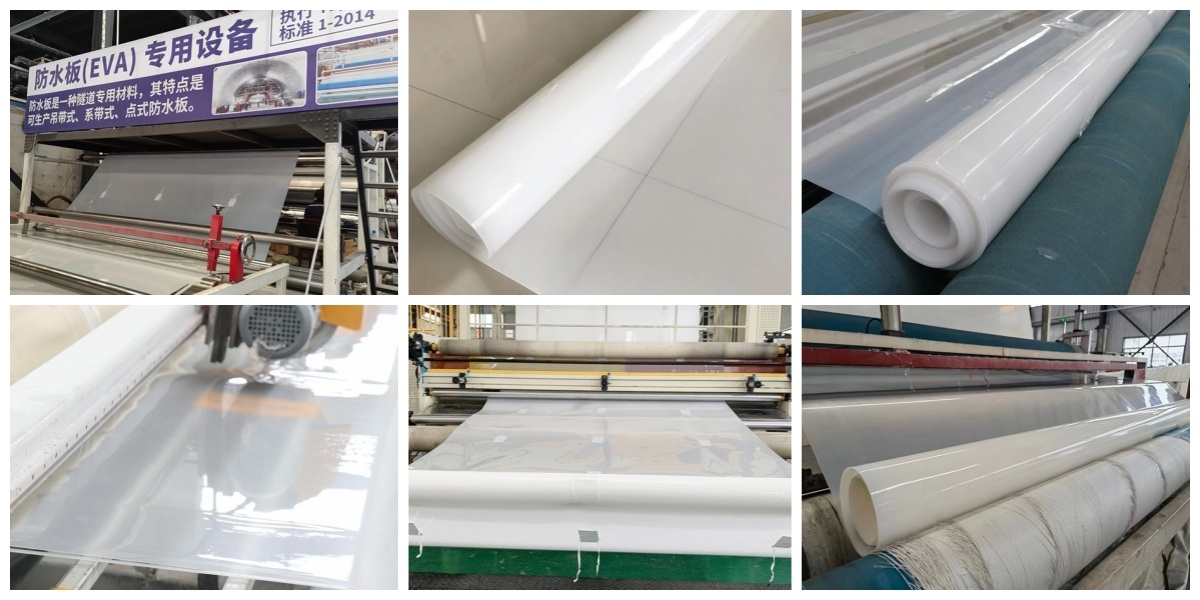
EVA geomembrane is a flexible thermoplastic liner made of ethylene‑vinyl acetate copolymer. It features high elongation and excellent low‑temperature ductility, easily conforming to uneven shotcrete surfaces in tunnels. Joints are formed by hot welding to create a continuous waterproof barrier. It is widely used for subway, road and railway tunnel waterproofing, underground pipe galleries and cold‑climate containment.
2 EVA vs. "Geomembrane" — Material against Product Family
Two levels of description, routinely confused. A geomembrane is a product family: any low-permeability polymer barrier sheet; EVA is one material in it, alongside HDPE, LDPE/LLDPE, PVC and ECB — "EVA geomembrane" is a catalogue entry, not a quality grade. Industry also splits by thickness: ≥ 0.8 mm a waterproof board (防水板, tunnel term), below that a geomembrane (土工膜, lining term) — the same polymer under two names.
Table 1 EVA against the other geomembrane materials
Material | Base polymer / VA | Density g/cm³ | Flexibility / cold | Plasticiser | Weld window | Positioning |
EVA | EVA copolymer; VA 5–8 % | ~0.93–0.94 | High; bend −35 °C (GB 50108) | None | Wide, ambient-tolerant | Tunnels, reservoirs, cold |
HDPE | High-density PE, no VA | ≥ 0.932 (GB/T 17643-2025 Tab. 1) | Low; stress-cracks under load | None | Narrow; 240–320 °C | Landfill, hazardous waste |
LDPE / LLDPE | LD / linear LD PE | 0.911–0.935 | Very high; elong. > 300 % | None | Wide, forgiving | Irregular subgrade, low head |
PVC | Polyvinyl chloride | ~1.3–1.4 | Very high, plasticiser migrates | Yes — weak point | Easy (solvent, hot air) | Water features, roofing |
ECB | Ethylene copolymer + bitumen | ~0.95–1.0 | Moderate | None | Like EVA | Tunnels, dams |
3 Advantages
▪ No plasticiser: nothing migrates or embrittles over the design life — the failure mode that caps PVC;
▪ Cold flexibility: bend −35 °C with no crack (GB 50108 T.4.5.8), makers claim −40 °C — why it dominates cold-region tunnels;
▪ Deformation: ≥ 550 % elongation follows shotcrete roughness and settlement without going into tension;
▪ Weld & bond: wide welding window, less ambient-sensitive than HDPE; good adhesion to concrete and nonwoven buffers, so detail work at penetrations and corners holds;
▪ Cost: a commodity resin; 1.0–1.5 mm sheet prices below HDPE of the same gauge where chemical resistance is not the driver.
4 Specifications
Three sets of numbers, not interchangeable: GB 50108 for building / municipal underground works, TB/T 3360.1 for railway tunnels, GB 18173.1 JS2 for the product. Name one as the acceptance basis on the PO.
Table 2 EVA property requirements — three bases side by side
Property | GB 50108-2008 T.4.5.8 (EVA) | TB/T 3360.1-2023 T.2 | GB 18173.1-2012 JS2 | Test |
Tensile strength | ≥ 16 MPa | ≥ 17 MPa (breaking) | ≥ 16 MPa (23 °C); ≥ 6 MPa (60 °C) | GB/T 528 |
Elongation at break | ≥ 550 % | ≥ 600 % | ≥ 550 % (23 °C); ≥ 350 % (−20 °C) | GB/T 528 |
Tear strength | — | ≥ 95 kN/m | ≥ 60 kN/m | GB/T 529 |
Puncture / piercing | — | ≥ 300 N | — | GB/T 19978 |
Watertightness | ≥ 0.3 MPa, 120 min | 0.3 MPa / 24 h, no leak | 0.3 MPa / 30 min, no leak | GB/T 328.10 |
Low-temperature bend | −35 °C, no crack | −35 °C, no crack | −35 °C, no crack | GB/T 328.15 |
Heat ageing | — | 80 °C × 168 h: ≥ 14 MPa / ≥ 550 % | 80 °C × 168 h: retention ≥ 80 % / ≥ 70 % | GB/T 3512 |
Alkali resistance | — | Ca(OH)₂ 168 h: ≥ 16 MPa / ≥ 550 % | Ca(OH)₂ 168 h: retention ≥ 80 % / ≥ 90 % | GB/T 1690 |
Artificial weathering | — | retention ≥ 80 % / ≥ 70 % | retention ≥ 80 % / ≥ 70 % | GB/T 18244 |
Dimensional change | ≤ 2.0 % | elong. ≤ 2 mm; shrink ≤ 6 mm | ≤ 2 mm / ≤ 6 mm | GB/T 12027 |
Thickness | ≥ 1.2 mm | ≥ 1.0 mm | resin sheet ≥ 0.5 mm | GB/T 6672 |
5 Selection by Application — Tunnel / Reservoir / Aquaculture Pond
Table 3 Application-specific selection
Item | Tunnel (waterproof board) | Reservoir / canal | Aquaculture pond |
Governing basis | GB 55030-2022 (mandatory); GB 50108-2008; TB/T 3360.1-2023 railway | GB/T 50290-2014; SL/T 225-98 | No pond standard; material to GB 18173.1 JS2 or food-contact GB 4806.7 |
Thickness | ≥ 1.5 mm grade 1 / ≥ 1.2 mm grade 2; railway ≥ 1.0 mm, 1.5 mm usual, 2.0 mm grade V rock | ≥ 0.5 mm, never < 0.3 mm; head: < 25 m → 0.4 mm; 25–50 m → 0.8–1.0 mm; 50–70 m → 1.2–1.5 mm | 0.5 mm shallow (≤ 1.5 m, ≤ 5 mu); 0.75 mid (1.5–3 m); 1.0+ deep (≥ 3 m, ≥ 20 mu) |
Why EVA | Bend −35 °C; deforms with the lining; bonds to buffer | Elongation follows settlement; cheaper than HDPE | Cold flexibility; smooth face does not abrade fish |
Key risk | Rebar-work puncture — 300 N puncture + nonwoven buffer | Wind uplift and slope slide before backfill — anchor trench critical | Residue, recycled resin — insist virgin food-grade + batch report |
Edge detail | Overlap ≥ 100 mm, double hot-wedge ≥ 10 mm/track; fix 0.5–0.8 m crown, 1.0–1.5 m wall | Anchor trench at crest and toe; lap buried with flow | Anchor trench all round; 200–300 g/m² nonwoven underlay on stony ponds |
Do not use where | Solvent, fuel, leachate — use HDPE | Same; no long-term exposed UV | Not for hot water above the softening range |
6 Installation
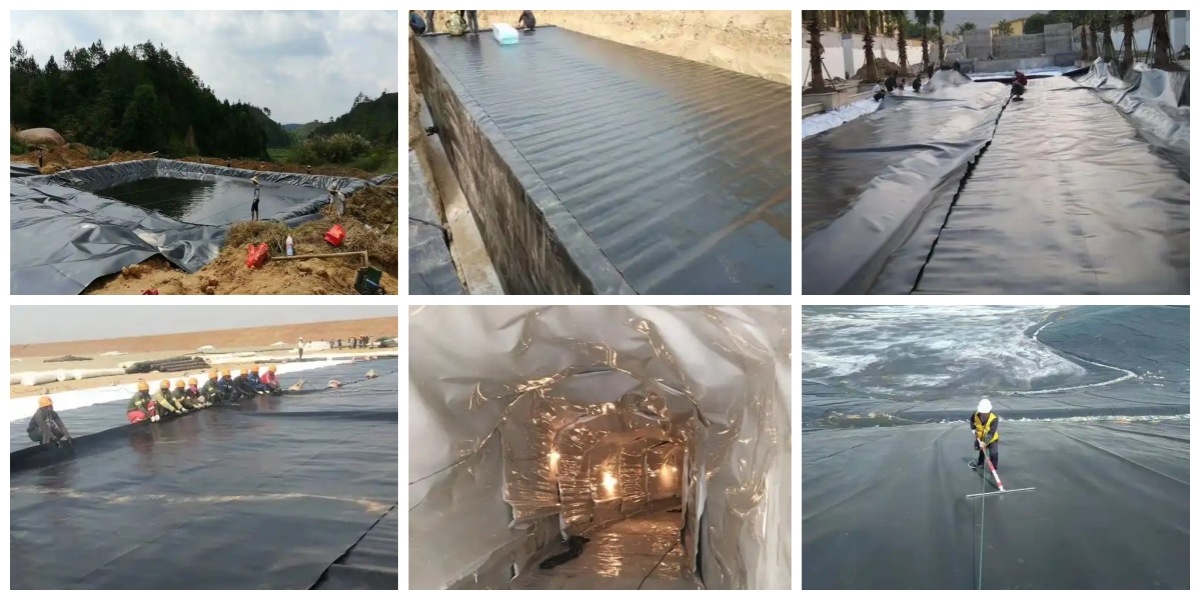
Subgrade → buffer → laying → welding → testing → protection → backfill. A sound sheet with a defective seam leaks as surely as a punctured one.
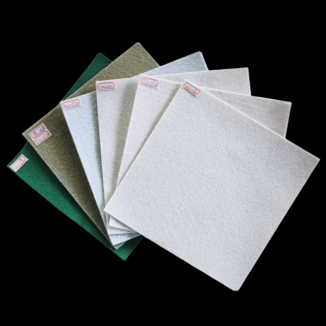
1. Subgrade, buffer, laying: level and compact, free of stone, roots and water; keep D/L ≤ 1/6, grind or mortar-fill protrusions. Tunnel buffer (nonwoven or PE foam) first, plastic nails at 0.5–0.8 m crown, 1.0–1.5 m wall, 1.5–2.0 m invert. Lay crown down to both sides (tunnels), low end upward (slopes, pond bottoms); upper sheet laps over lower in the flow direction. Do not drag the roll; leave ~1.5 % slack so cooling does not tension it. Overlap ≥ 100 mm.
2. Welding: double-track hot-wedge for main seams, extrusion gun for details. Trial-weld each shift and after any change of roll or temperature; set parameters from the trial. Weld only clean, dry sheet (wipe 300 mm either side); stop in rain or wind-blown sand.
3. Testing and protection: pressurise the inter-track channel to 0.2 MPa, 5 min no visible drop; seal the needle hole. Destructive samples: seam ≥ 80 % of parent strength (90 % critical works), parent fails first; repair and re-test defects. No traffic; shield rebar work. Lay 5–20 m ahead of the lining; backfill within the stated UV period; fill ponds, stand ~1 week before stocking. Below 5 °C weld quality falls away; below −10 °C pre-warm. Max three layers at any overlap (GB 50108 4.5.14).
7 FAQ
1. Q: What is the main difference between EVA geomembrane and HDPE geomembrane?
A: EVA geomembrane is softer, with better low‑temperature toughness and higher elongation, more suitable for tunnels and complex deformed bases. HDPE geomembrane has superior chemical resistance, anti‑oil performance and UV resistance, which is preferred for landfill bottom liner.
2. Q: Is EVA geomembrane suitable for direct long‑term exposure outdoors?
A: Not recommended. Without geotextile or soil covering, it will age rapidly under strong UV radiation. If exposed use is required, select grades with extra UV stabilizers.
3. Q: Can EVA geomembrane be used in cold regions?
A: Yes. It maintains good flexibility and crack resistance at low temperature, so it is widely used for tunnel waterproofing in cold areas.
4. Q: What thickness is commonly supplied for tunnel EVA geomembrane?
A: Typical thickness ranges from 1.2 mm to 2.0 mm. Thicker specifications are chosen for high water pressure and important tunnel projects.
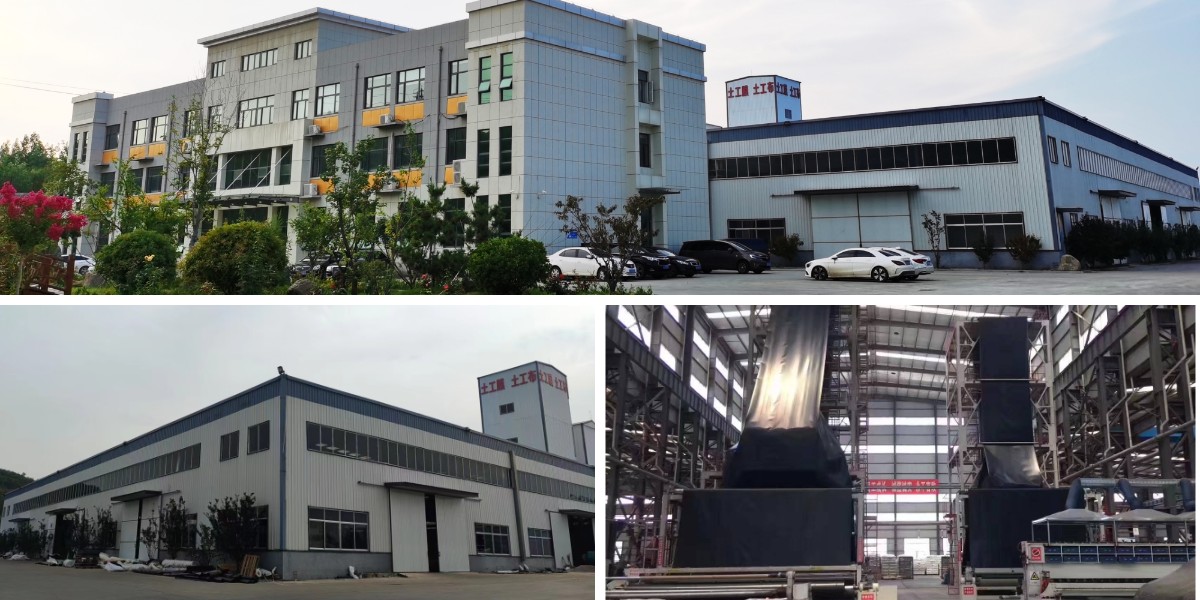
Shandong Yuanpeng Environmental Protection Technology Co., Ltd. was founded in 2022 with a registered capital ofRMB 50 milion. The company employs over 300 people, and its production facility covers 35,000 square metersEquipped with a professional technical and R&D team, the company is a comprehensive company integratingproduction, sales, and after-sales service.