Shandong Yuanpeng Environmental Protection Technology Co., Ltd.: High-Quality Geotextiles Loaded into Containers for Domestic and International Infrastructure & Environmental Projects
May 2026 | Company News | Tai’an, Shandong
Recently, the production base of Shandong Yuanpeng Environmental Protection Technology Co., Ltd. (hereinafter referred to as “Yuanpeng Environmental Protection”), located in the New Materials Industrial Park of Tai’an High‑tech Zone, Shandong Province, has been bustling with activity. Rolls of polyester filament geotextiles, staple fiber needle‑punched geotextiles, composite geotextiles, and woven geotextiles have undergone strict factory inspections and are being neatly loaded into containers, ready for shipment. These products will be sent to highway expansion projects in central and western China as well as key projects along the Belt and Road Initiative, where they will be used in critical applications such as subgrade reinforcement, slope protection, filtration & drainage, and environmental anti‑seepage systems. Leveraging its comprehensive geotextile product line and rigorous quality control system, Yuanpeng Environmental Protection provides customers worldwide with end‑to‑end support from product selection to delivery.
Rooted in Tai’an’s Geosynthetics Industrial Cluster with a Complete Product Range
Yuanpeng Environmental Protection is located in Tai’an, Shandong – a nationally important hub for geosynthetics. After years of development, the Tai’an High‑tech Zone has become a major cluster for geosynthetics in China, hosting nearly 40 geosynthetic‑related enterprises. In 2025, the output value of this cluster exceeded RMB 2.5 billion, accounting for half of Tai’an’s total. Tai’an’s geosynthetics occupy about one‑third of the national market share, with some core products exceeding 50%. Relying on this mature industrial supply chain, Yuanpeng Environmental Protection focuses on the R&D, manufacturing, and sales of geosynthetic materials. Its product range includes polyester filament geotextiles, staple fiber needle‑punched geotextiles, woven geotextiles, composite geotextiles, and curing geotextiles – meeting differentiated requirements for different engineering grades and working conditions.
Polyester filament geotextiles are made of polyester or polypropylene through spinning, web‑laying, and needle‑punching, conforming to the national standard GB/T 17639-2023. With a three‑dimensional structure, they offer high strength, high modulus, high tensile strength, excellent puncture resistance, and resistance to acid and alkali corrosion. Their breaking strength can reach 20 kN/m or more. As filtration, separation, reinforcement, and protection materials, they are widely used in transportation subgrade reinforcement, embankment filtration, landfill protection layers, and other applications.
Staple fiber needle‑punched geotextiles are made of polyester crimped staple fibers through processes such as opening, carding, web‑laying, and needle‑punching. The weight ranges from 100 to 800 g/m² and the width from 2 to 8 m. These geotextiles have good water permeability and filtration performance. They are primarily used for railway subgrade reinforcement, highway pavement curing, embankment protection, hydraulic structure separation, and environmental engineering. Custom production according to construction requirements is available.
Woven geotextiles are manufactured using high‑strength industrial synthetic fibers through weaving processes. They offer high strength, low strain, and minimal creep, making them suitable for soft soil foundation reinforcement, retaining wall backfill reinforcement, and anchored panel applications where high mechanical performance is required.
Composite geotextiles adopt a structure combining woven and nonwoven fabrics, integrating high‑strength reinforcement with excellent filtration and drainage performance. They provide both load‑bearing capacity and efficient water permeability and filtration, making them an ideal choice for water conservancy anti‑seepage and landfill cover systems.
In addition, Yuanpeng Environmental Protection can provide customized products with different weights, widths, and technical specifications according to engineering design requirements, covering the full range from 100 g/m² to 800 g/m². Technical guidance for installation is also provided.
On‑Site Dispatch: Geotextile Products Loaded into Containers
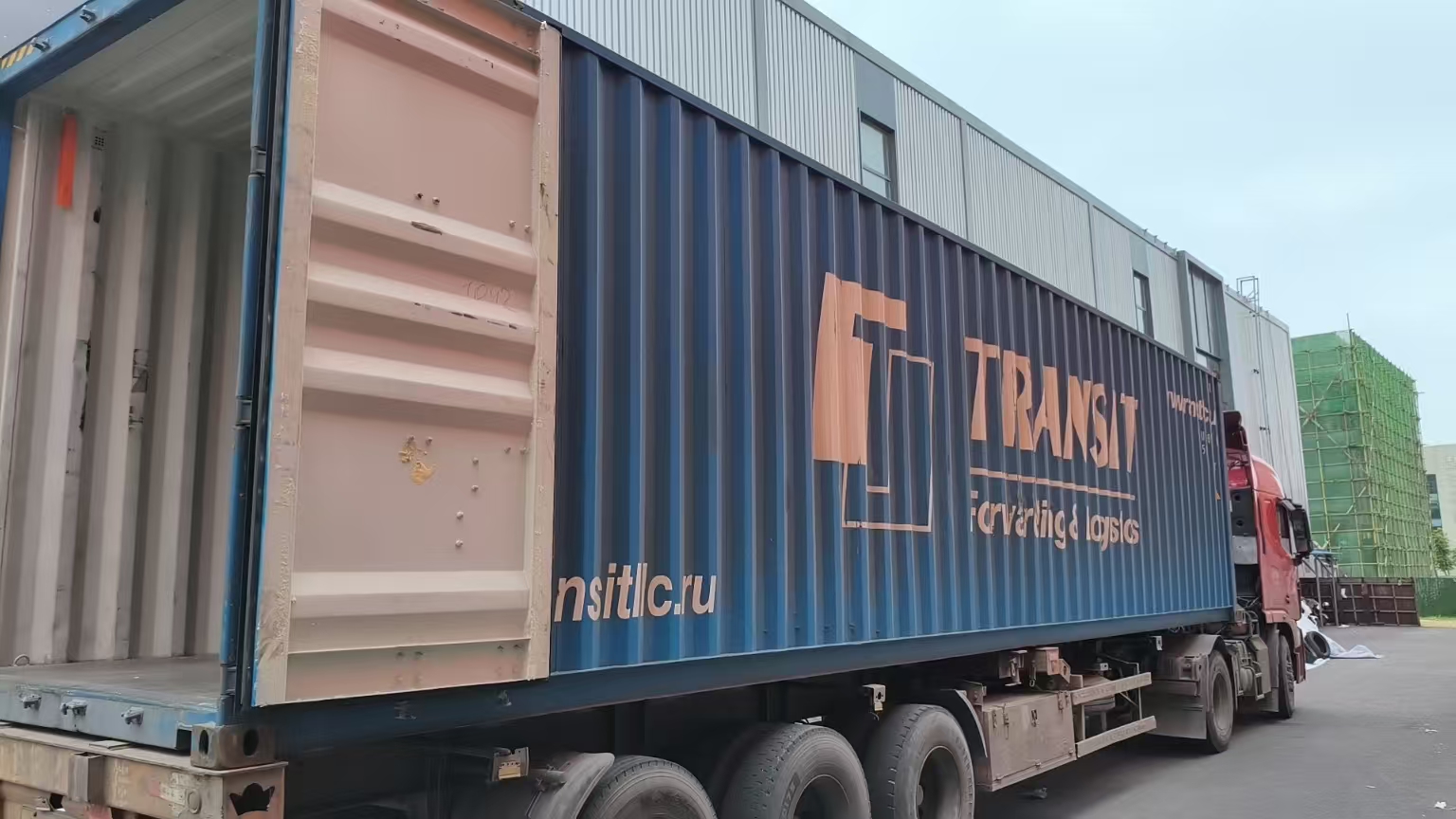
At Yuanpeng’s warehousing and dispatch area, rolls of geotextile products that have passed strict quality inspections are being systematically loaded into containers. As shown in the photos taken on site, rolls of filament geotextiles, staple fiber needle‑punched geotextiles, and composite geotextiles are smoothly moved by forklifts into the containers, neatly stacked with tight roll‑to‑roll alignment, and well wrapped with protective film.
Before each batch is loaded and dispatched, every product undergoes testing of key mechanical and hydraulic performance indicators, including mass per unit area, tensile strength, elongation at break, water permeability coefficient, and equivalent opening size. Quality inspectors carefully verify product specifications against engineering order drawings. Only after confirmation of conformity can the products be released for dispatch. Each shipment is accompanied by batch numbers, test reports, and construction recommendation manuals, enabling customers to immediately inspect the products and begin construction upon receipt.
A dispatch manager at Yuanpeng Environmental Protection said: “Geotextiles are the ‘invisible guardians’ of engineering materials, especially in subgrade reinforcement and landfill anti‑seepage systems. The quality of a single roll of geotextile directly affects the safety and durability of the entire project. Before each shipment, we strictly check the technical parameters and construction suitability to ensure that every roll our customers receive meets the design requirements.”
Five Major Application Scenarios for Geotextiles
Geotextiles are permeable synthetic materials made of polypropylene or polyester fibers, offering multiple core functions including separation, filtration, drainage, reinforcement, and protection. Yuanpeng Environmental Protection’s geotextile products play indispensable roles in the following engineering scenarios:
1. Subgrade Reinforcement and Separation
In transportation projects such as highways, railways, and airport runways, laying high‑strength geotextiles between subgrade fill layers effectively separates soils of different particle sizes, preventing fine soil from mixing into gravel layers that could loosen the subgrade structure. At the same time, geotextiles act as “invisible reinforcement” that distributes upper loads and suppresses uneven settlement, significantly improving embankment stability.
2. Embankment Slope Filtration and Drainage
In water conservancy projects such as embankment slope protection and riverbank rehabilitation, geotextiles serve as filter layers in retaining wall backfill drainage systems, as well as around drainage pipes or stone drainage trenches. When water flows from a fine‑grained soil layer into a coarse‑grained soil layer, the good air and water permeability of the geotextile allows smooth water flow while effectively retaining soil particles, preventing fine soil loss with seepage. This achieves the balance of “water permeability with soil retention”, eliminating the risk of piping and seepage failure.
3. Landfill and Tailings Pond Protection
In environmental anti‑seepage projects such as landfills, tailings ponds, and wastewater treatment, filament geotextiles are widely used as key protection and filtration layers. On one hand, the geotextile protects the underlying anti‑seepage geomembrane from puncture by sharp particles and mechanical damage. On the other hand, it forms a filter layer in the leachate collection system, preventing fine particles from clogging drainage pipes and ensuring long‑term smooth operation of the landfill leachate drainage system.
4. Soft Soil Foundation Reinforcement
Laying woven geotextiles for foundation reinforcement on soft soil foundations such as swamps, floodplains, and paddy fields allows the embankment to reach design height within the contract period without losing stability. This construction method has been widely validated worldwide and eliminates the need for surcharge preloading. It is suitable for temporary roads, high‑fill embankments, and reinforced soil retaining walls.
5. Pavement Curing and Crack Prevention
Fiberglass composite geotextiles are used as stress‑absorbing layers before overlaying asphalt on old cement concrete pavements, effectively dispersing concentrated tensile stresses from reflective cracks and significantly delaying the appearance of reflective cracks. In addition, during the curing period of cement concrete pavements, curing geotextiles are used to cover the surface, maintaining moisture, reducing water evaporation, improving concrete curing quality, and reducing crack incidence.
Global Geotextile Market Continues to Grow
In recent years, the global geotextile market has maintained steady growth. According to industry research data, the global geotextile market reached approximately USD 5.293 billion in sales in 2025 and is expected to reach USD 8.553 billion by 2032, with a compound annual growth rate (CAGR) of 7.0%. The main drivers for the nonwoven geotextile market are sustained growth in global infrastructure construction and water conservancy investments, as well as increasing requirements for soil reinforcement, drainage & filtration, and protection performance.
In the domestic market, China’s geosynthetic material market exceeded RMB 15 billion in 2025, with a stable CAGR of over 8%. Benefiting from the “dual carbon” goals, transportation construction in Belt and Road countries, and domestic infrastructure upgrades, demand for geotextiles – as core materials for environmental engineering and infrastructure construction – is expected to further expand.
Strict Quality Control and Export Services
Yuanpeng Environmental Protection strictly implements whole‑process quality management from incoming raw material inspection to finished product testing. Key indicators such as tensile strength, elongation at break, water permeability coefficient, equivalent opening size, and UV aging resistance are tested according to Chinese national standards (e.g., GB/T 17638, GB/T 17639) or international standards (e.g., ASTM, ISO). Authoritative third‑party test reports are available upon request.
For exports, Yuanpeng Environmental Protection has developed well‑integrated capabilities in packaging, warehousing, and logistics coordination. Geotextile products can be rolled, film‑wrapped for moisture protection, and shipped in containers or bulk carriers. Each export shipment is accompanied by container loading images, batch numbers, and test reports, achieving full traceability from production to delivery.
Future Outlook
Looking ahead, Yuanpeng Environmental Protection will continue to deepen its presence in the geosynthetics field, increasing R&D investment in the manufacturing of polyester filament geotextiles, woven geotextiles, and composite geotextiles. The company will continuously optimize production processes and material properties, with a focus on promoting the engineering application of high‑strength geotextiles in heavy‑load transportation, high‑water‑head water conservancy, and deep anti‑seepage environmental protection, providing safe, reliable, and durable geosynthetic solutions to customers worldwide.