Geotextiles are applied in mountain slope protection projects
Geotextiles are applied in mountain slope protection projects
Ecological Slope Restoration of Mountain Slopes (Soil Slopes in Arid and Semi-Arid Regions)
Ⅰ. Project Overview
·Project: Loess mountain slope
·Climate: Arid with little rainfall, intense ultraviolet (UV) radiation, and large diurnal temperature fluctuations
·Slope: Gradient ranging from 1:1.2 to 1:1.5; predominantly loess soil, loose in structure, highly susceptible to rainwater erosion
·Problems: Severe soil and water loss, poor vegetation survival, and localized slope slumping
·Objectives: Soil stabilization and erosion control + promotion of vegetation recovery + long-term durability and resistance to aging
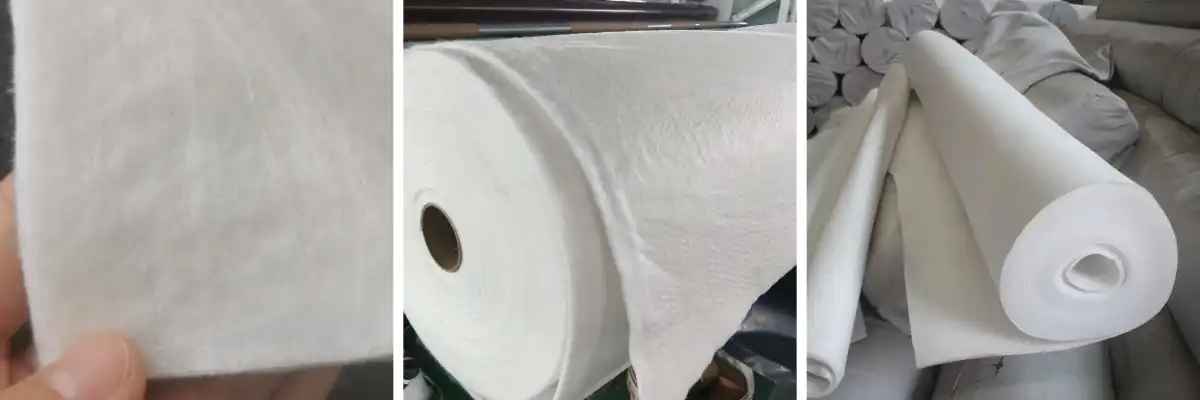
Ⅱ. Geotextile Application Plan
Materials: 200g/㎡–300g/㎡ polypropylene geotextile (with UV-resistant additives)
Structure:
·Slope grading → Compaction of surface layer
·Full coverage of geotextile, with overlaps ≥30 cm, secured with U-shaped nails
·Hydroseeding over the geotextile surface (grass seeds + water retention agent + fertilizer + imported soil)
·On steep sections, a 3D vegetation net is additionally laid and used in combination with the geotextile
Ⅲ. Construction Key Points
·Geotextile selection: UV-resistant and anti-aging polypropylene material with a tensile strength of ≥26 kN/m;
·Installation: Closely laid against the slope surface, without wrinkles or unsupported areas; overlaps shall be joined by hot-air welding or stitching;
·Hydroseeding: A 3–5 cm thick layer is sprayed directly onto the geotextile surface to ensure uniform adhesion of grass seeds;
·Curing: Regular watering during the early stage to maintain moisture; avoid direct exposure to intense sunlight (temporary shading recommended if necessary).
Ⅳ. Application Results
·Soil stabilization: After 12 months, soil and water loss reduced by over 90%, with no new rills or slope slumping observed;
·Vegetation recovery: Vegetation coverage increased by more than 30%, and drought-tolerant grass species showed healthy growth;
·Durability: After 12 months, the geotextile exhibited only a 4.5% performance degradation rate, maintaining excellent UV resistance and long-term stability;
·Cost efficiency: Compared to traditional stone masonry, construction costs were reduced by over 40%, and project duration shortened by 50%.